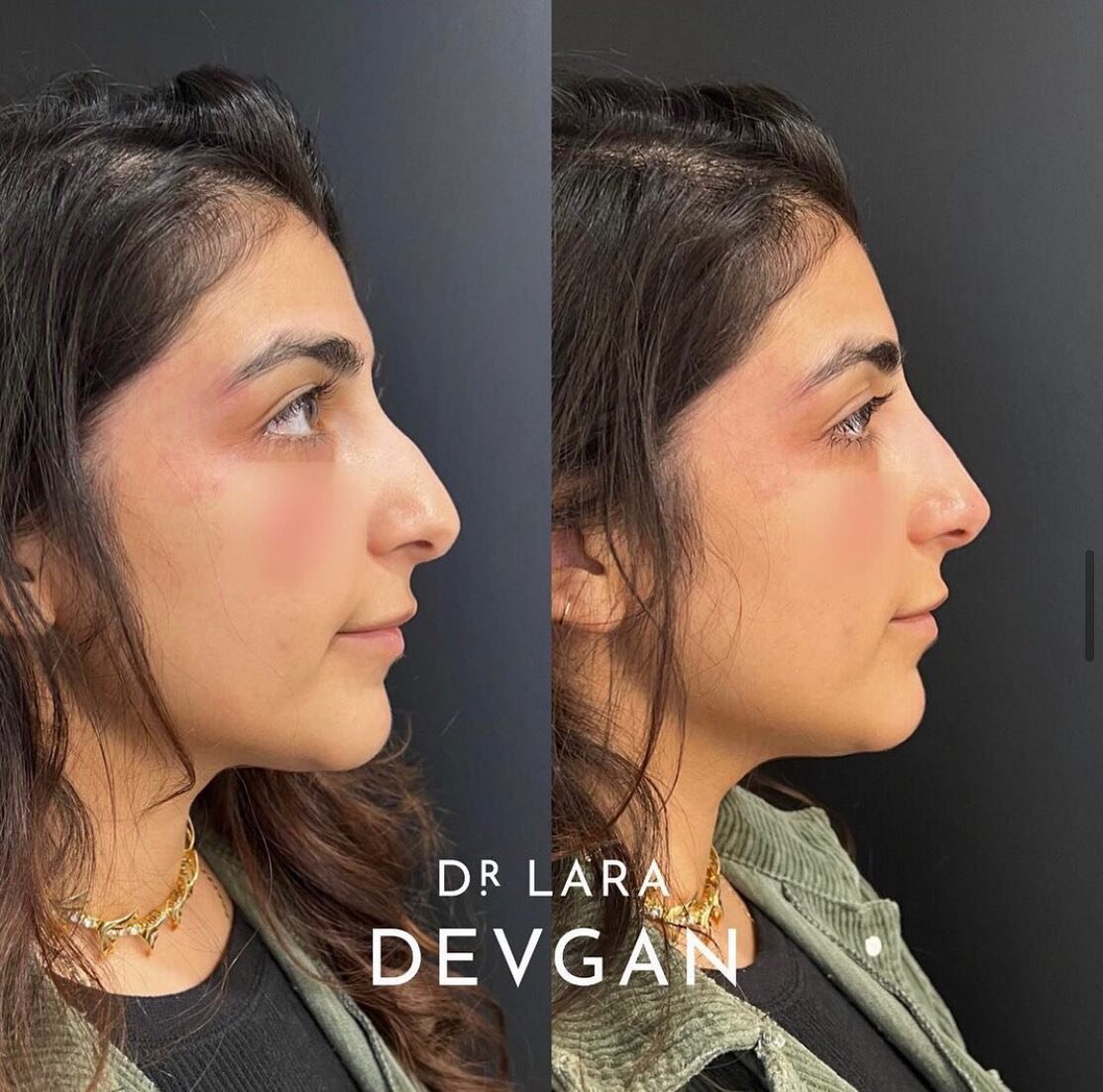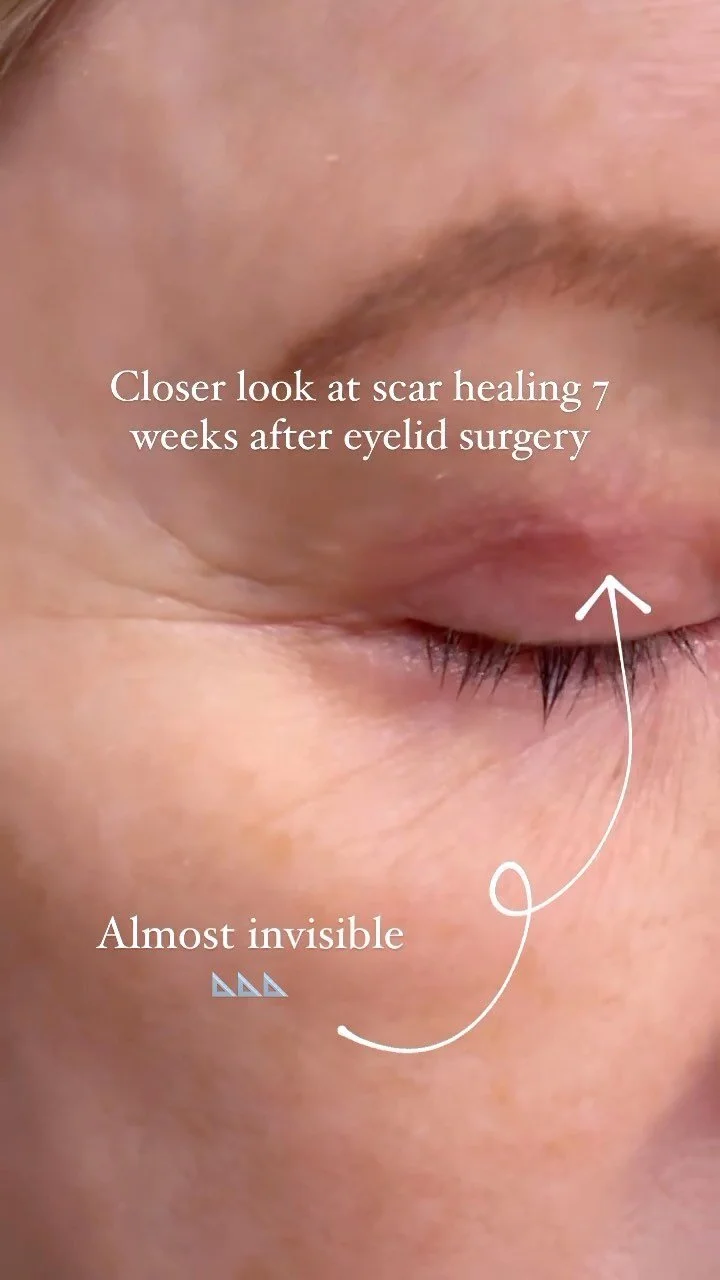
Doctor's Notes | The Eyebrows as the Structural Frame of Facial Expression and Identity

In this TikTok, Dr. Devgan breaks down the importance of the eyebrows in framing facial identity, attractiveness, and biological/cultural meaning and how it relates to her work as a plastic surgeon.


The Eyebrows as the Structural Frame of Facial Expression and Identity

The eyebrows are the most expressive and communicative feature of the human face. They function as the visual punctuation of emotion—subtly shaping how expressions are read, how intention is interpreted, and how personality is perceived. Despite this, they are often underestimated as a structural determinant of attractiveness, youth, and identity.

A Key Structural Element of the Upper Face

In clinical evaluation, the eyebrows are not treated as isolated hair structures, but as a critical architectural component of the upper face. Their position, shape, and density directly influence the appearance of the eyes and forehead, determining whether the periorbital region reads as open or heavy, lifted or compressed.

A well-positioned brow typically sits just above the orbital rim, with a gentle peak laterally. This configuration creates upward vectoring of the upper face, enhancing eyelid show, improving eye openness, and contributing to a more balanced and energized facial expression.

How Brow Position Shapes Perceived Age and Emotion

The eyebrows play a central role in how age and fatigue are perceived. When appropriately positioned, they create lift through the upper face, supporting the appearance of alertness and vitality. When they descend—as occurs naturally with age due to skin laxity, soft tissue descent, and gravitational changes—they contribute to upper lid hooding, reduced eyelid visibility, and a heavier, more tired facial expression.

These changes can occur subtly but have a disproportionate effect on overall facial perception, often influencing how rested, approachable, or aged a person appears.

A Defining Marker of Facial Identity

From an identity standpoint, the eyebrows are uniquely powerful. They are among the most recognizable features in facial recognition, often serving as a primary reference point in how we distinguish and remember faces. Small variations in brow shape or position can significantly alter perceived identity.

When eyebrows are over-thinned, over-tattooed, or lost due to aging, medical conditions, or over-treatment, patients often report a loss of facial familiarity—describing themselves as looking “different” or no longer fully recognizable.

Restoration of the Upper Facial Frame

Restoring the brows is not simply a cosmetic adjustment—it is a structural recalibration of the upper face. Depending on the individual anatomy, this may involve surgical elevation, neuromodulator-based repositioning, or cosmetic techniques that re-establish natural shape and density.

Each approach aims to restore balance between the brow, eyelid, and forehead, re-opening the periorbital region and re-establishing vertical lift through the upper face.

The Frame That Defines the Face

The eyebrows ultimately function as the frame of the eyes. While the eyes convey emotion and identity, the brows determine how that expression is perceived. Without proper framing, even the most balanced facial features lose clarity and impact.

When restored thoughtfully, the brows reintroduce structure, expression, and harmony to the upper face—allowing the eyes to read clearly, the face to feel more open, and the overall appearance to regain cohesion and vitality.


Appointment Inquiries

For inquiries and appointments, please email appointments at appointments@laradevganmd.com or call 212-452-2400. You may also use the following button to schedule an appointment online. We look forward to hearing from you. Thank you!

Doctor's Notes | The Jawline as the Structural Foundation of Facial Definition

In this TikTok, Dr. Devgan breaks down the importance of the jawline in structural facial identity, attractiveness, and biological/cultural meaning and how it relates to her work as a plastic surgeon.


The Jawline as the Structural Foundation of Facial Definition

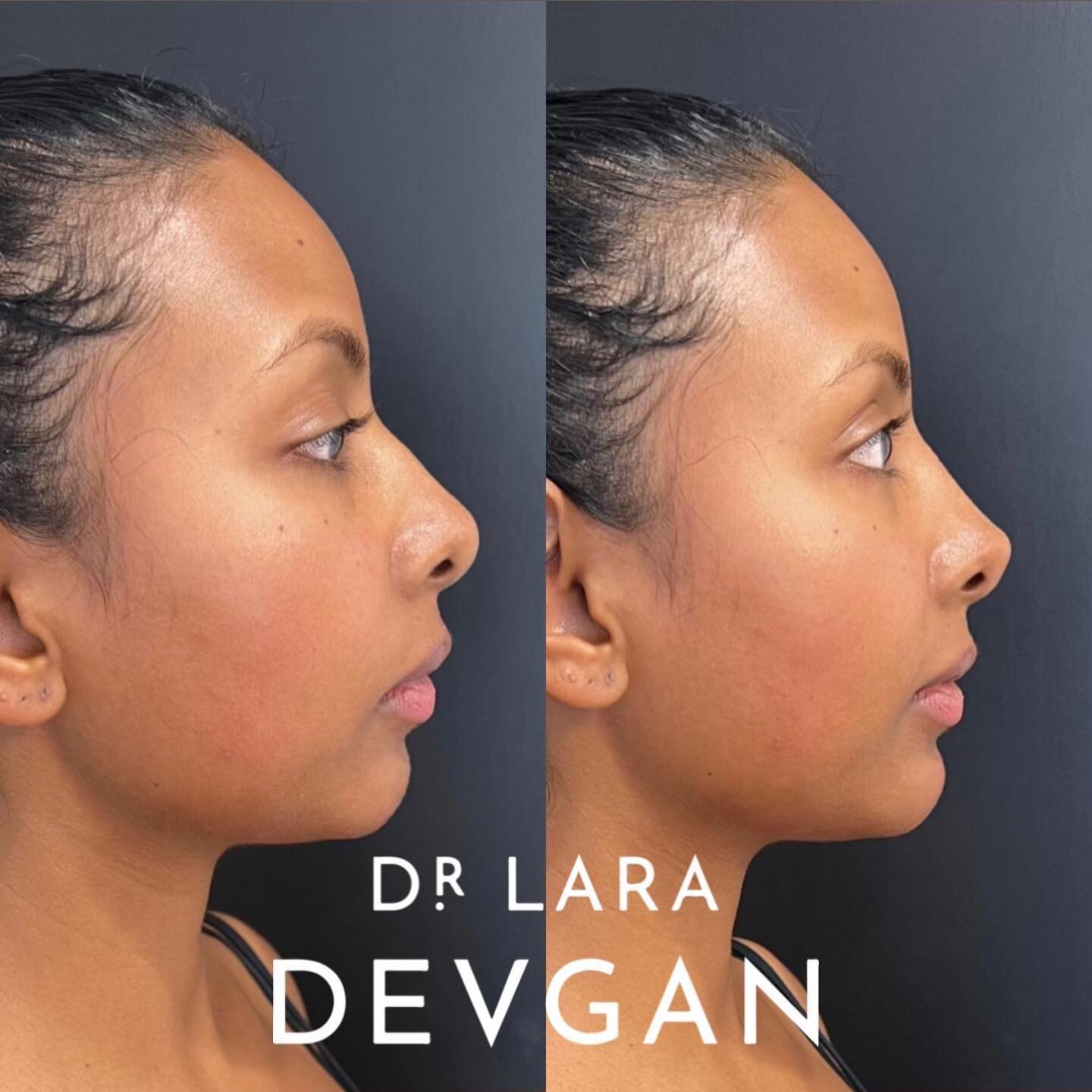
The jawline is the foundation of the face. It forms the lower facial border that separates the face from the neck and establishes the framework that everything above it rests upon. In clinical assessment, it is one of the most critical determinants of facial harmony, attractiveness, and perceived age.

A well-defined jawline provides structure, continuity, and balance. It creates a clean mandibular border that anchors the mid and upper face, giving the entire structure a sense of coherence and strength. This is not simply a contour feature—it is the anatomical edge that defines facial identity in profile and frontal view.

Universally Associated with Strength, Elegance, and Youth

Across populations and aesthetic ideals, a defined jawline is consistently associated with attractiveness. In women, it is often linked with elegance, refinement, and facial clarity. In men, it is associated with strength, angularity, and perceived vitality. Despite these differences in interpretation, the underlying principle is the same: a distinct mandibular border signals structural integrity and youthful proportion.

The jawline plays a central role in how the face is framed and perceived, particularly in motion and in three-quarter view, where definition along the lower face becomes most apparent.

How Aging Alters the Lower Facial Frame

The jawline is also one of the earliest and most visible regions affected by aging. As skin elasticity declines, retaining ligaments weaken, and soft tissue volume shifts inferiorly, the once-sharp mandibular border begins to blur.

This process leads to the formation of jowls, softening of the cervicomental angle, and gradual loss of separation between the face and neck. The result is a visual descent of the lower face, where definition is replaced by continuity, and structure is replaced by softness. These changes significantly impact how age is perceived, even when other facial features remain relatively preserved.

Restoring Definition Restores Facial Identity

Because the jawline serves as the boundary of facial structure, restoring it has a profound effect on overall facial perception. Re-establishing mandibular definition re-creates separation between the face and neck, reintroduces angularity where it has softened, and restores balance to the lower third of the face.

Depending on the anatomical needs, this may involve surgical refinement, fat reduction, energy-based tightening, or precise volume restoration along the mandibular border. Each approach targets a different component of structural loss, but the goal remains the same: to re-establish a clean, continuous frame.

The Jawline as Identity and Presence

The jawline is not just a contour—it is a defining structural identity marker. Patients often recognize its loss before they can articulate exactly what has changed, describing it as a shift in how “like themselves” they feel in photos or in the mirror.

Restoring this structure does more than refine appearance. It re-establishes definition, proportion, and presence. A strong jawline does not simply complete the face—it organizes it, giving it clarity, confidence, and architectural authority.


Appointment Inquiries

For inquiries and appointments, please email appointments at appointments@laradevganmd.com or call 212-452-2400. You may also use the following button to schedule an appointment online. We look forward to hearing from you. Thank you!
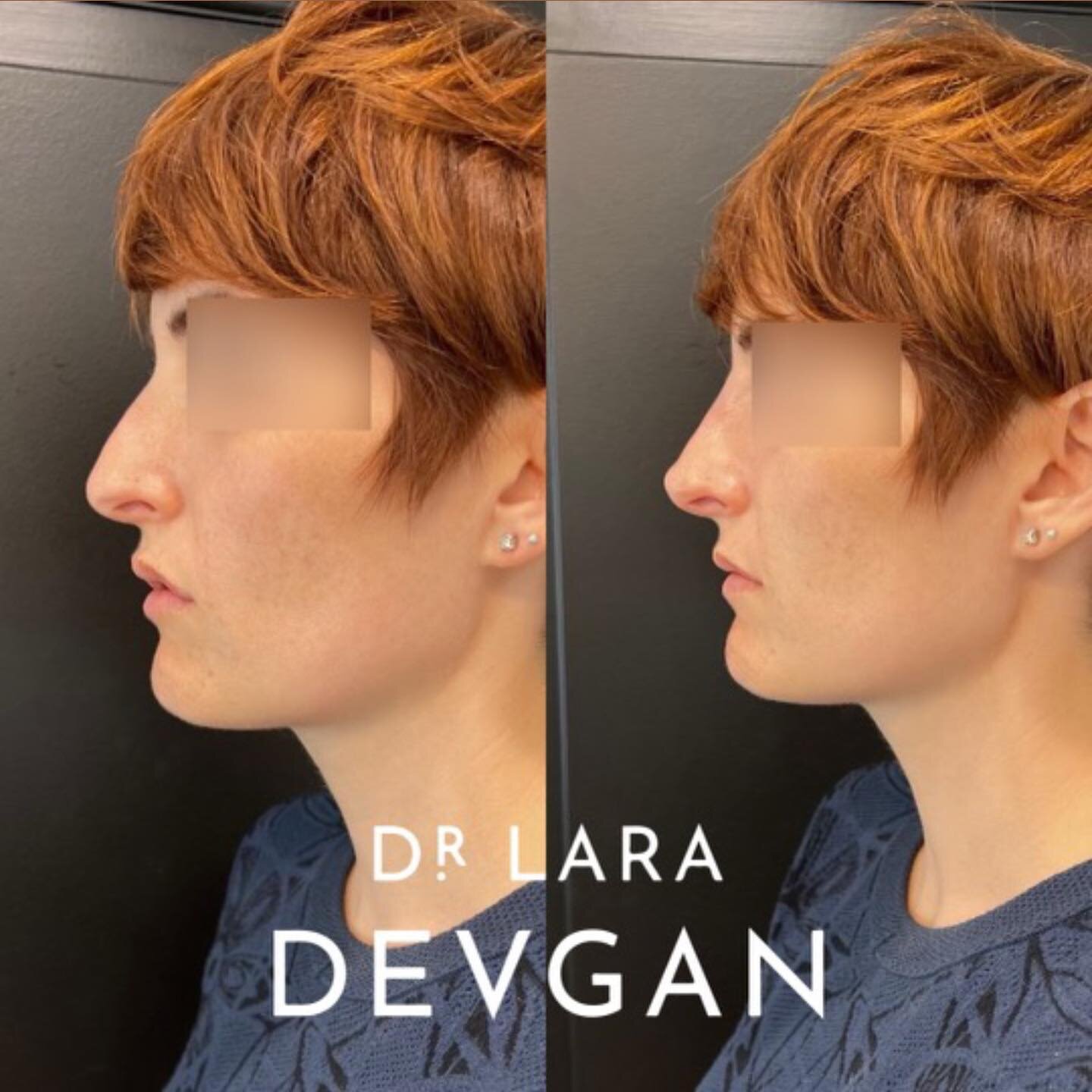
Doctor's Notes | The Cheekbones as the Architectural Foundation of the Face

In this TikTok, Dr. Devgan breaks down the importance of the cheekbones in foundational facial identity, attractiveness, and biological/cultural meaning and how it relates to her work as a plastic surgeon.


The Cheekbones as the Architectural Foundation of the Face

The cheekbones are the architecture of the face. They function as the structural scaffolding that supports everything above and below them, shaping how light, shadow, and proportion interact across the midface. In clinical practice, they are one of the most critical determinants of facial attractiveness, perceived youth, and overall identity.

High, well-defined cheekbones create lateral projection and midface volume, giving the face its three-dimensional structure. This is what allows the face to move beyond flatness into contour—where light catches the upper midface and transitions into natural shadow beneath the cheek, creating sculptural definition and visual balance.

Universally Recognized Markers of Beauty and Structure

Across cultures and throughout history, prominent cheekbones have been consistently associated with beauty. They signal strong skeletal support, underlying tissue integrity, and what is often described as a youthful, heart-shaped facial contour—where the upper face appears more structured and the lower face tapers with softness and proportion.

This geometry is not arbitrary. It reflects how the midface distributes volume and support, influencing everything from facial symmetry to how expressions are perceived in motion.

The Cheekbones as the Anchor of Facial Youth

The cheeks are also central to how we define youthfulness. In a younger face, the malar fat pad sits higher and more anterior, creating a natural convexity in the midface. This fullness supports the lower eyelid, softens transitions into the nasolabial region, and maintains an overall lifted appearance.

With aging, this system changes. The malar fat pad descends and deflates, and the midface loses its structural projection. As this occurs, the face begins to flatten centrally while simultaneously descending downward. The nasolabial folds deepen, early jowling may emerge, and the eye-cheek junction becomes more hollow and shadowed. Importantly, these are not isolated changes—they are the downstream effects of midface structural loss.

How Midface Restoration Rebalances the Entire Face

Because the cheekbones sit at the center of facial architecture, restoring this region has global effects. When volume and support are reintroduced to the midface, the entire facial structure responds.

Rebuilding projection in this area restores upward support to the lower eyelid, softens the appearance of nasolabial folds, and re-establishes the natural light–shadow dynamics of a youthful face. Whether achieved through precise filler placement or fat grafting, midface restoration does not simply add volume—it repositions balance across the entire facial framework.

Structure, Identity, and Perception

The cheekbones are also deeply tied to identity. Small variations in their projection and contour often define how a face is recognized and remembered. They influence whether a face reads as soft or sculpted, rounded or angular, youthful or mature.

This is what makes the midface so clinically significant. It is not just an aesthetic zone—it is the structural core of facial perception. When it is supported, the entire face feels lifted, coherent, and naturally aligned.


Appointment Inquiries

For inquiries and appointments, please email appointments at appointments@laradevganmd.com or call 212-452-2400. You may also use the following button to schedule an appointment online. We look forward to hearing from you. Thank you!
Doctor's Notes | The Eyes as the Central Feature of Facial Expression and Perception

In this TikTok, Dr. Devgan breaks down the importance of the eyes in facial identity, attractiveness, and biological/cultural meaning and how it relates to her work as a plastic surgeon.


The Eyes as the Central Feature of Facial Expression and Perception

The eyes are, without question, the most powerful and defining feature of the human face. The periorbital region sits at the center of visual attention and serves as the primary point through which we interpret emotion, energy, and identity. When we meet another person, the gaze almost always lands on the eyes first. They communicate alertness, fatigue, warmth, and emotional state with immediate clarity—often before a single word is spoken.

A Delicate and Highly Active Anatomical System

The eye area is one of the most structurally complex and delicate regions of the face. It includes the upper and lower eyelids, the tear trough, orbital fat compartments, and an exceptionally thin layer of skin that is constantly in motion.

Unlike other facial regions, the periorbital area is under continuous mechanical stress from blinking, squinting, and expression. Over time, this constant activity, combined with natural volume shifts and skin thinning, makes it especially prone to early visible changes such as fine lines, puffiness, hollowing, and skin laxity.

How the Eyes Define Youth and Vitality

From an aesthetic standpoint, the eyes are central to how we perceive age and vitality. Bright, open eyes signal energy and health. Smooth transitions under the eyes suggest restfulness and balance. Well-supported eyelids maintain an alert, engaged expression.

When this region is in harmony, the face reads as refreshed and cohesive. The eyes feel “awake”—not just visually, but emotionally.

When Subtle Changes Shift the Entire Expression

Even small structural changes in the periorbital area can significantly alter facial perception. A slight loss of volume in the midface can deepen under-eye shadows. Mild skin laxity can create heaviness in the upper lids. Reduced support beneath the eye can make the lower lid appear tired or uneven.

These changes are often gradual, but their impact is immediate. Because the eyes are the focal point of human interaction, even subtle shifts can influence how age, emotion, and energy are perceived—regardless of how someone actually feels.

Why the Eye Area Requires Precision and Restraint

The periorbital region is not an area where large changes are needed to create meaningful impact. It responds to millimeter-level adjustments—improvements in hydration, support, and structural balance that restore light reflection and smooth transitions.

The goal is not to fundamentally change the eye area, but to correct the small disruptions that accumulate over time. Restoring continuity between the eyelid, tear trough, and midface can dramatically improve overall facial harmony.

Restoration, Not Alteration

Treating the eye area is fundamentally about restoration. The intention is to bring the region back into balance so that it reflects the individual’s natural expression of energy and identity.

When the periorbital region is supported appropriately, the eyes appear brighter, more open, and more engaged. The face looks more rested—not because it has changed, but because its most expressive feature is functioning as it was meant to.

Ultimately, the goal is simple: to let the eyes do what they already do best—communicate clarity, emotion, and life—without distraction from structural or textural imbalance.


Appointment Inquiries

For inquiries and appointments, please email appointments at appointments@laradevganmd.com or call 212-452-2400. You may also use the following button to schedule an appointment online. We look forward to hearing from you. Thank you!

Doctor's Notes | The Lips as the Functional and Aesthetic Center of Expression

In this TikTok, Dr. Devgan breaks down the importance of the lips in facial identity, attractiveness, and biological/cultural meaning and how it relates to her work as a plastic surgeon.


The Lips as the Functional and Aesthetic Center of Expression

The lips are not just a feature—they are a dynamic structure that sits at the intersection of communication, perception, and facial balance. Positioned along the lower third of the face, they influence how we interpret emotion, age, and overall vitality.

Anatomically, the lips are highly specialized. They are composed of vascularized soft tissue, dense sensory innervation, and the orbicularis oris muscle, which governs movement and function. This combination allows for precise articulation in speech, controlled expression, and tactile sensitivity. Few structures in the face are asked to do as much, both functionally and perceptually.

From a structural standpoint, the lips are not isolated. They exist in direct relationship with the nasal base, the philtrum, and the chin. The proportions between these elements determine whether the face reads as balanced or disharmonious. Lip volume, projection, and definition all contribute to how the lower face is perceived in three dimensions.

When the lips are in harmony, they support the face without dominating it.

The transition from nose to lip is proportionate. The upper lip shows appropriate incisor visibility at rest. The vermillion has enough volume to reflect light naturally, and the Cupid’s bow maintains definition. In this state, the lips enhance expression without drawing disproportionate attention. The face reads as cohesive, and the lips function as intended—expressive, but integrated.

When this balance is disrupted, the change is immediately perceptible.

Volume loss, elongation of the cutaneous upper lip, and flattening of the vermillion border alter the relationships within the lower third. The mouth may appear less defined, less supported, or disproportionate to the surrounding structures. These changes are not just aesthetic—they affect how age, energy, and even emotion are perceived.

Like the nose, the lips carry disproportionate visual weight because they are constantly in motion and central to human interaction.

This is what makes lip enhancement deceptively complex.

Small changes can significantly alter facial perception. A slight increase in projection can restore balance between the upper and lower lips. Subtle eversion of the vermillion border can enhance definition without increasing volume. Adjustments to the cutaneous lip length can change how much tooth is visible, which directly impacts perceived youth.

These are millimeter-level decisions with system-wide effects.

Because of this, lip treatment is not about adding volume in isolation. It is about restoring proportion and structure within the context of the entire face.

Different approaches address different aspects of this anatomy. Hyaluronic acid fillers—such as hyaluronic acid filler—allow for precise, reversible volume restoration and contour refinement. Fat grafting offers a longer-term solution through biointegrated tissue replacement. A surgical lip lift shortens the cutaneous upper lip, restoring tooth show and redefining the Cupid’s bow. Neuromodulators can be used to relax the orbicularis oris, creating a subtle outward roll of the lip without increasing volume.

Each modality targets a specific structural variable: volume, length, projection, or movement.

The goal is not to create larger lips.

The goal is to reestablish balance—so that the lips once again function as a natural extension of the face, supporting expression, symmetry, and proportion without overwhelming them.


Appointment Inquiries

For inquiries and appointments, please email appointments at appointments@laradevganmd.com or call 212-452-2400. You may also use the following button to schedule an appointment online. We look forward to hearing from you. Thank you!