Doctor's Notes | Profile Balancing

In this TikTok, Dr. Devgan breaks down her Signature Profile Balancing Procedure.


Elegant, Understated Profile Balancing

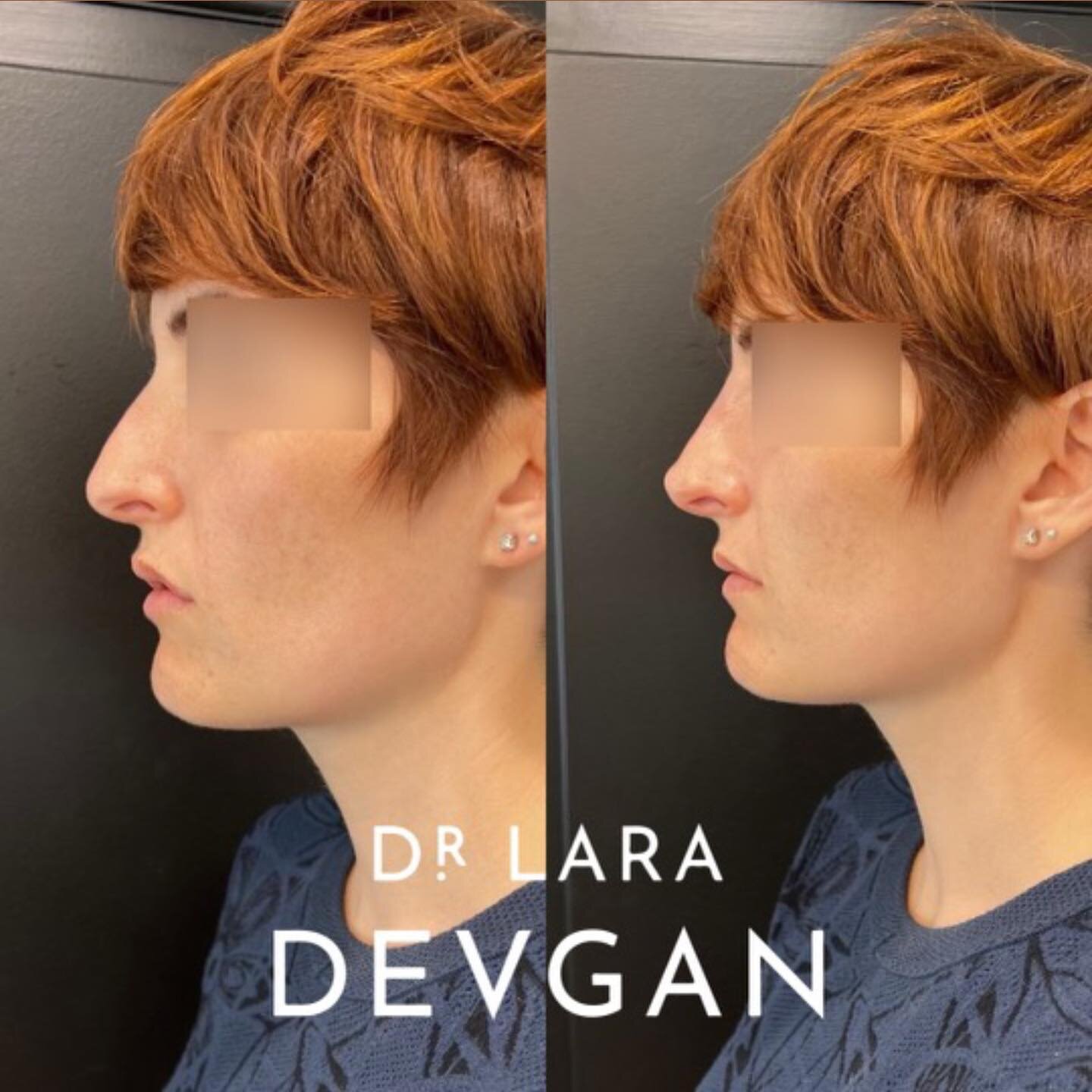
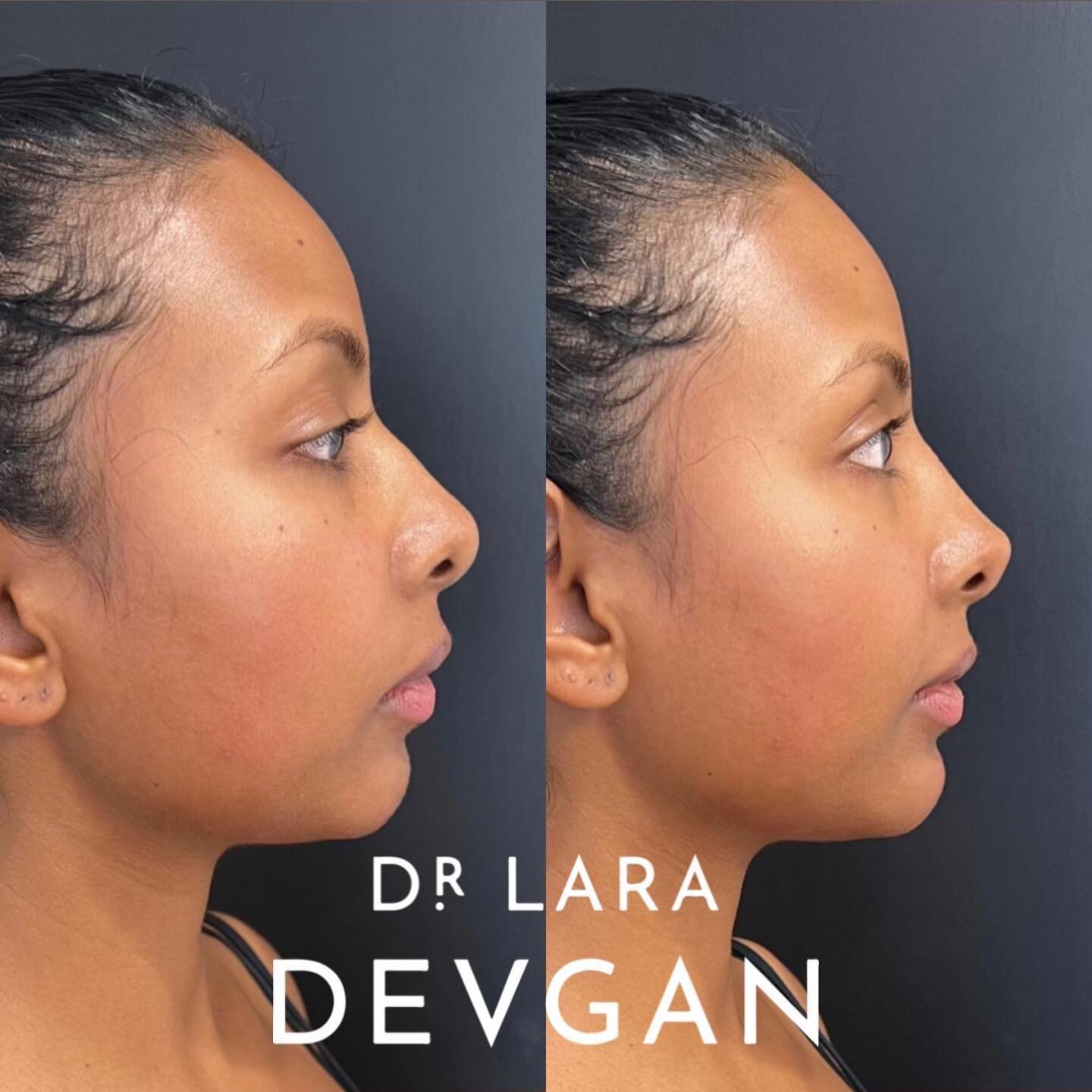
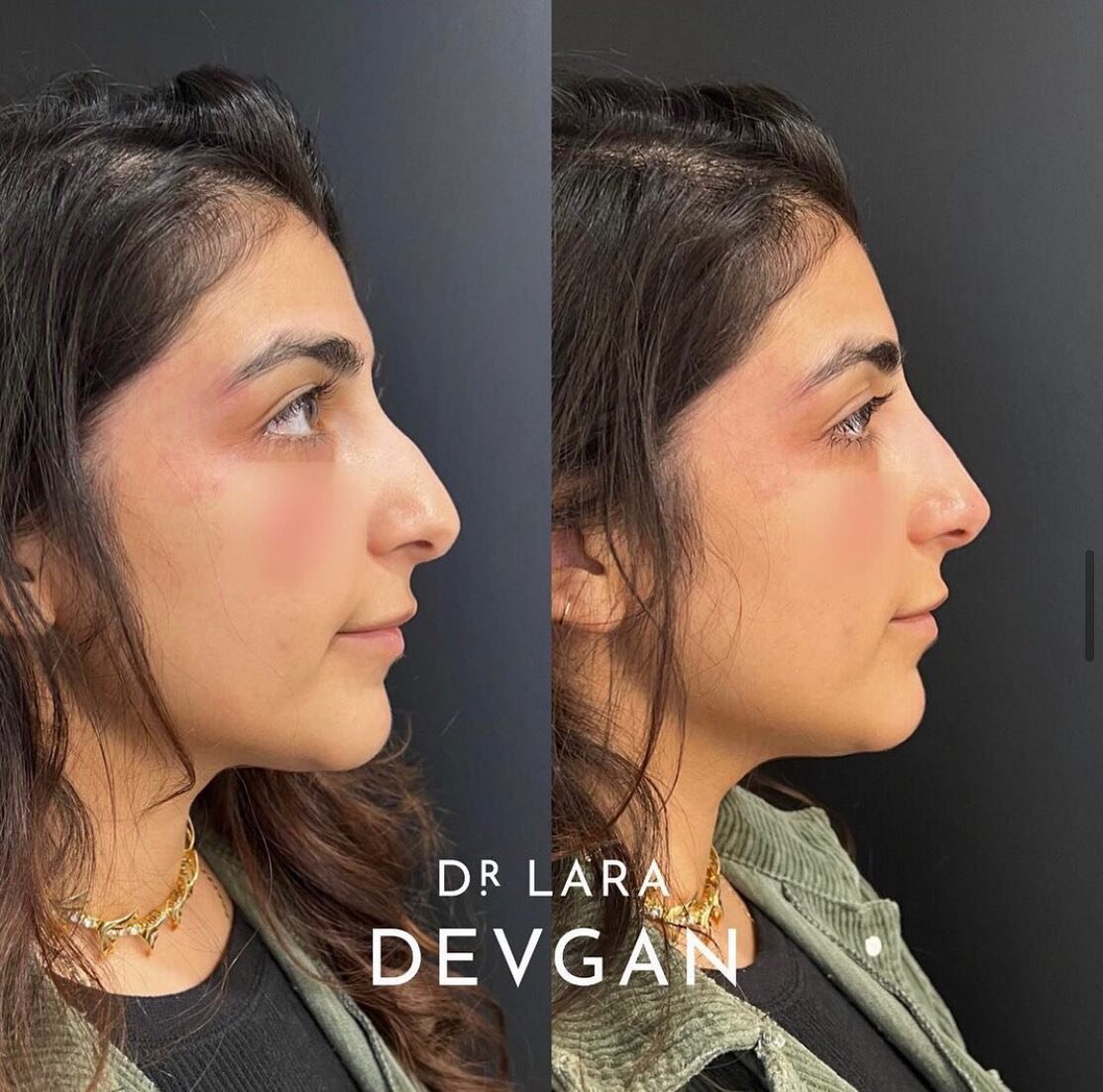
True facial refinement isn’t about transformation—it’s about restraint. This patient came in with a clear, thoughtful goal: she wanted to subtly improve her profile without surgery, downtime, or anything that would read as “done.” Specifically, she was concerned about a mild dorsal hump, a softly bulbous nasal tip, and a micrognathic chin that disrupted overall balance. Nothing dramatic. Just enough to bring harmony back to her facial architecture.

That kind of request requires precision, not excess.

Understanding the Architecture of the Face

A refined result starts with anatomy. The nose and chin don’t exist in isolation—they work together as a structural unit that defines the profile. In many patients, a dorsal hump becomes more noticeable because the chin is under-projected. Likewise, a nasal tip can appear heavier when the surrounding support is lacking.

Rather than “chasing” individual flaws, I approach these cases using principles of surgical anatomy, even when working nonsurgically. The goal is to rebalance proportions, not erase character.

Nonsurgical Rhinoplasty: Subtle Power

In this case, nonsurgical rhinoplasty allowed me to smooth the appearance of the dorsal hump by strategically placing injectable filler to create a straighter dorsal line. This doesn’t remove bone or cartilage—it reframes the contour so the eye reads continuity instead of interruption.

For the nasal tip, careful structural support was added to refine shape and improve definition without stiffness or over-projection. The result is a nose that looks naturally elegant, not altered.

Chin Augmentation: The Quiet Game-Changer

The chin is often the unsung hero of facial balance. A micrognathic chin can make the nose appear more prominent and disrupt the flow of the lower face. With conservative chin augmentation, I was able to restore forward projection and improve the cervicomental angle, which immediately softened the profile and enhanced overall harmony.

Importantly, this wasn’t about making the chin “bigger.” It was about placing support exactly where anatomy calls for it.

Finesse Over Force

This is what finesse facial optimization looks like. No invasive surgery. No exaggerated contours. No giveaway signs. Just thoughtful adjustments that work with the patient’s natural structure.

My signature nonsurgical rhinoplasty and chin augmentation techniques are designed for patients who want refinement without spectacle—results that look effortless, timeless, and unmistakably high-level.

The Result

The final outcome is an elegant, understated profile that feels entirely her own. Friends won’t ask what she had done. They’ll just notice that she looks balanced, confident, and quietly elevated.

That’s the standard.


Appointment Inquiries

For inquiries and appointments, please email appointments at appointments@laradevganmd.com or call 212-452-2400. You may also use the following button to schedule an appointment online. We look forward to hearing from you. Thank you!

Signature Procedure | Tear Trough Augmentation

Dr. Lara Devgan demonstrates her Signature Tear Trough Augmentation Procedure in this TikTok.


Tear Trough Augmentation: What You Need to Know

Tear trough augmentation is a popular cosmetic treatment designed to address under-eye hollows, dark circles, and a tired appearance. This minimally invasive procedure can provide a refreshed, youthful look with little to no downtime. If you’ve been curious about how it works, what to expect, and whether it’s right for you, this post covers the essentials.

What Is Tear Trough Augmentation?
The tear trough is the area between your lower eyelid and upper cheek. Over time, this area can develop hollows due to aging, genetics, or lifestyle factors. Tear trough augmentation typically involves the use of dermal fillers to add volume, smooth out the area, and reduce the appearance of dark circles. Hyaluronic acid-based fillers, such as Restylane or Juvederm, are commonly used because they are safe, effective, and reversible if needed.

Benefits of Tear Trough Augmentation

  • Reduced under-eye hollows and dark circles

  • A more youthful, rested appearance

  • Immediate results with minimal downtime

  • Non-surgical and minimally invasive

The Procedure: What to Expect
The treatment is relatively quick, usually taking 15 to 30 minutes. Here’s a step-by-step overview:

  1. Consultation – Your provider will assess your tear trough area, discuss your concerns, and determine whether you’re a good candidate for the procedure.

  2. Preparation – Before the injections, the area may be numbed with a topical anesthetic to minimize discomfort.

  3. Injection – The dermal filler is carefully injected into the tear trough using a fine needle or cannula. This process is done slowly and precisely to ensure a smooth, natural result.

  4. Aftercare – After the procedure, you may experience mild swelling, redness, or bruising, which typically subsides within a few days.

Results and Recovery
One of the biggest advantages of tear trough augmentation is that the results are visible almost immediately. You may notice an improvement right after the procedure, with full results appearing after any swelling has resolved. Most patients return to their normal activities the same day, although it’s recommended to avoid intense exercise, alcohol, and excessive sun exposure for 24 to 48 hours.

The effects of hyaluronic acid fillers usually last between 9 and 12 months, depending on the individual and the specific product used. Maintenance treatments are needed to sustain the results over time.

Are You a Good Candidate?
Tear trough augmentation can be effective for people with mild to moderate under-eye hollows and dark circles. However, it’s not suitable for everyone. Those with significant under-eye bags, excessive skin laxity, or certain medical conditions may not benefit from fillers and may be better suited for surgical options such as blepharoplasty.

The best way to determine if tear trough augmentation is right for you is to consult with a qualified, experienced provider. They can assess your anatomy, discuss your goals, and recommend the most appropriate treatment plan.

Risks and Considerations
While tear trough augmentation is generally safe, it’s not without risks. Potential side effects include bruising, swelling, asymmetry, and, in rare cases, more serious complications like vascular occlusion. Choosing a skilled injector with a thorough understanding of facial anatomy is crucial to minimizing risks and achieving the best possible outcome.

Conclusion
Tear trough augmentation is a popular, minimally invasive solution for under-eye hollows and dark circles. With immediate results, minimal downtime, and long-lasting effects, it’s an appealing option for those seeking a more refreshed, youthful look. As with any cosmetic procedure, doing your research and choosing the right provider are key to a successful experience.

If you’re considering tear trough augmentation, book a consultation with a licensed, experienced injector who can guide you through the process and help you achieve your aesthetic goals.


Appointment Inquiries

For inquiries and appointments, please email appointments at appointments@laradevganmd.com or call 212-452-2400. You may also use the following button to schedule an appointment online. We look forward to hearing from you. Thank you!

Doctor's Notes | Does Filler Complicate Your Facelift Later?

In this TikTok, Dr. Devgan gives her thoughts on how nonsurgical procedures earlier in life do or do not impact future surgical procedures. She details how you can work with your board-certified plastic surgeon to optimize and customize the care you receive.


Does Filler Complicate Your Facelift Later?
With Dr. Lara Devgan, Board-Certified Plastic Surgeon

This is one of the most common—and smartest—questions patients ask: If I get filler now, am I making surgery harder later? The short answer is it depends. The longer, more important answer is about which treatments, how they’re used, and who’s guiding your long-term plan.

Dr. Lara Devgan breaks it down.

1. What Treatments Can Cause Issues Later?

Not all injectables are created equal, and not all filler use is strategic.

The treatments most likely to complicate a future facelift include:

  • Excessive or repetitive filler placed in the wrong planes, especially deep or structural areas of the face where surgical dissection later occurs

  • Permanent or semi-permanent fillers, which can integrate into tissue and distort anatomy over time

  • Overfilled midface, jawline, or temples, leading to stretched skin, altered contours, or fibrotic tissue

The issue isn’t filler itself—it’s poorly planned filler. When filler is layered year after year without regard for anatomy, aging patterns, or future surgery, it can blur natural planes, obscure landmarks, and make surgical correction more complex.

By contrast, appropriately placed, conservative hyaluronic acid filler, used judiciously and allowed to metabolize naturally, rarely causes meaningful problems during facelift surgery—especially in the hands of an experienced surgeon.

2. How Do You Maintain Youthfulness From Age 60 and Beyond?

A facelift is not a magic eraser—it’s one part of a lifelong strategy.

Patients who age best over decades typically follow a layered approach:

  • Early decades (30s–40s): Skin quality, collagen preservation, sun protection, subtle neuromodulators, light filler where needed

  • Midlife (40s–50s): Strategic volume support, energy-based skin tightening, biologic skin health, and restraint

  • Later decades (60+): Surgical lifting to restore anatomy, paired with conservative nonsurgical refinement

What matters most is preserving tissue integrity. Over-filling in place of lifting eventually backfires. Gravity always wins. A facelift works best when the skin and deeper structures haven’t been chronically distorted by excess volume.

Patients who transition thoughtfully—using nonsurgical treatments to support, not replace, surgical options—tend to look more natural, rested, and youthful long-term.

3. How Do You Use Nonsurgical Treatments Now Without Burning Bridges Later?

This is where physician choice matters most.

The safest way to enjoy nonsurgical procedures today without compromising surgical options tomorrow is to work with a board-certified plastic surgeon who performs both.

Why? Because they understand:

  • Facial anatomy at surgical depth

  • How today’s filler placement affects tomorrow’s dissection

  • When not to inject

  • When filler should be dissolved rather than layered

  • When surgery is the more honest solution

A surgeon-injector plans with the end in mind. They don’t chase trends or inflate faces. They prioritize balance, reversibility, and anatomical respect.

In many cases, Dr. Devgan recommends:

  • Using small amounts of hyaluronic acid filler, placed superficially and selectively

  • Avoiding permanent fillers entirely

  • Allowing filler to naturally metabolize as patients approach surgical age

  • Dissolving residual filler before facelift surgery when appropriate

This approach keeps surgical planes clean and results predictable.

The Bottom Line

Filler does not inherently ruin a future facelift. Poor planning does.

When injectables are used thoughtfully—and guided by a surgeon who understands both nonsurgical finesse and surgical precision—they can be part of a smart, long-term aesthetic plan.

The key is choosing a physician who isn’t just treating your face today, but is designing a custom roadmap for the decades ahead.

Seeing a board-certified plastic surgeon experienced in both surgical and nonsurgical procedures allows for exactly that: a fully personalized, intelligently sequenced future of care—without shortcuts, regrets, or burned bridges.

A youthful result isn’t about doing more.
It’s about doing the right thing, at the right time, with the right expert guiding the way.


Appointment Inquiries

For inquiries and appointments, please email appointments at appointments@laradevganmd.com or call 212-452-2400. You may also use the following button to schedule an appointment online. We look forward to hearing from you. Thank you!
Doctor's Notes | Neck Wrinkle Treatment

In this TikTok, Dr. Devgan breaks down her recommendations for treating neck wrinkles. Her solutions range from topical to non surgical to surgical options.


Neck Wrinkles: Why They Happen—and What Actually Works

The neck is one of the first places to show aging, and one of the hardest to treat. Skin here is thinner, oil glands are fewer, and it’s constantly in motion—looking down at phones doesn’t help. Add sun exposure, collagen loss, and gravity, and you get creases, laxity, and fullness that don’t respond to wishful thinking or random creams.

Dr. Lara Devgan’s approach is simple and unsentimental: match the treatment to the problem. Neck aging isn’t one issue—it’s several happening at once. Texture, lines, fat, and skin laxity each require a different solution.

Start With Skin Quality: Scientific Beauty Niacin Qualene Neck Cream

Great results start with great skin. Dr. Devgan recommends daily use of her Scientific Beauty Niacin Qualene Neck Cream to address the foundational issues: thinning skin, dehydration, and loss of elasticity.

This isn’t a face cream repackaged for the neck. It’s formulated specifically to strengthen the skin barrier, improve texture, and support collagen where the skin is most fragile. Used consistently, it helps soften fine lines and makes in-office treatments work better and last longer.

Neck Tox: Relax the Pull That Creates Lines

Vertical banding and tightness in the neck often come from overactive muscles, not just aging skin. Carefully placed neuromodulator injections—often referred to as “neck tox”—can relax these muscles, reducing visible banding and creating a smoother, more elegant neck contour.

This is a precision treatment. Done correctly, it softens without affecting natural movement or expression.

Horizontal Neck Line Filler: Treat the Creases, Not Just the Skin

Horizontal neck lines—sometimes called “tech neck”—can appear early and deepen over time. Skincare alone won’t erase them.

Dr. Devgan may recommend micro-aliquots of filler placed directly into these lines to smooth creases and restore continuity to the skin. The goal isn’t volume—it’s refinement. When done properly, results look natural and seamless.

Kybella: Address Fullness Under the Chin

Submental fullness can blur the jawline and make the neck look heavier, even in younger patients. Kybella is an injectable treatment that dissolves excess fat under the chin, improving definition and contour over time.

This option is best for patients with good skin elasticity who want improvement without surgery.

Submental Liposuction: When Fat Is the Main Issue

When excess fat is more significant—or when faster, more dramatic results are desired—submental liposuction may be the better option. This procedure physically removes fat beneath the chin and along the upper neck, immediately restoring sharper definition.

It’s a targeted solution for patients whose skin quality is still strong but whose neck contour has been compromised by fat.

Surgical Neck Lift: The Gold Standard for Laxity

When skin laxity and structural aging are advanced, no injectable or topical can fully correct it. In these cases, Dr. Devgan considers a surgical neck lift the definitive solution.

A neck lift tightens underlying muscles, removes excess skin, and redefines the neck and jawline with results that are both dramatic and long-lasting. It’s not about looking different—it’s about restoring what time has taken.

The Bottom Line

There is no single fix for neck aging—and that’s the point. Dr. Devgan’s philosophy is layered, precise, and honest. Skin care supports procedures. Injectables refine specific issues. Surgery is reserved for when it’s truly needed.

The best neck results come from choosing the right tool, at the right time, for the right anatomy. And when that happens, the neck doesn’t just look younger—it looks intentional.


Appointment Inquiries

For inquiries and appointments, please email appointments at appointments@laradevganmd.com or call 212-452-2400. You may also use the following button to schedule an appointment online. We look forward to hearing from you. Thank you!