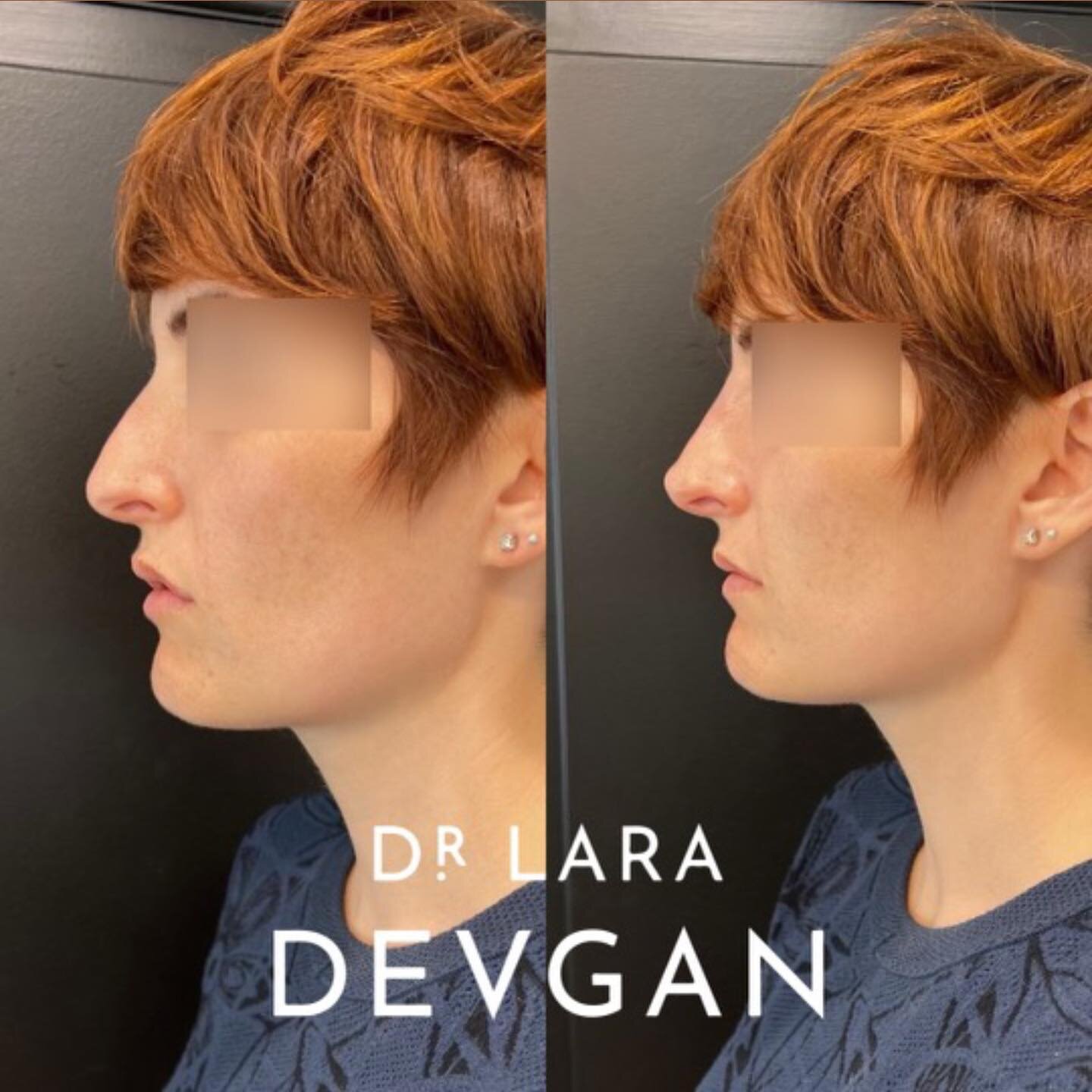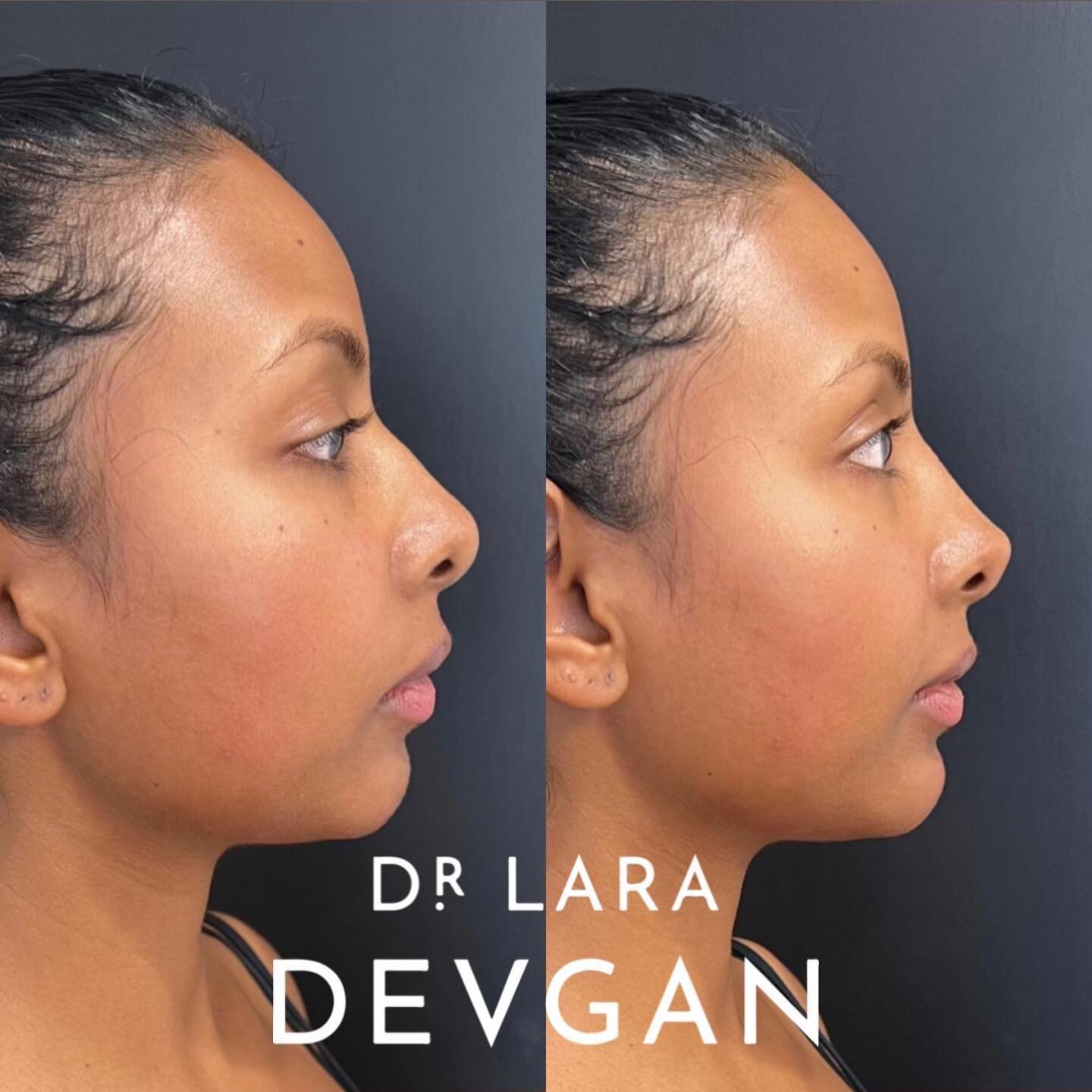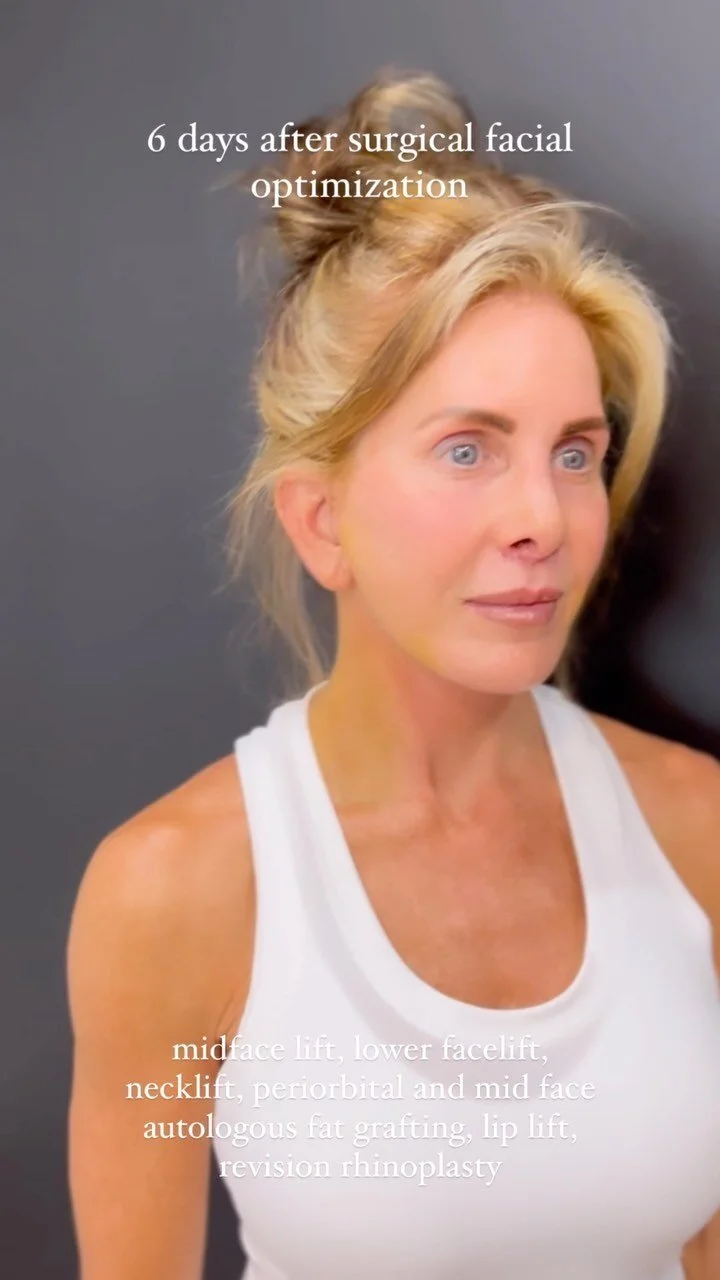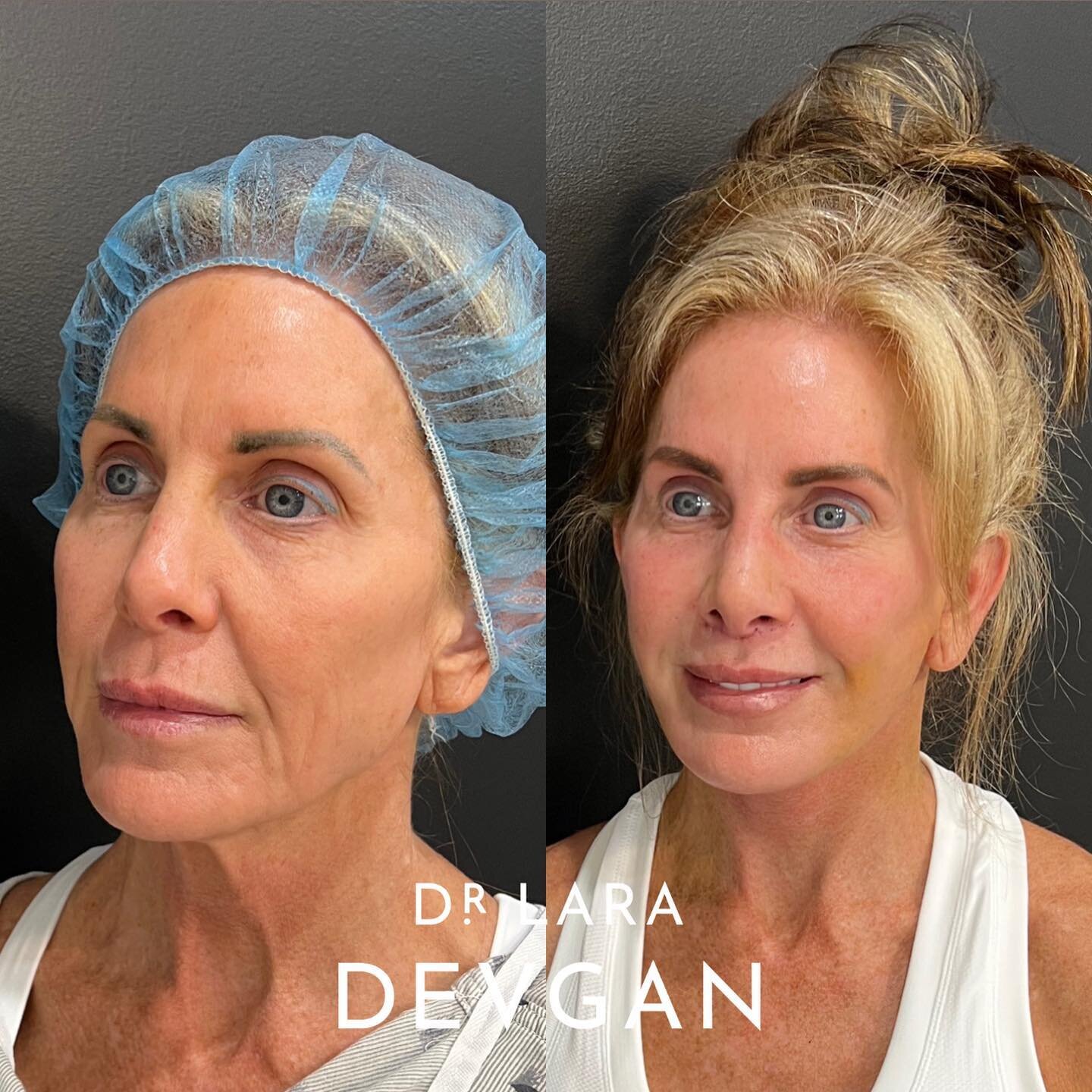
Facelift, New York City
Dr. Lara Devgan’s Signature Approach to Surgical Facial Optimization/ Facelift Surgery
A facelift, medically known as a rhytidectomy, is an operation that repositions descended facial tissues and improves laxity involving the cheeks, jawline, jowls, and neck. Depending on the patient’s anatomy, a facelift may address the midface, lower face, neck, or a combination of these regions.
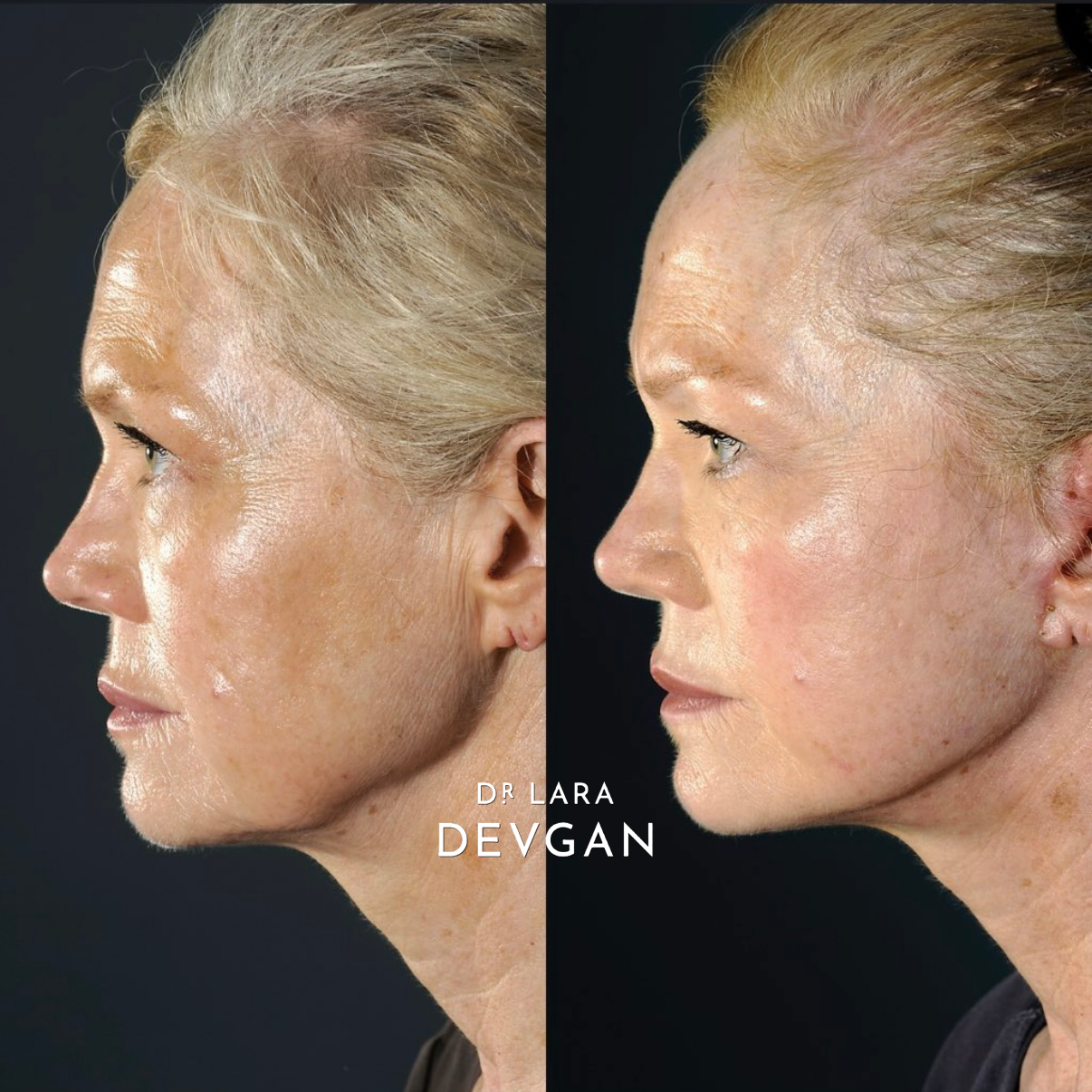
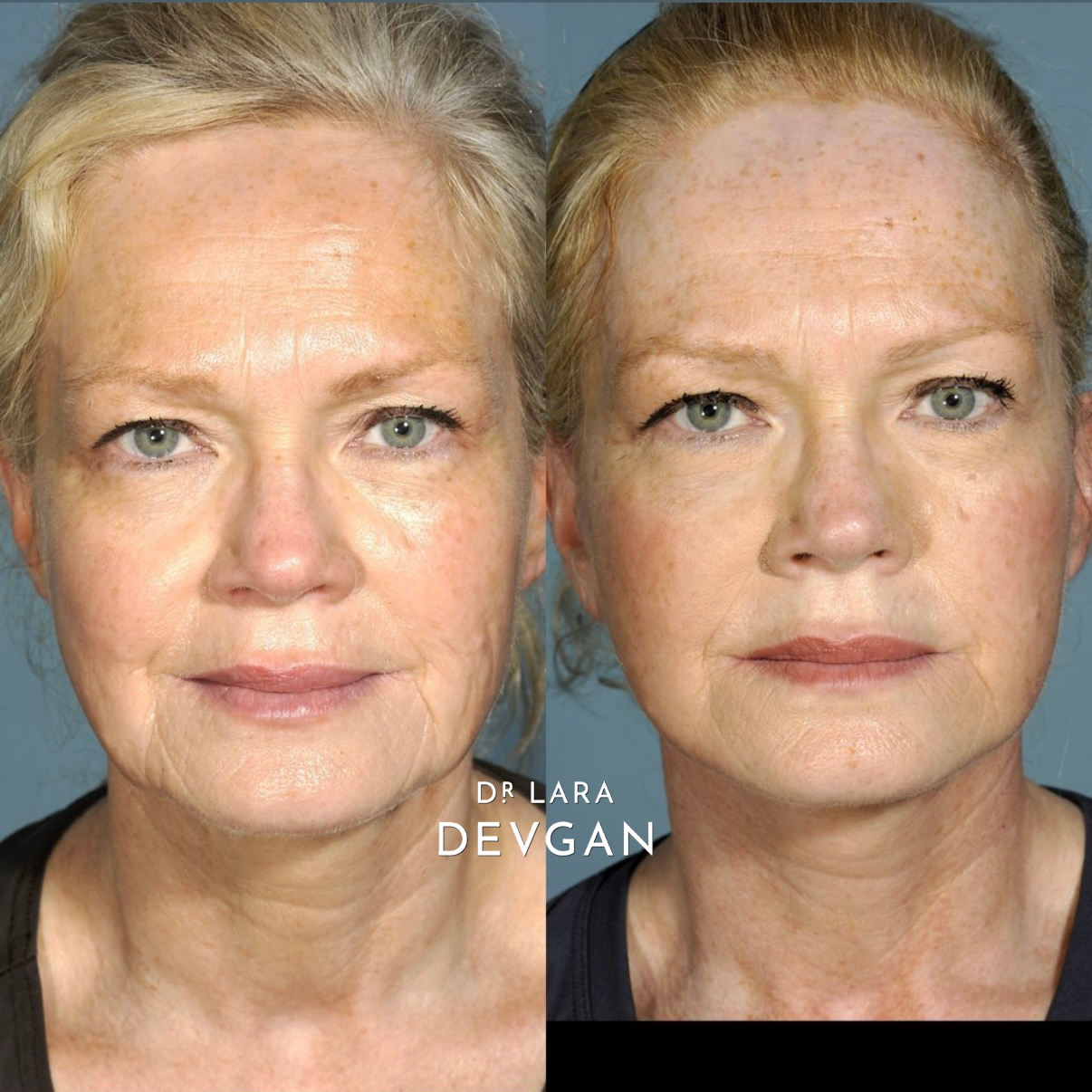
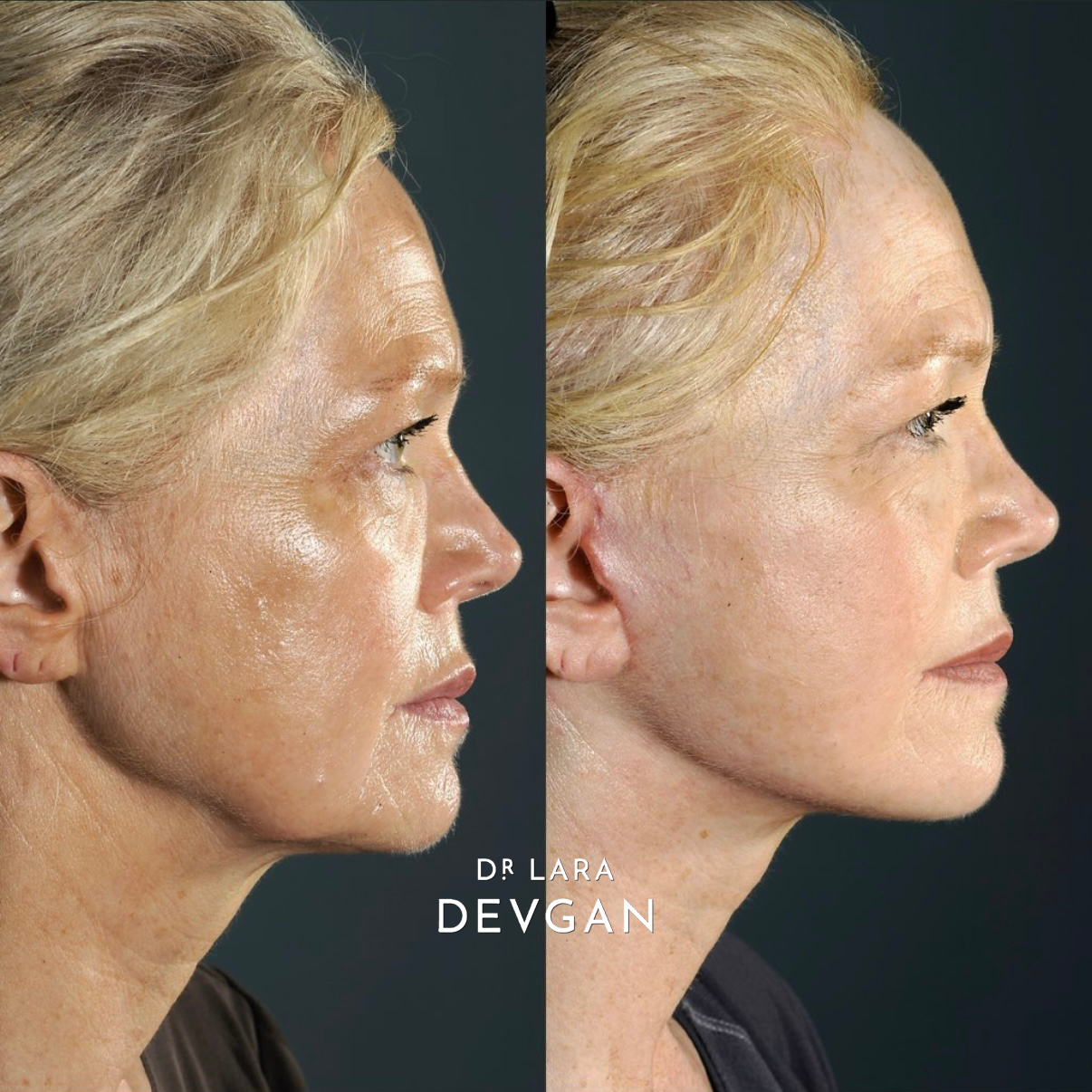
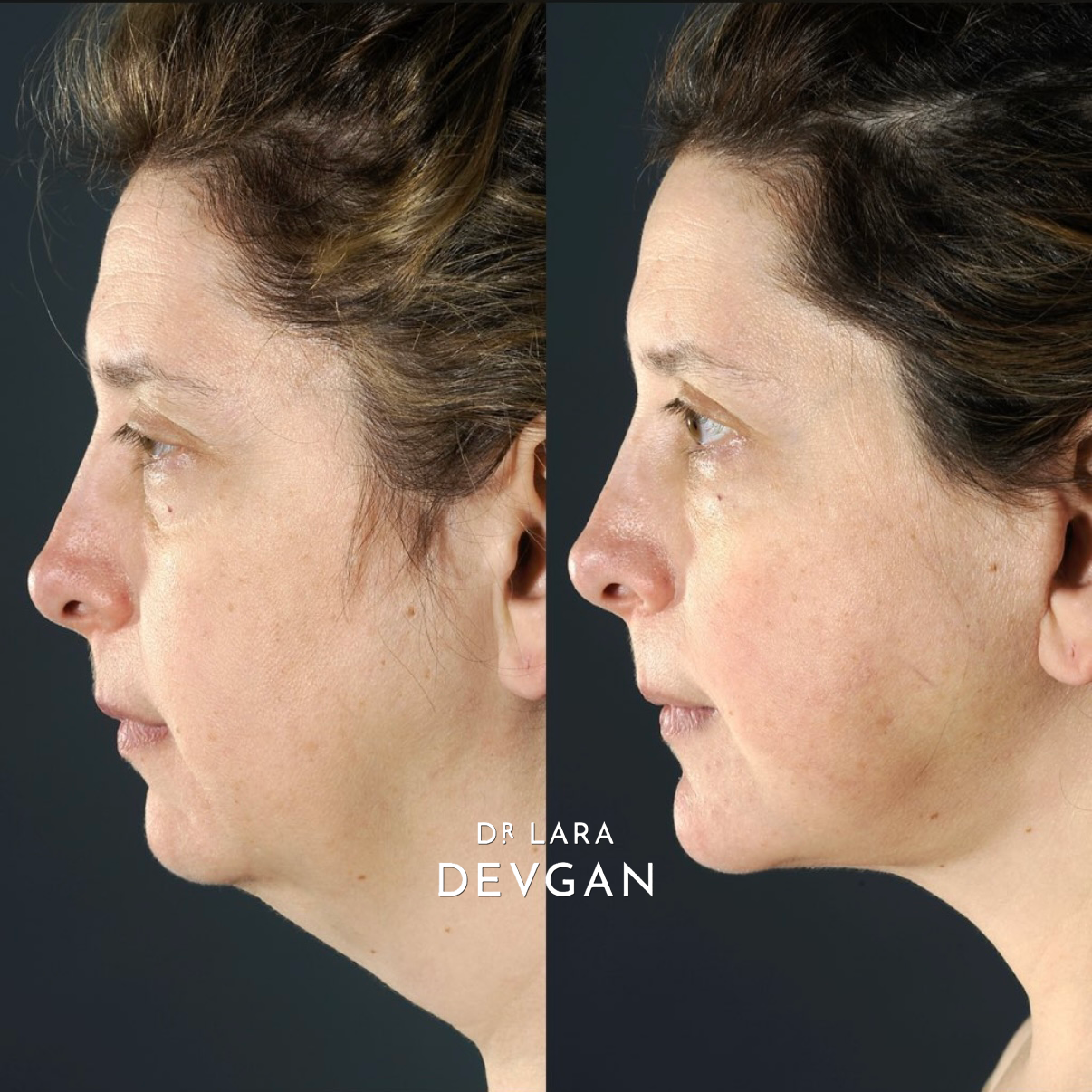
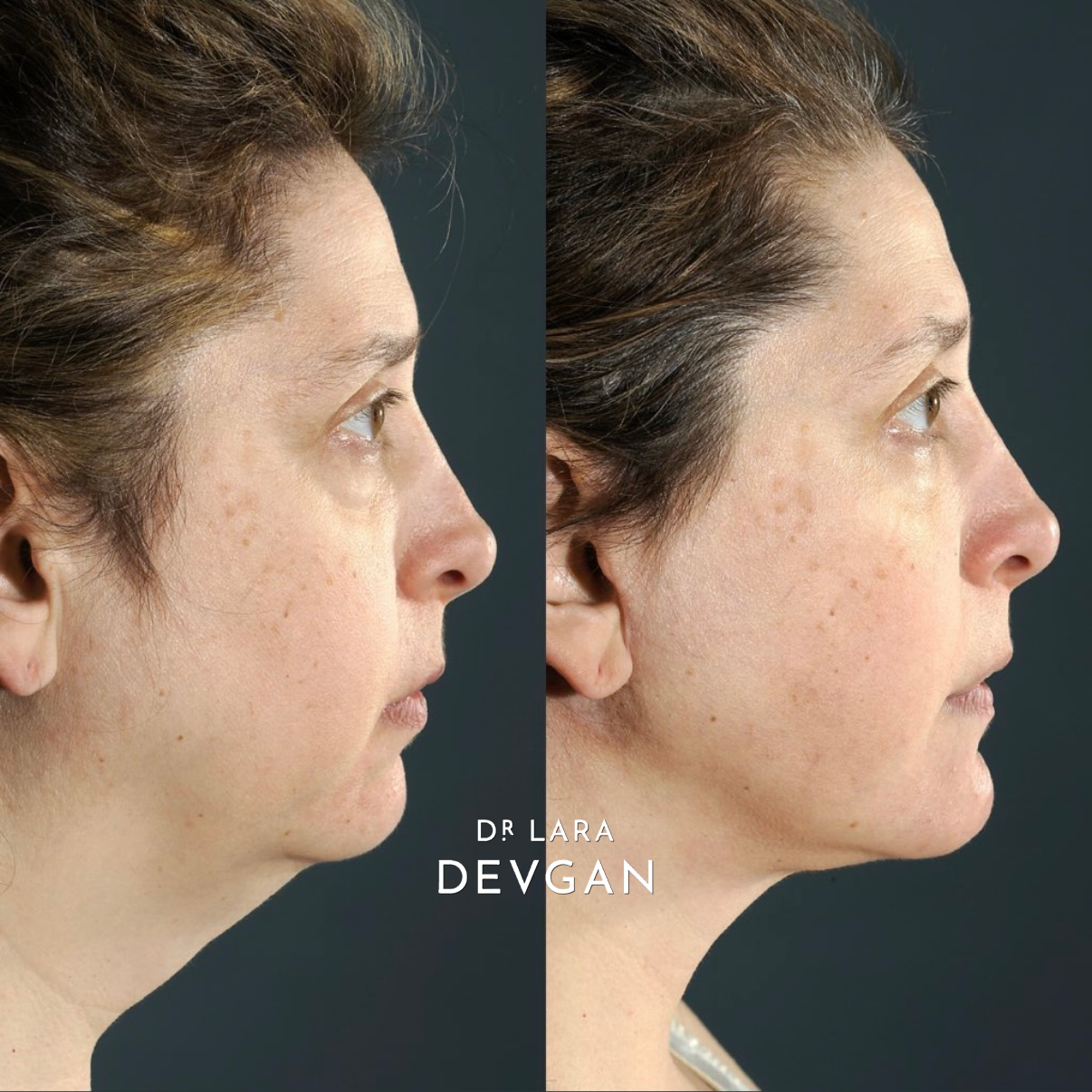
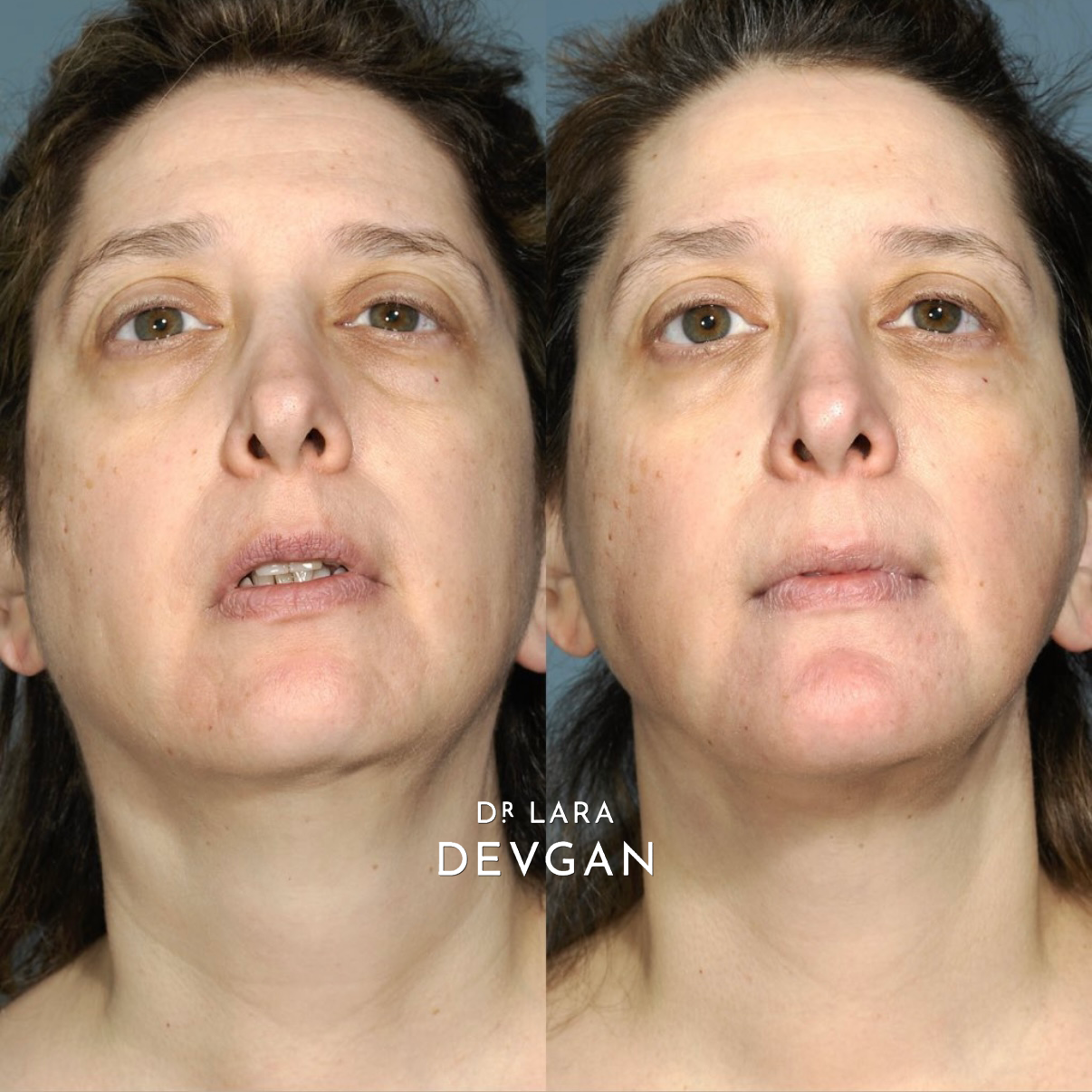
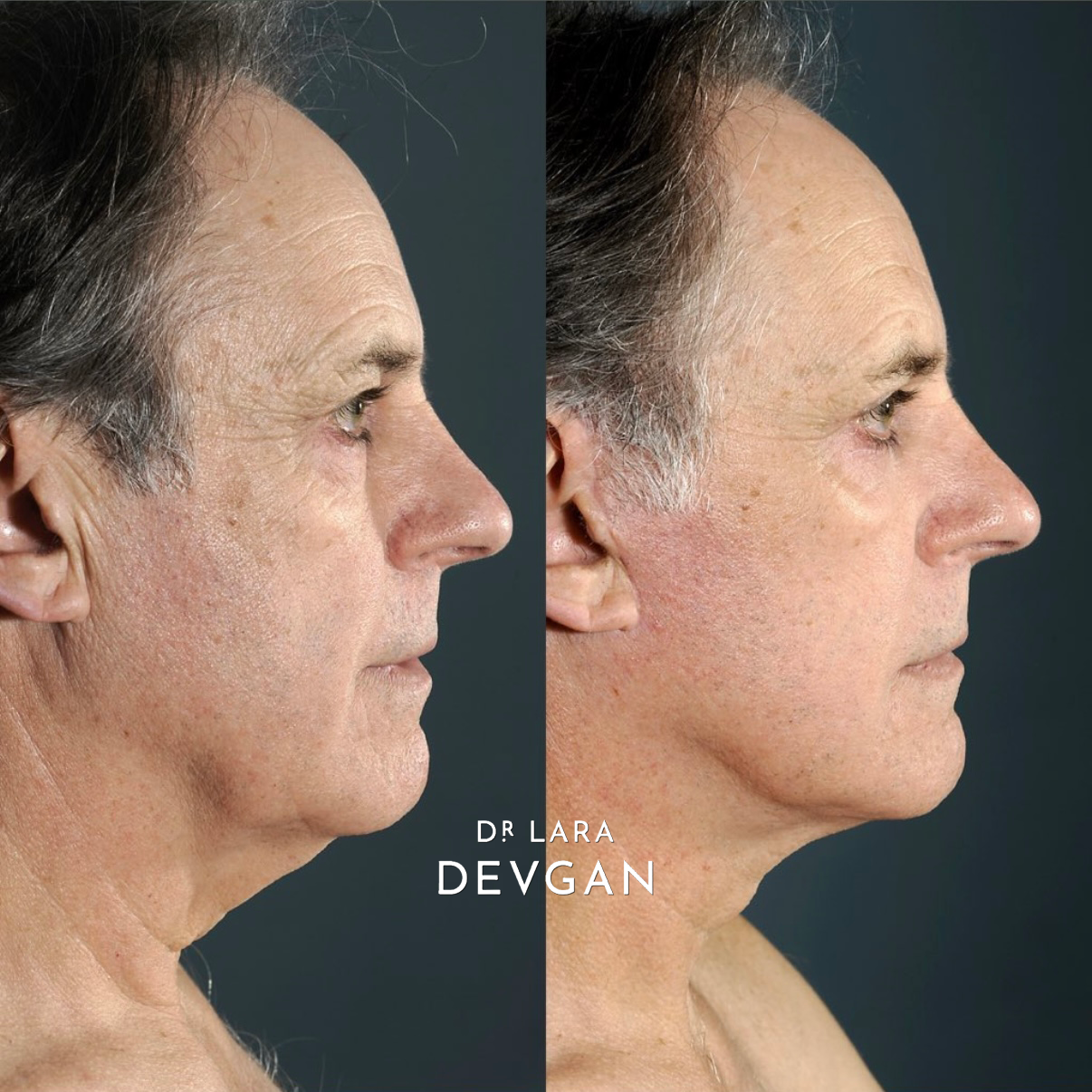
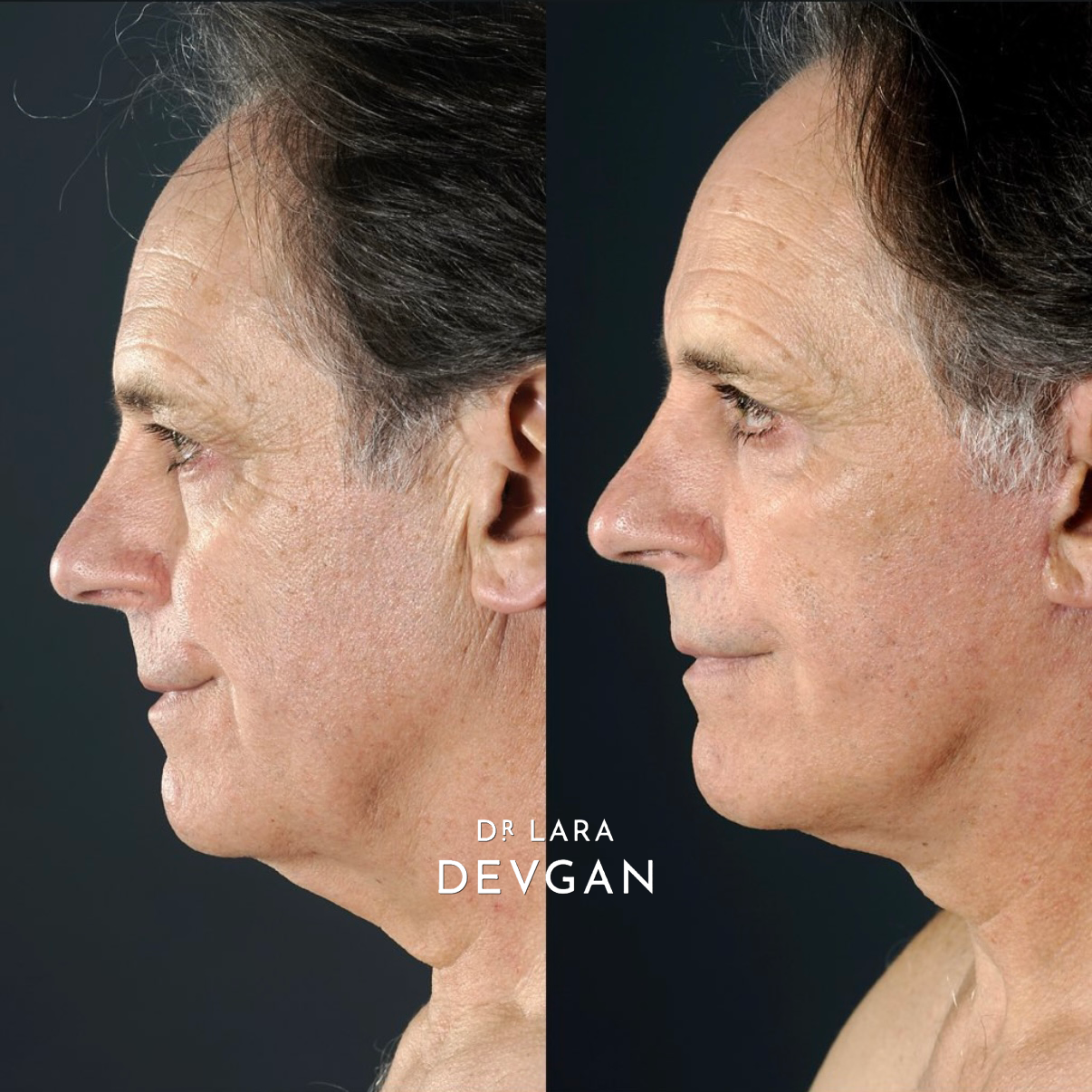
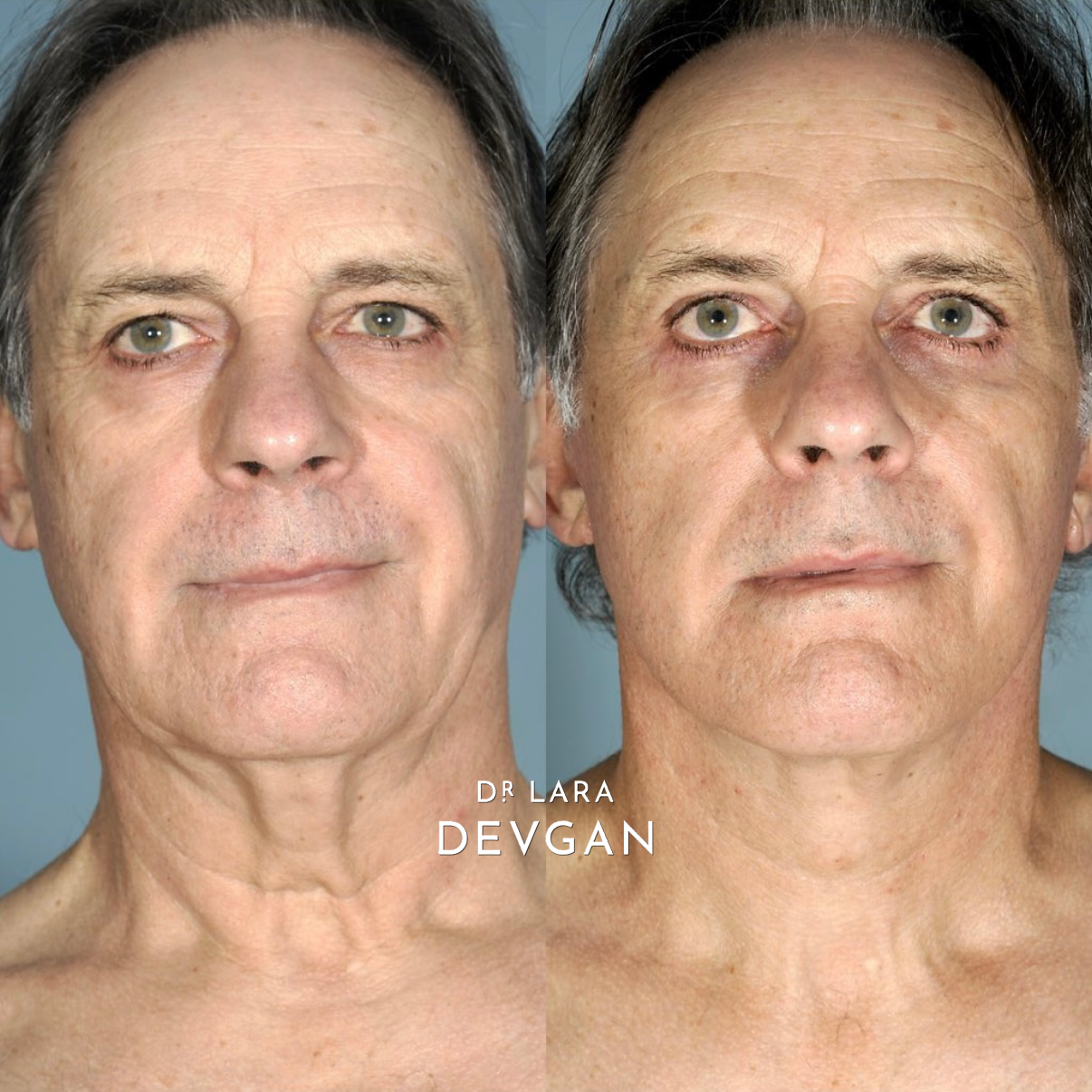
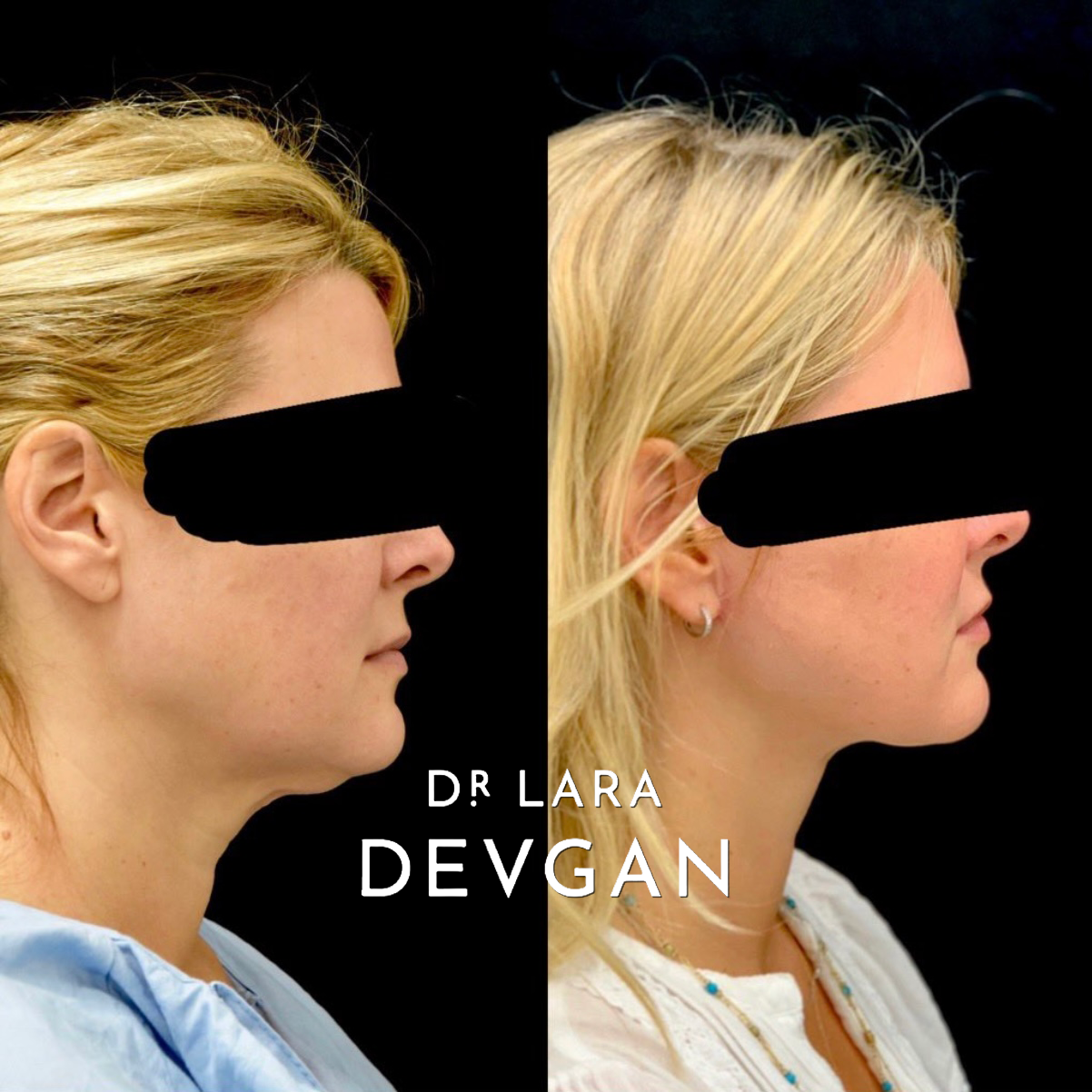
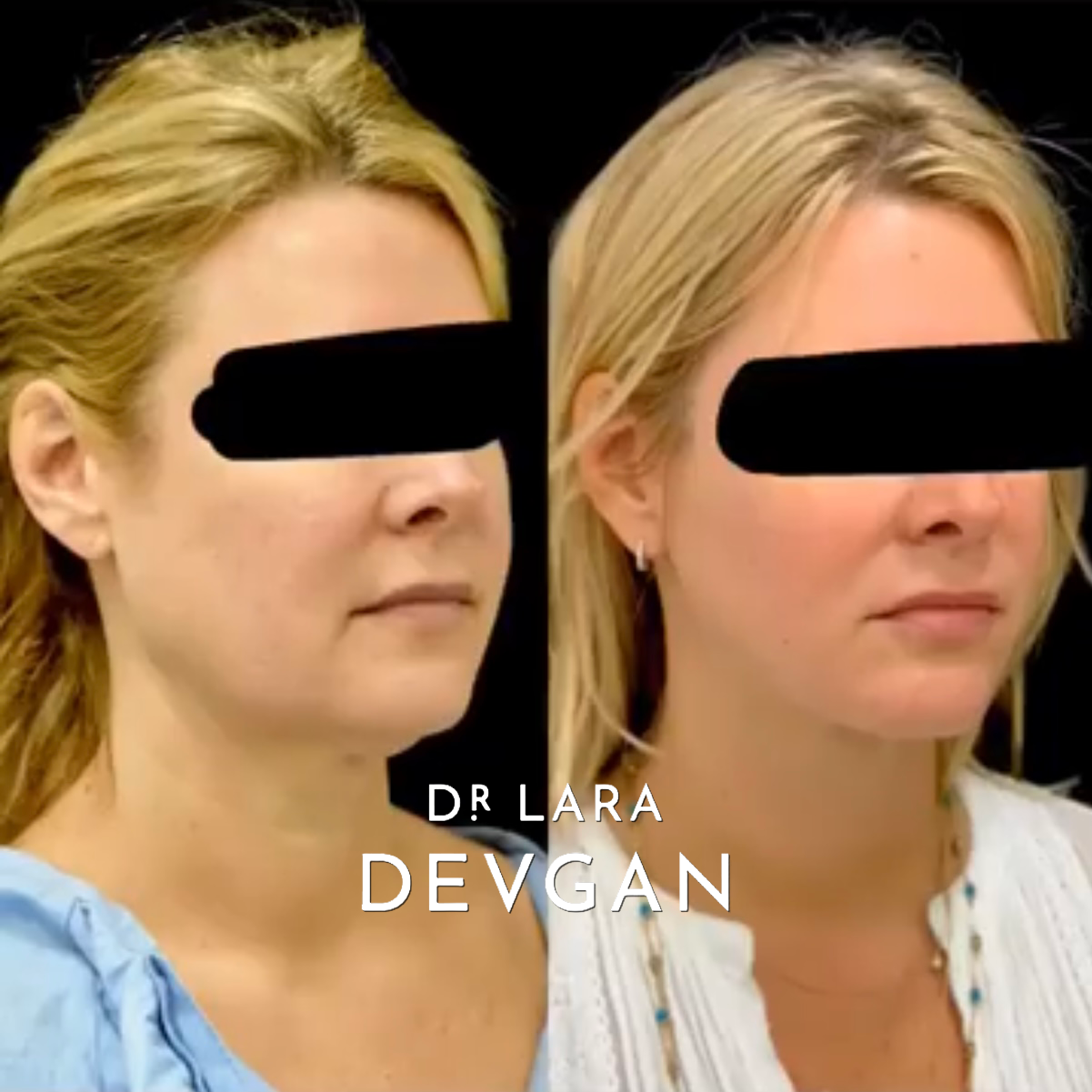
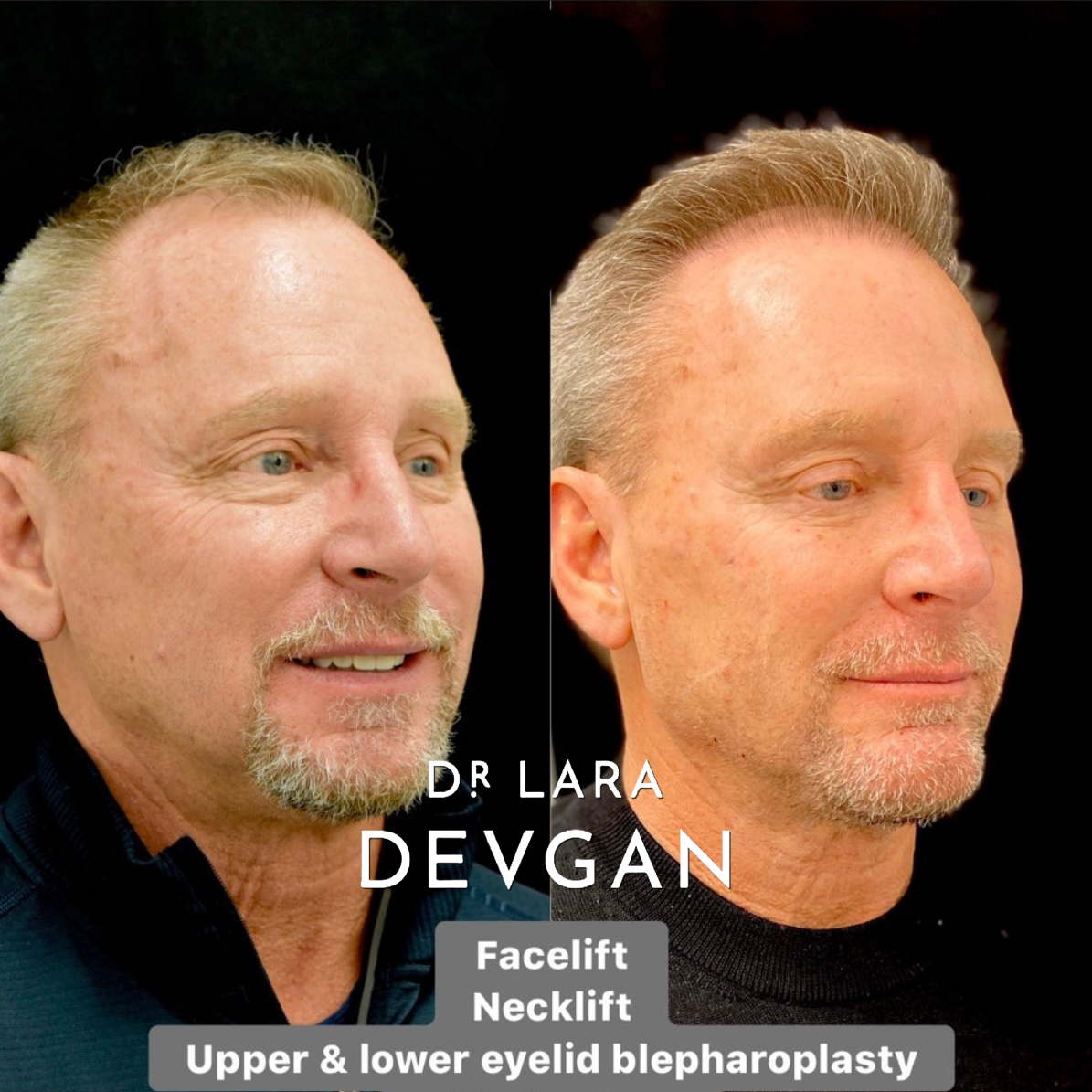
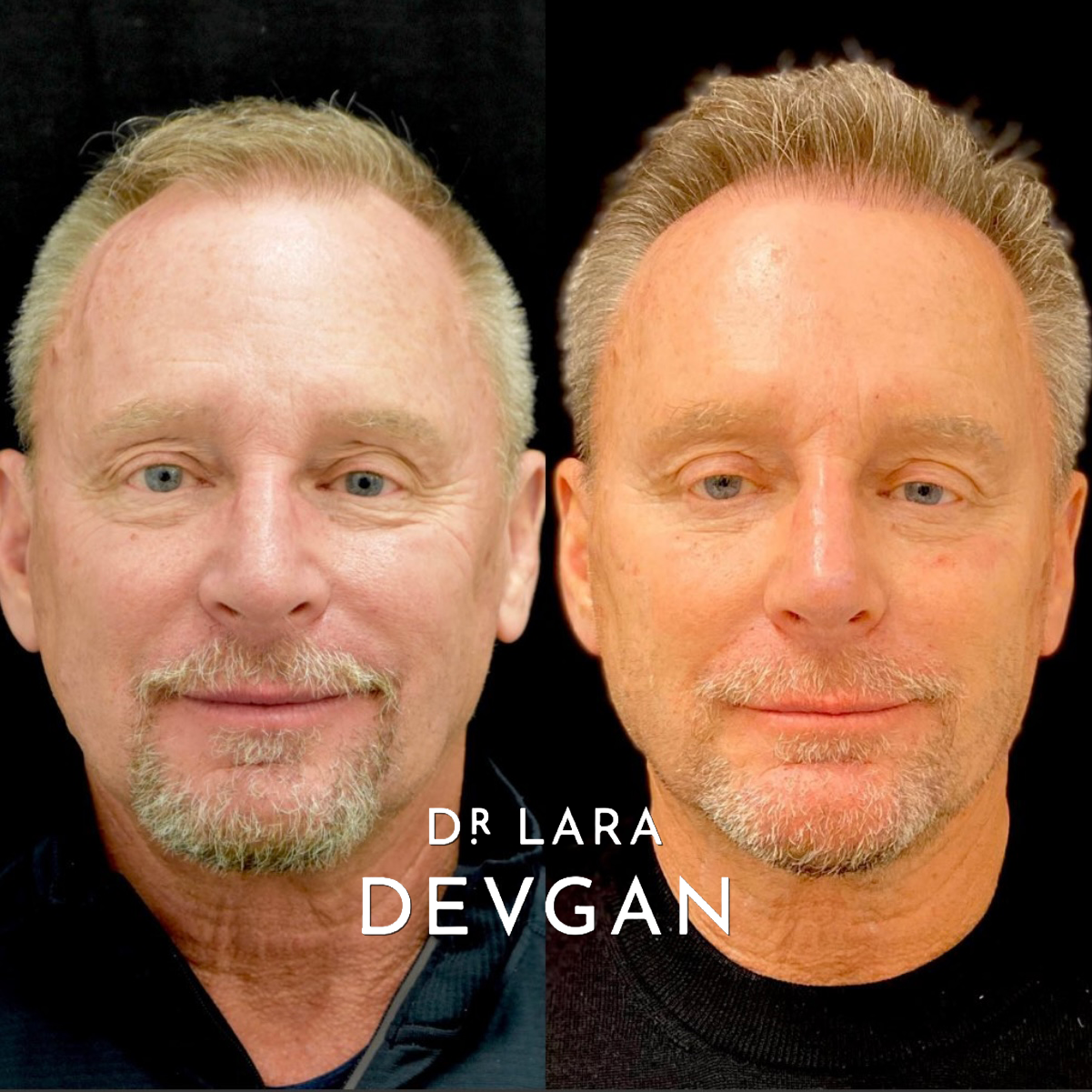
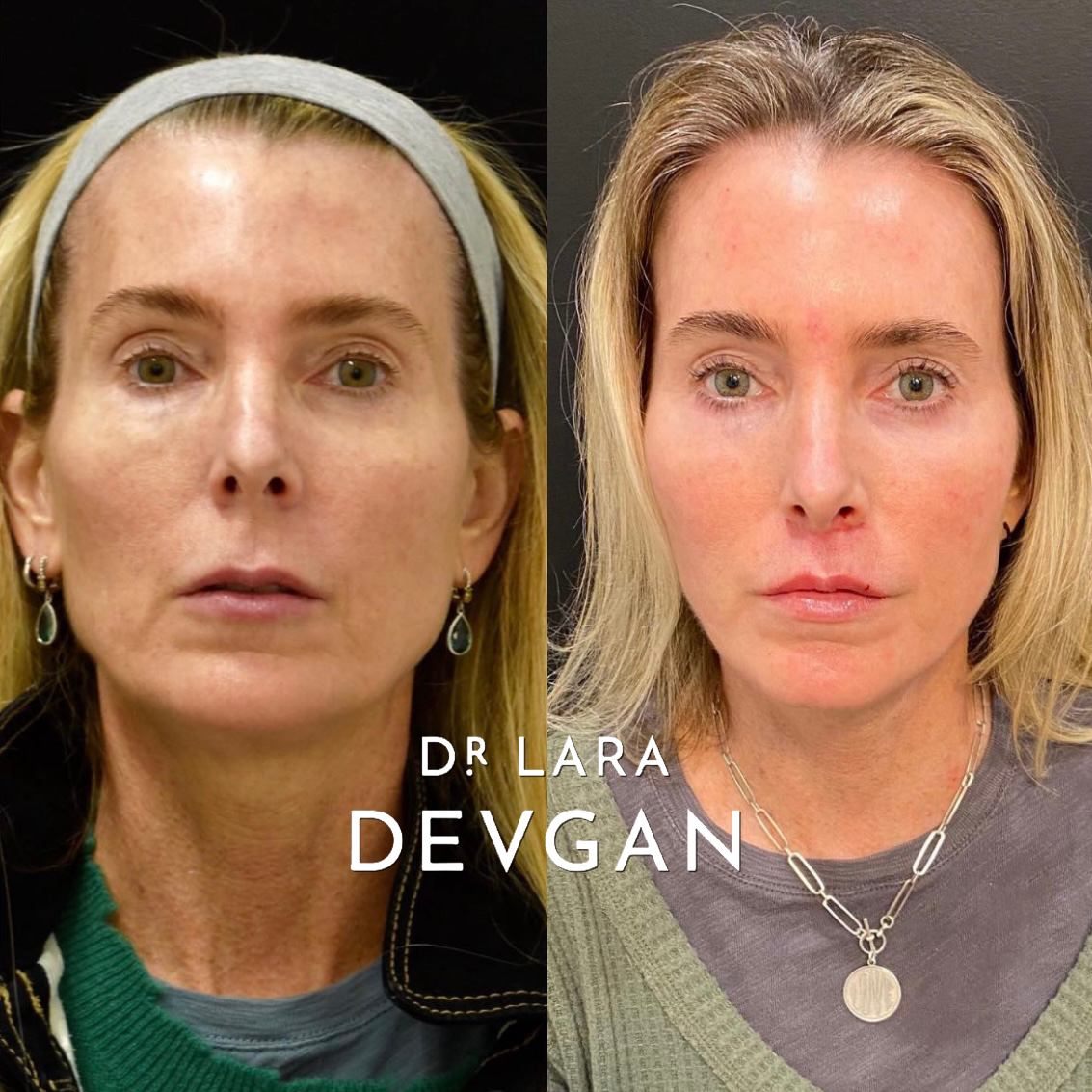
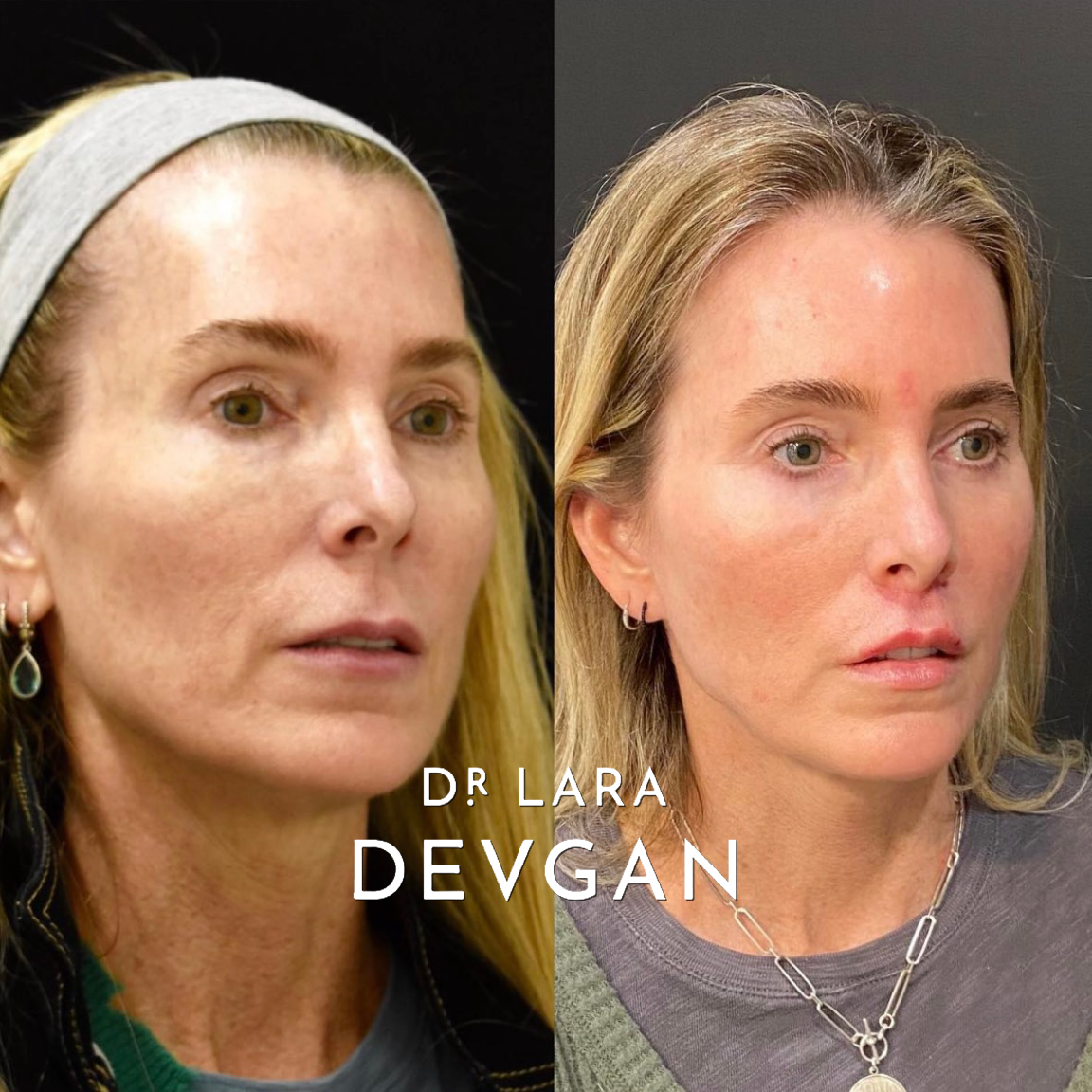
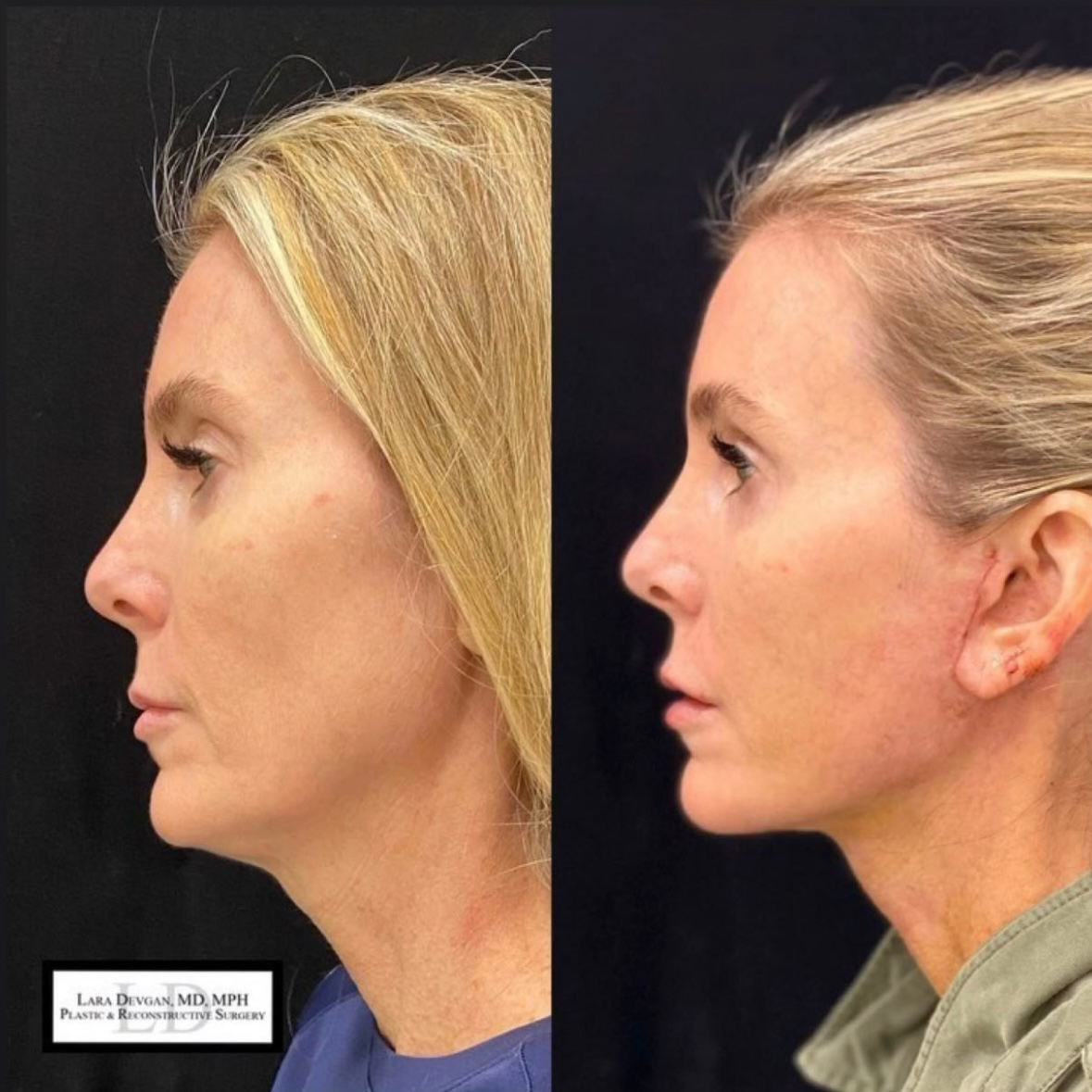
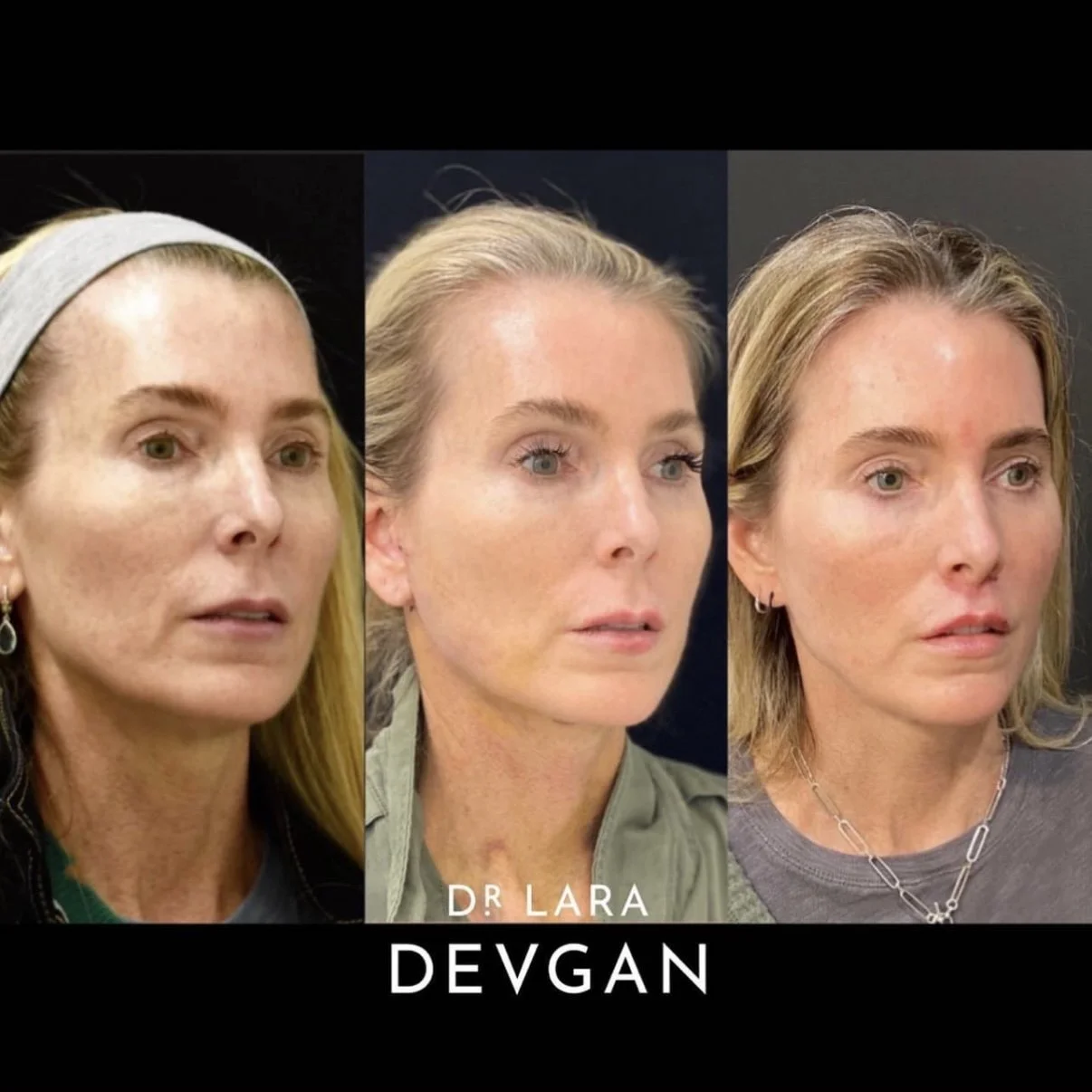
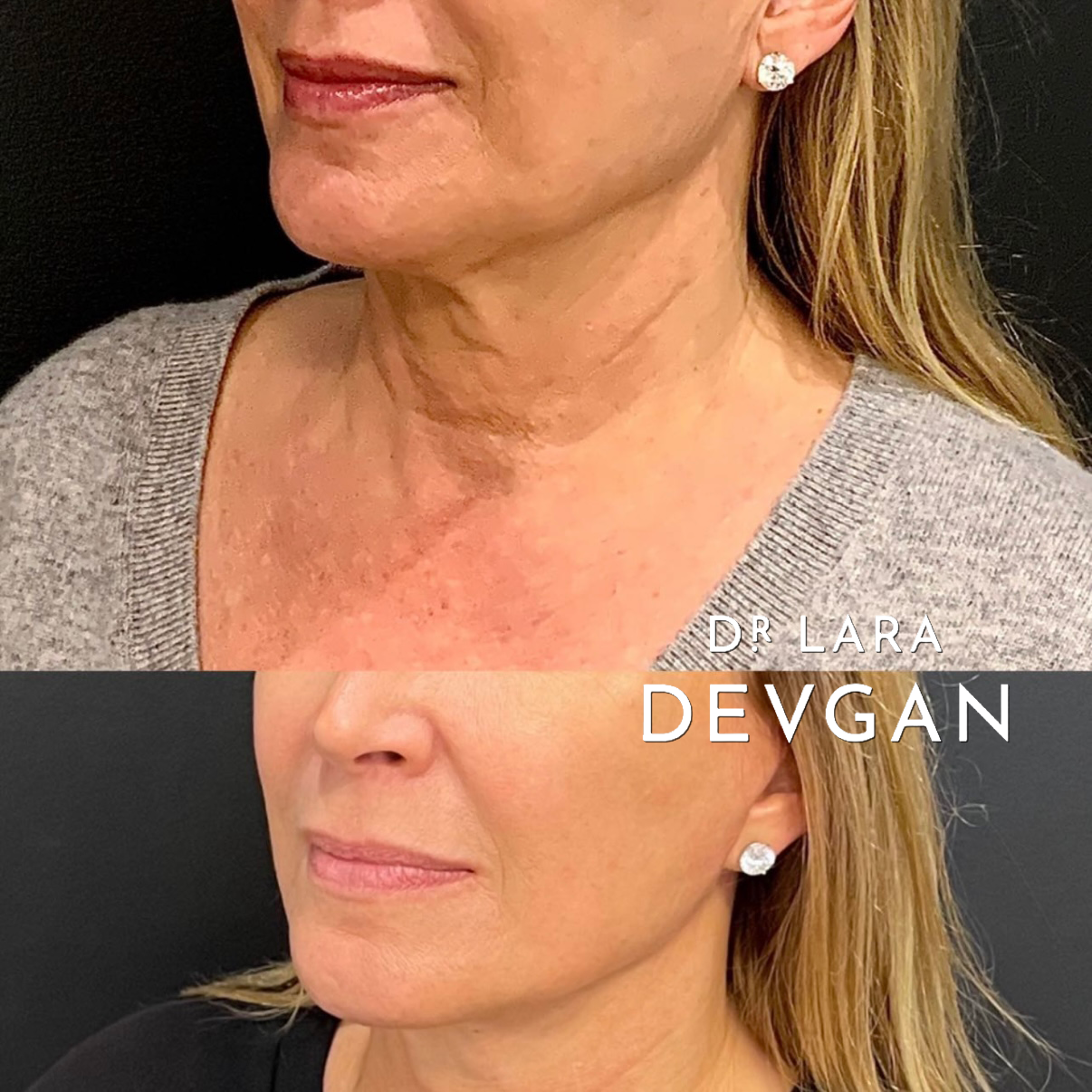
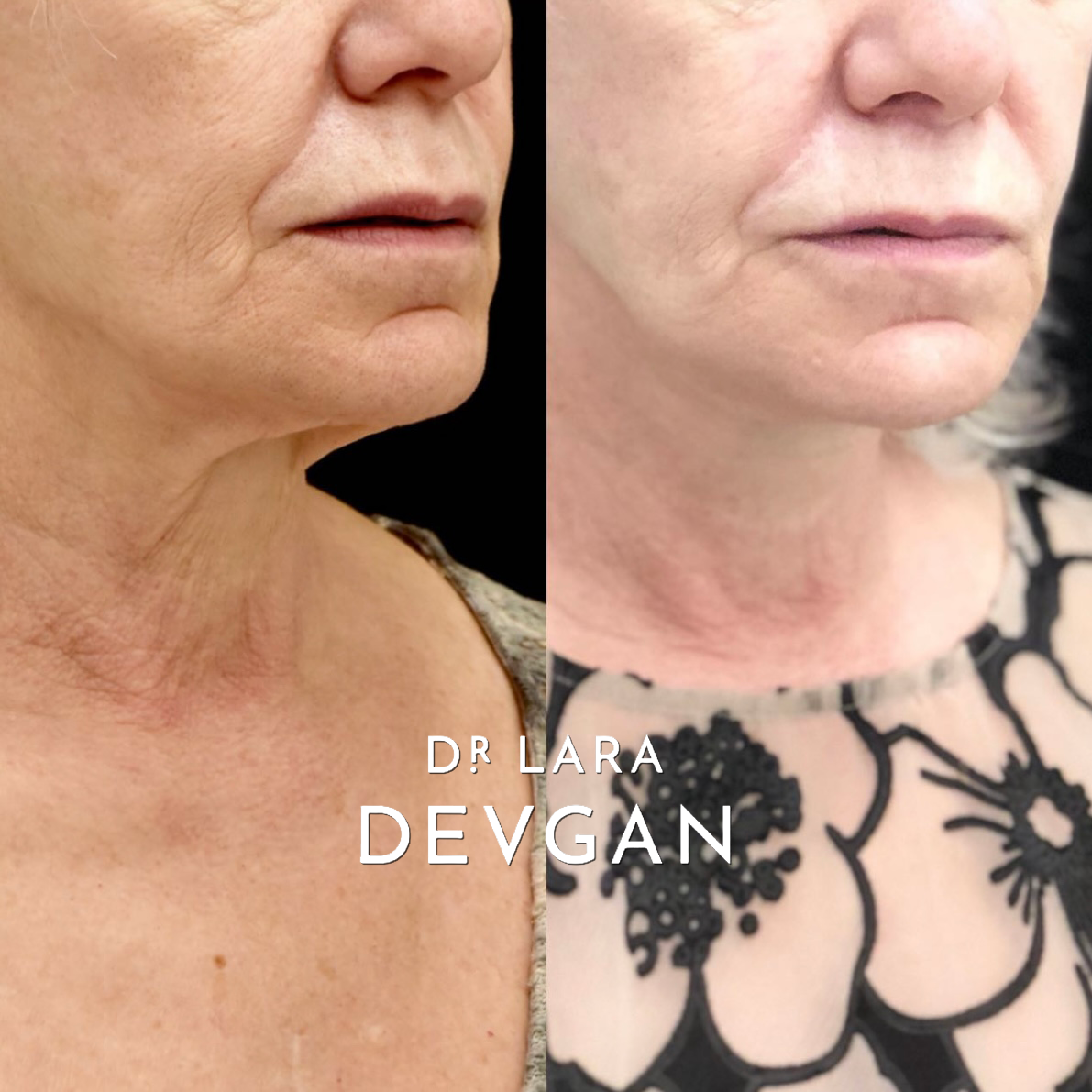
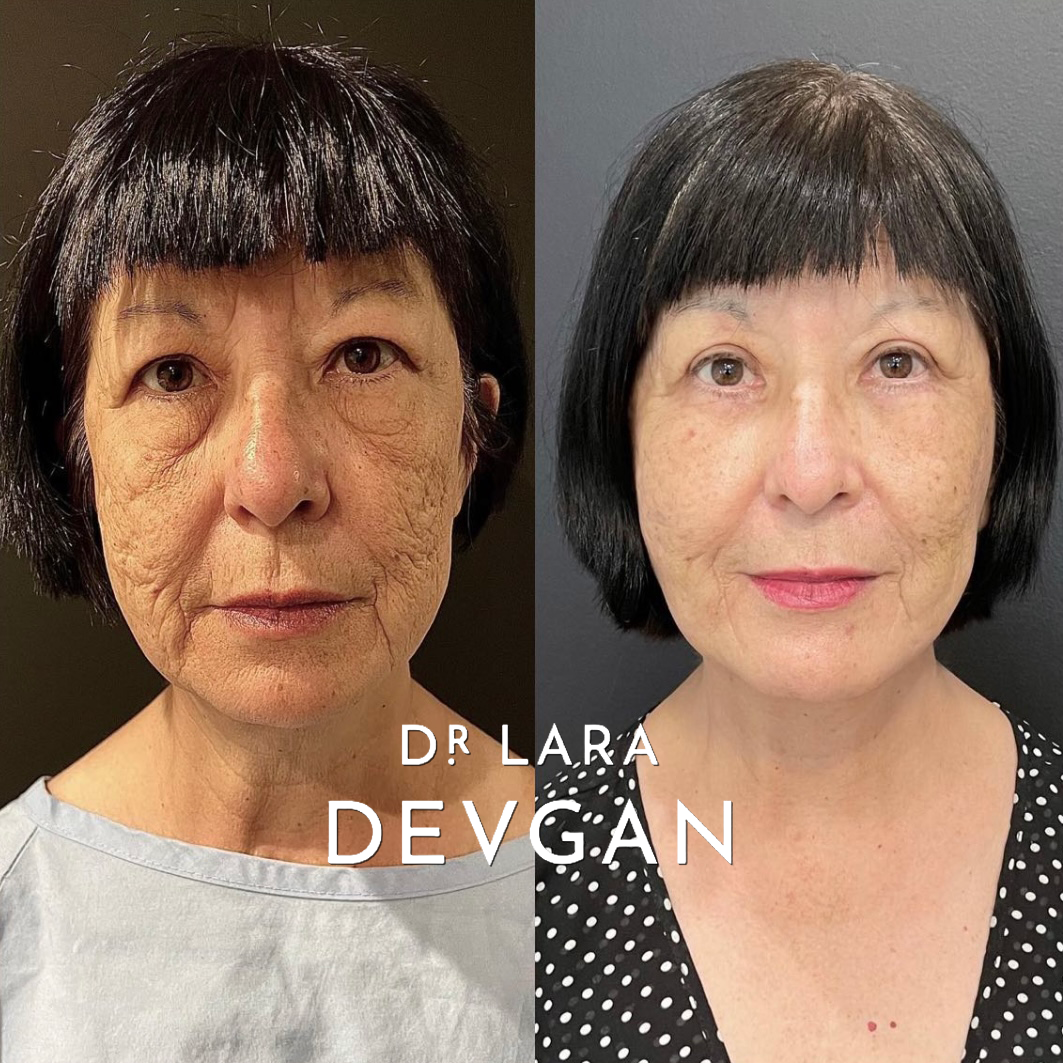
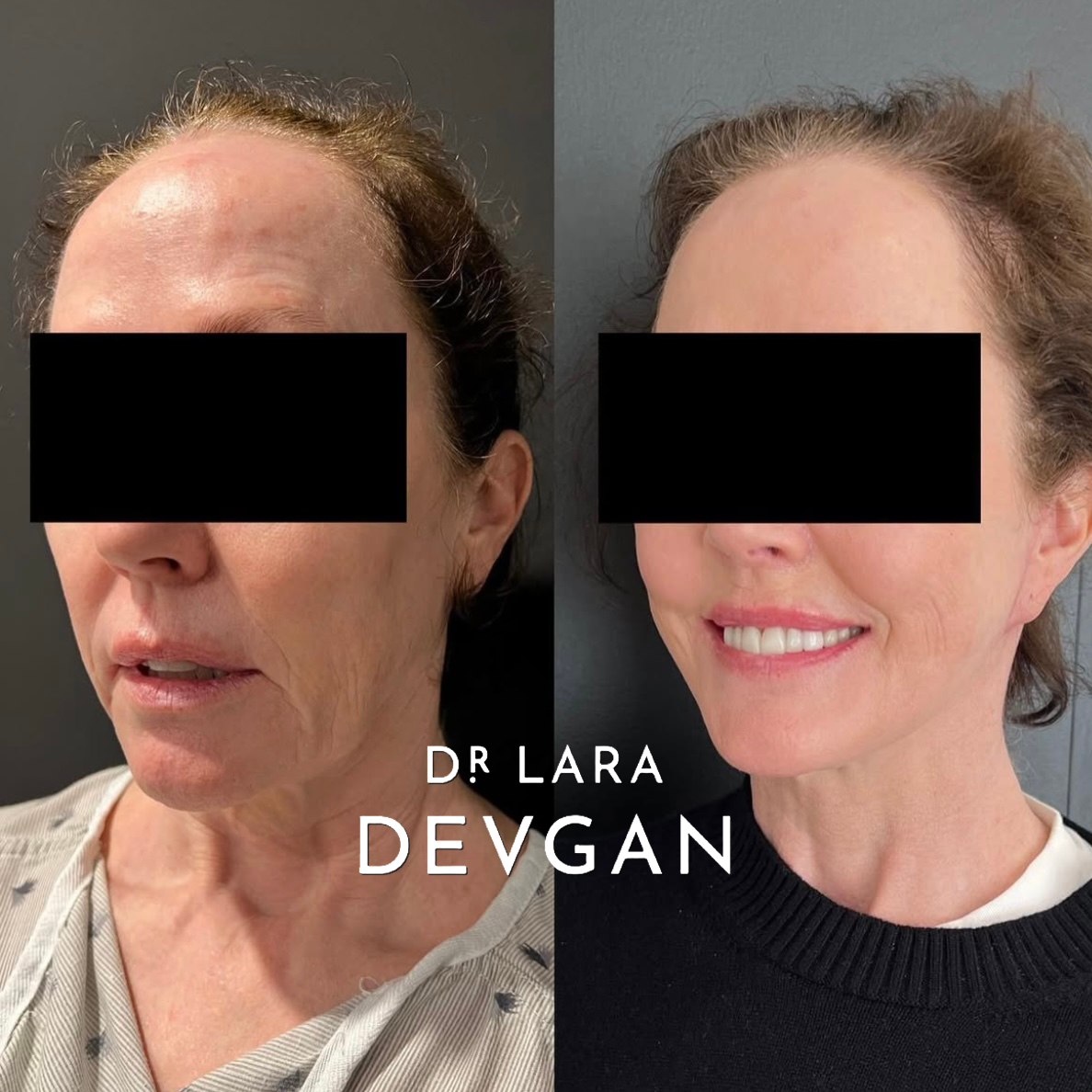
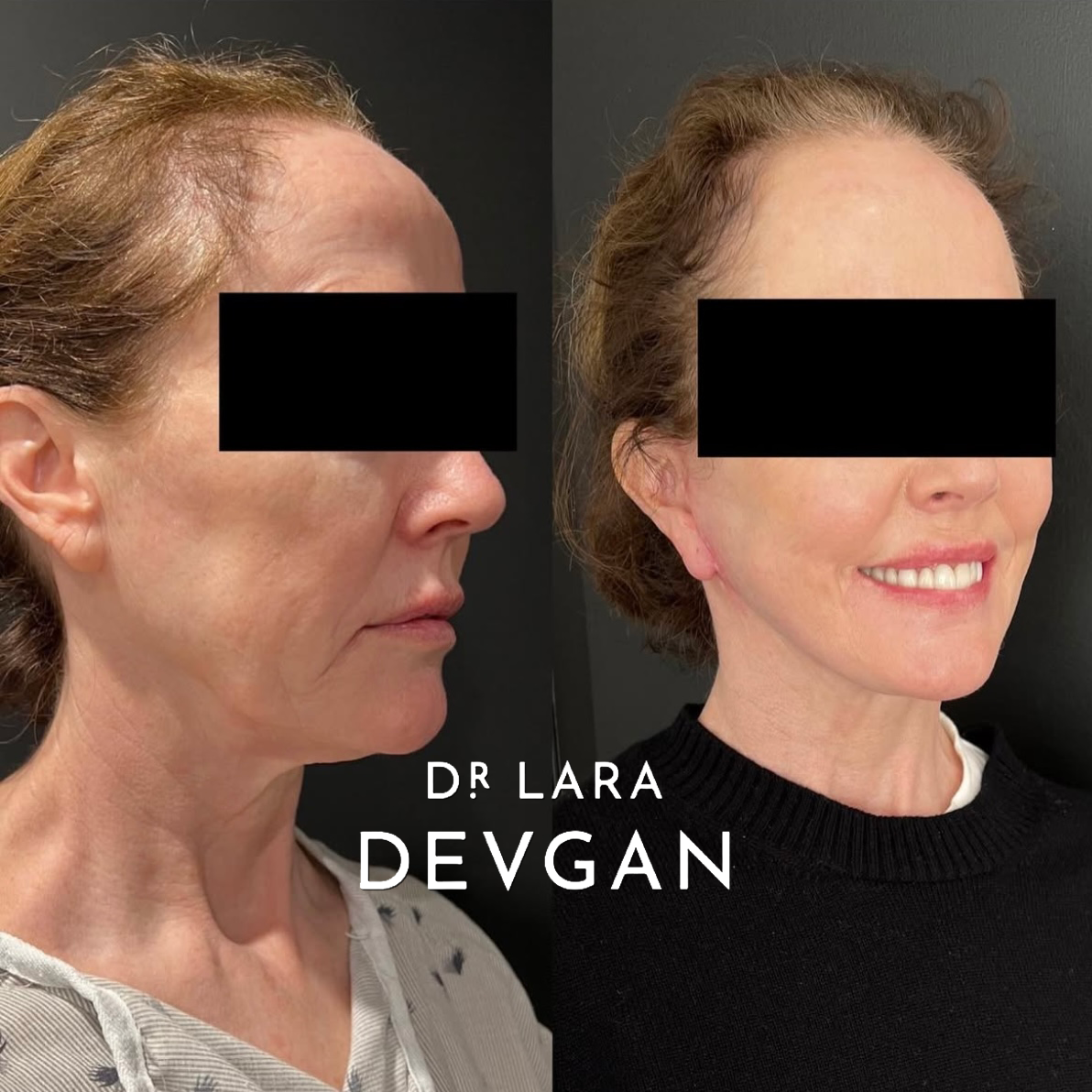
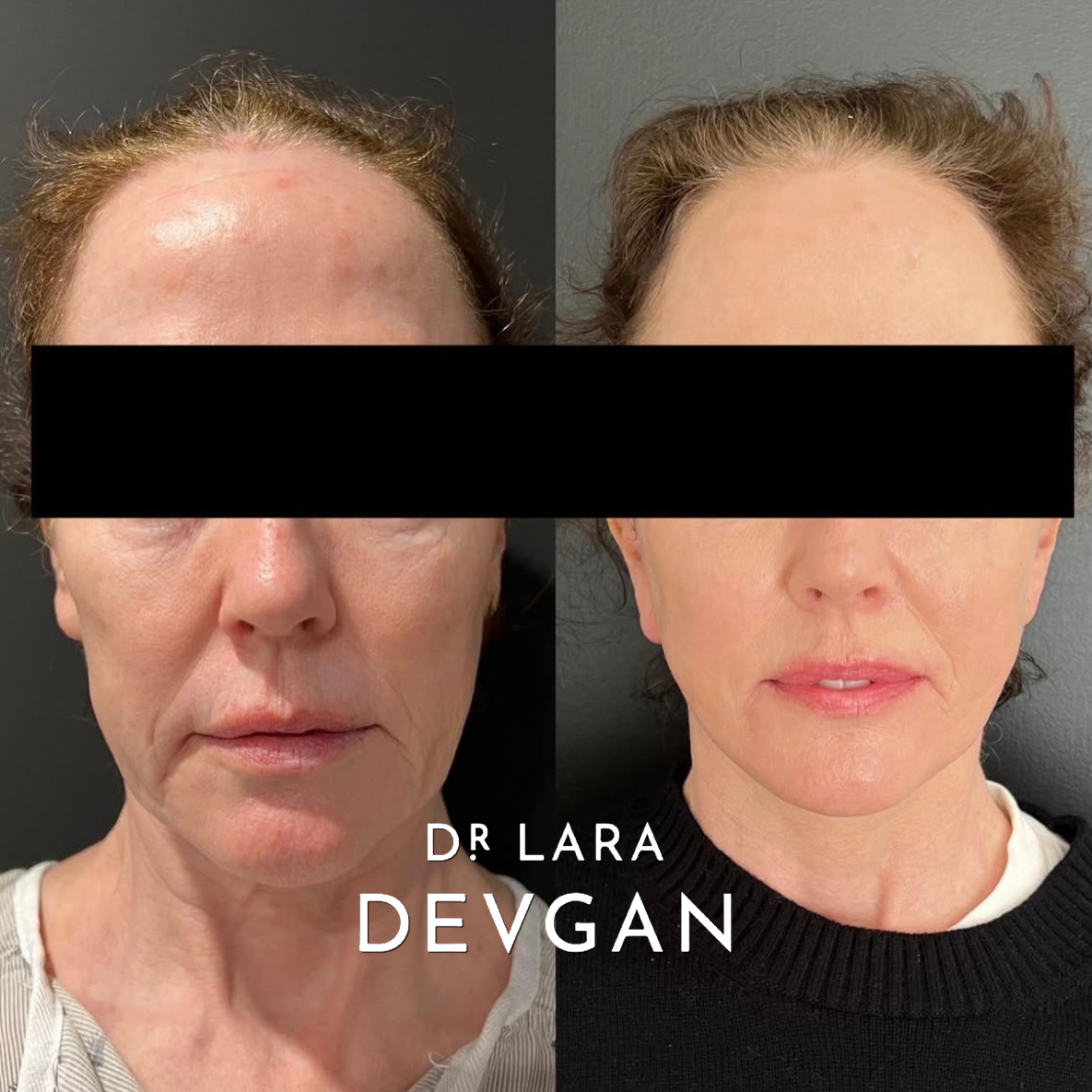
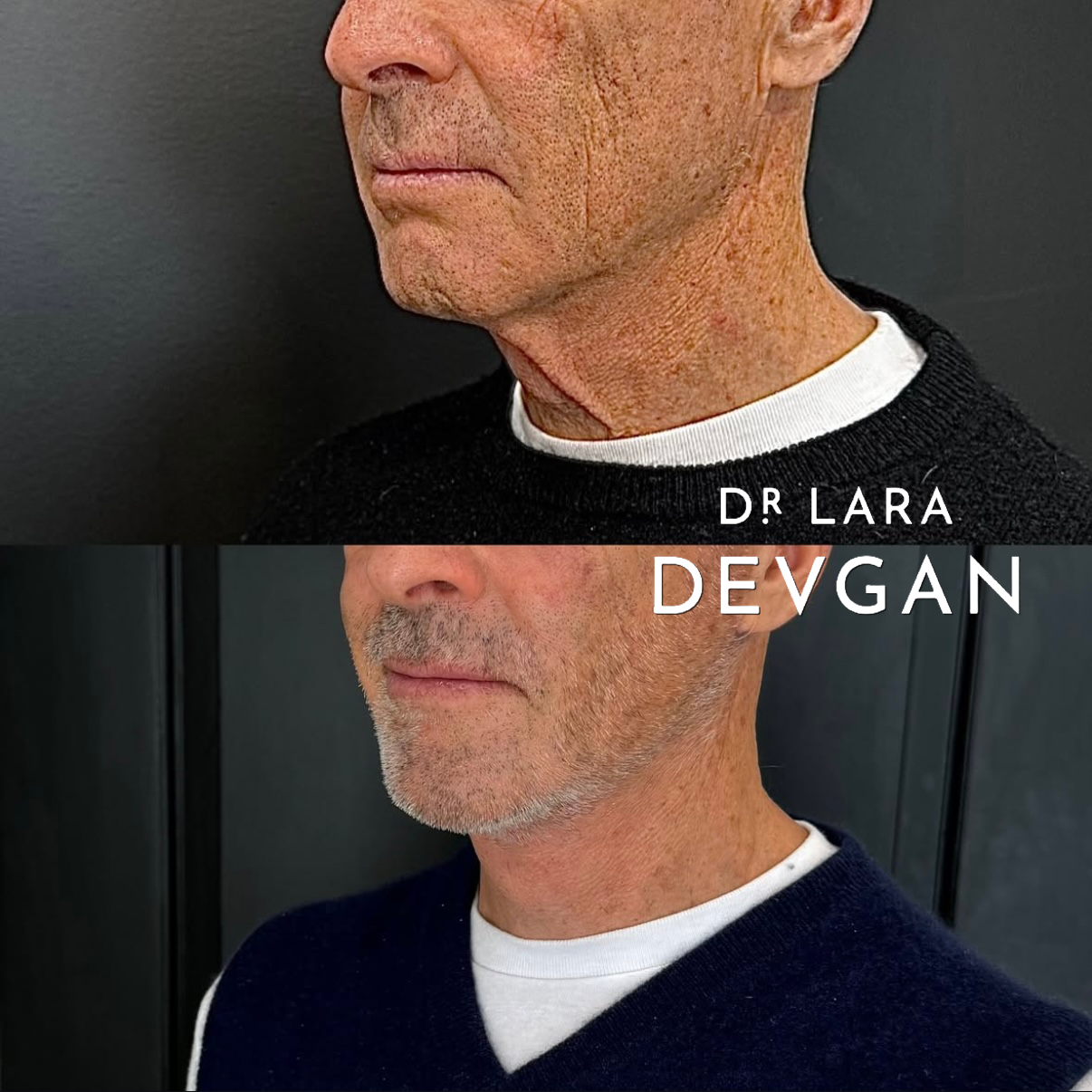
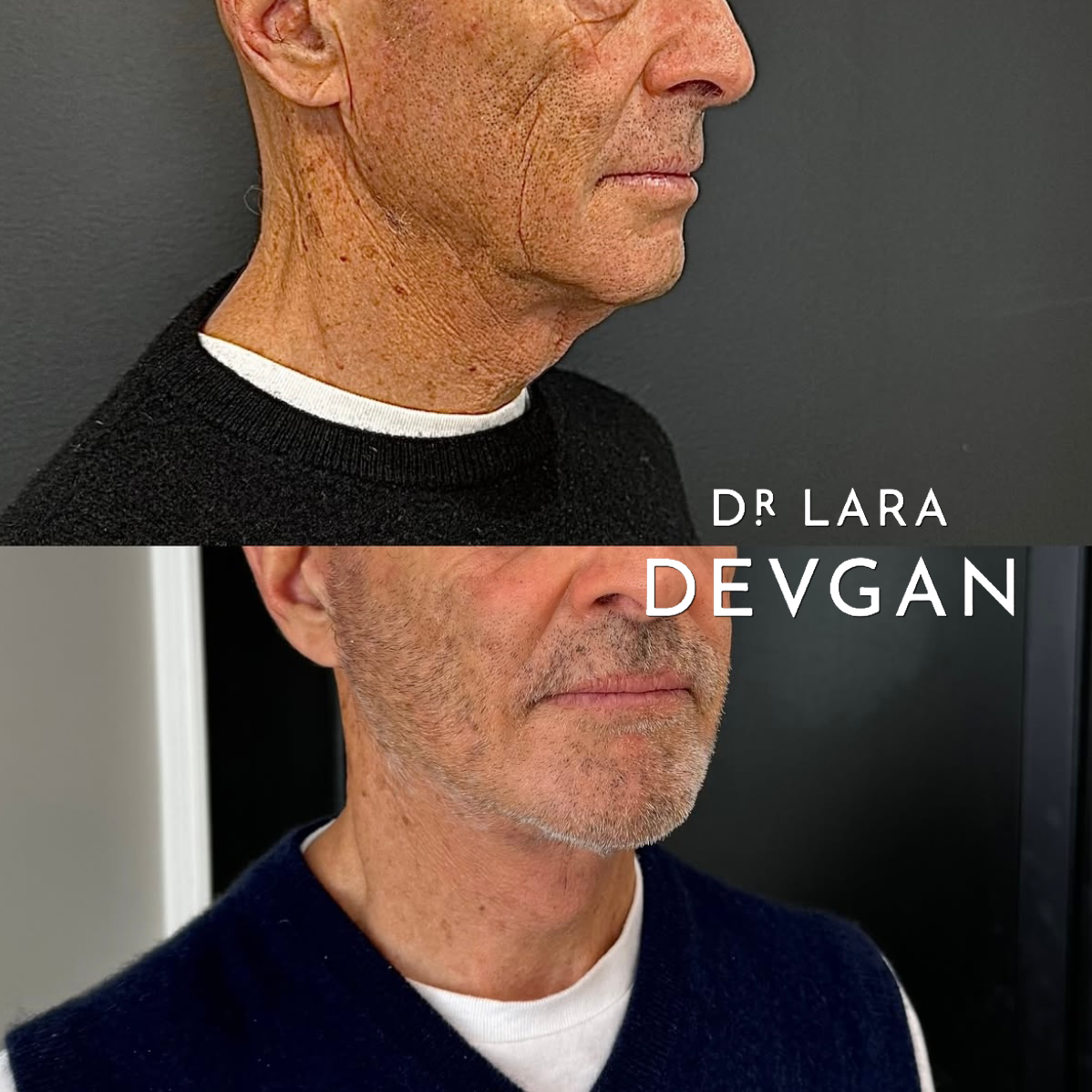
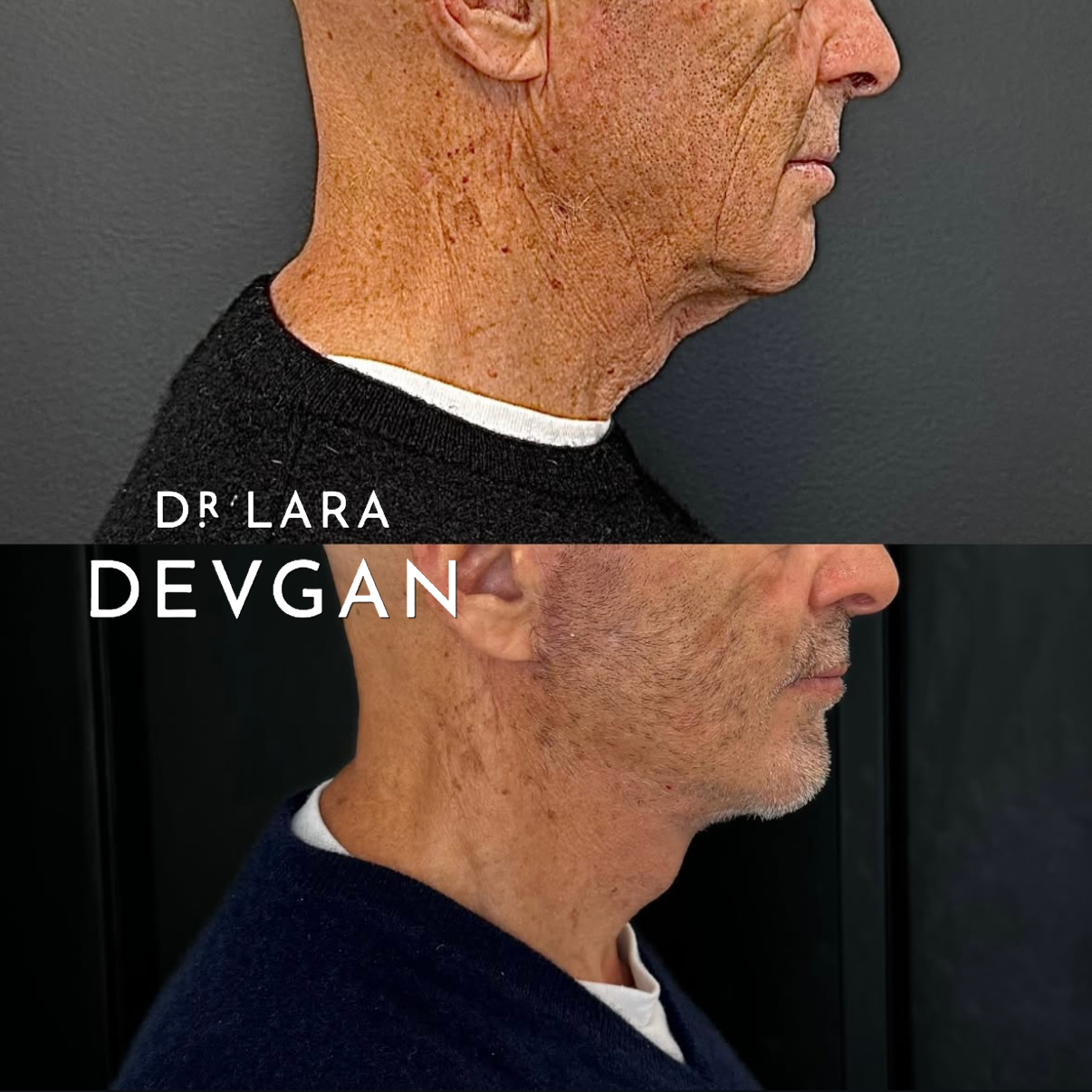
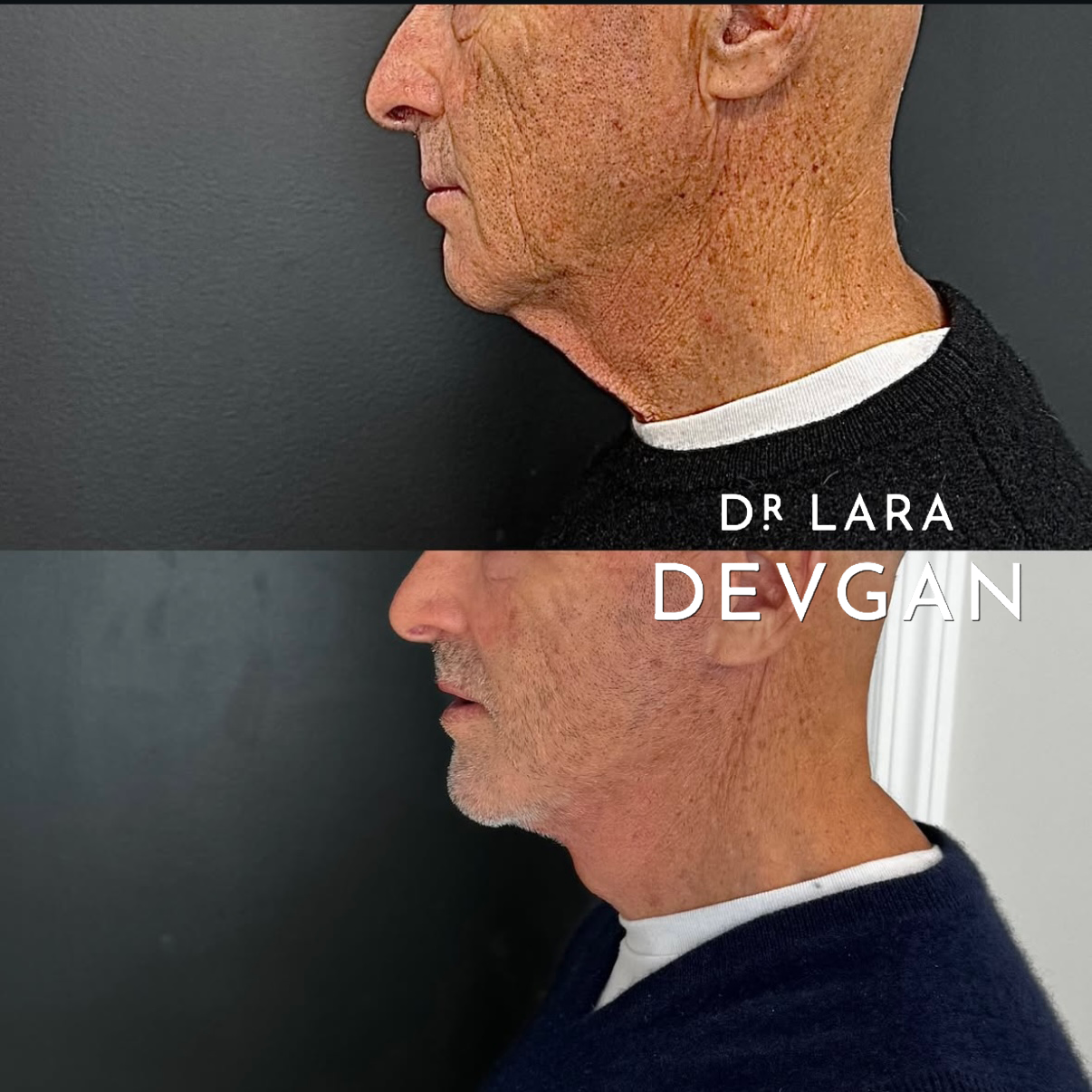
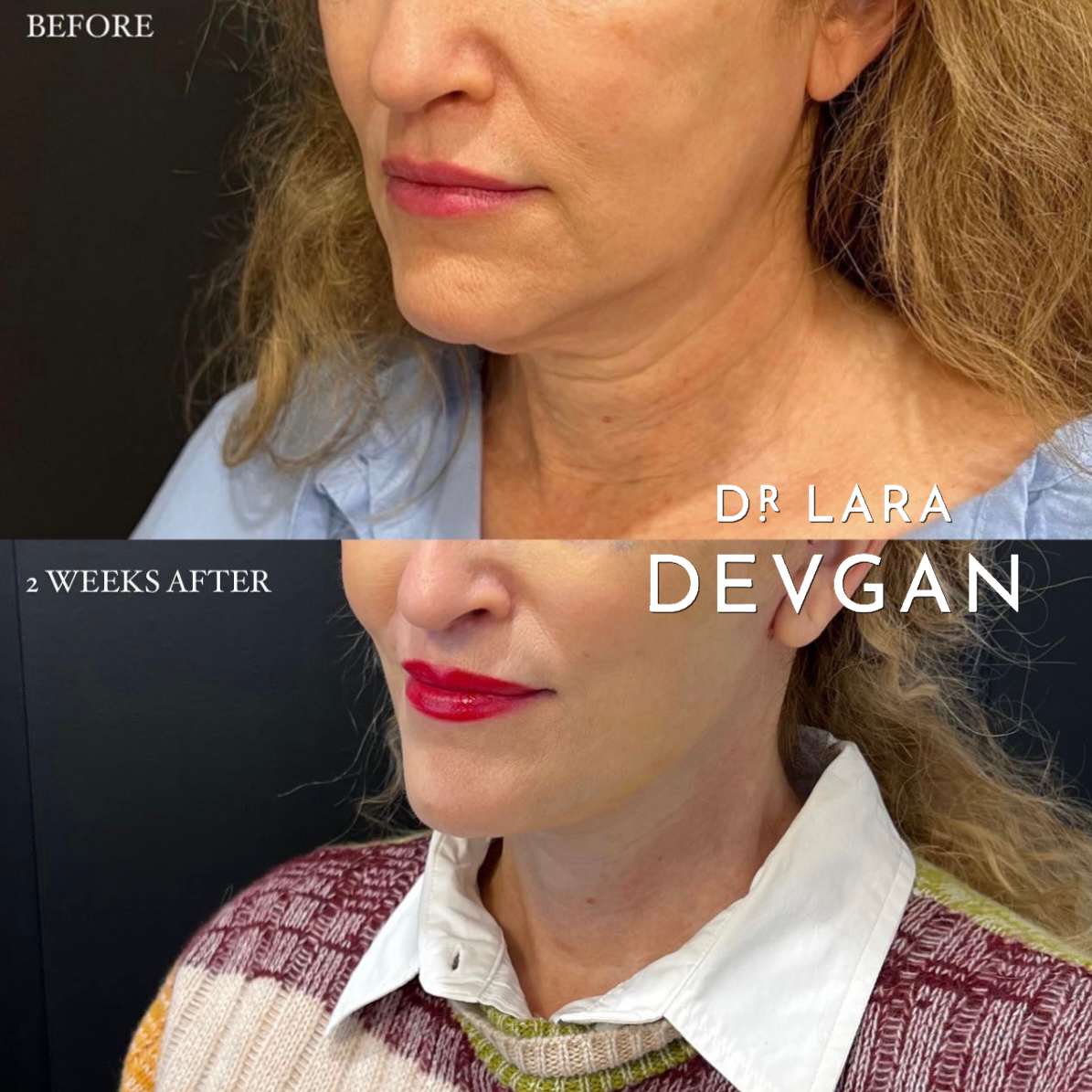
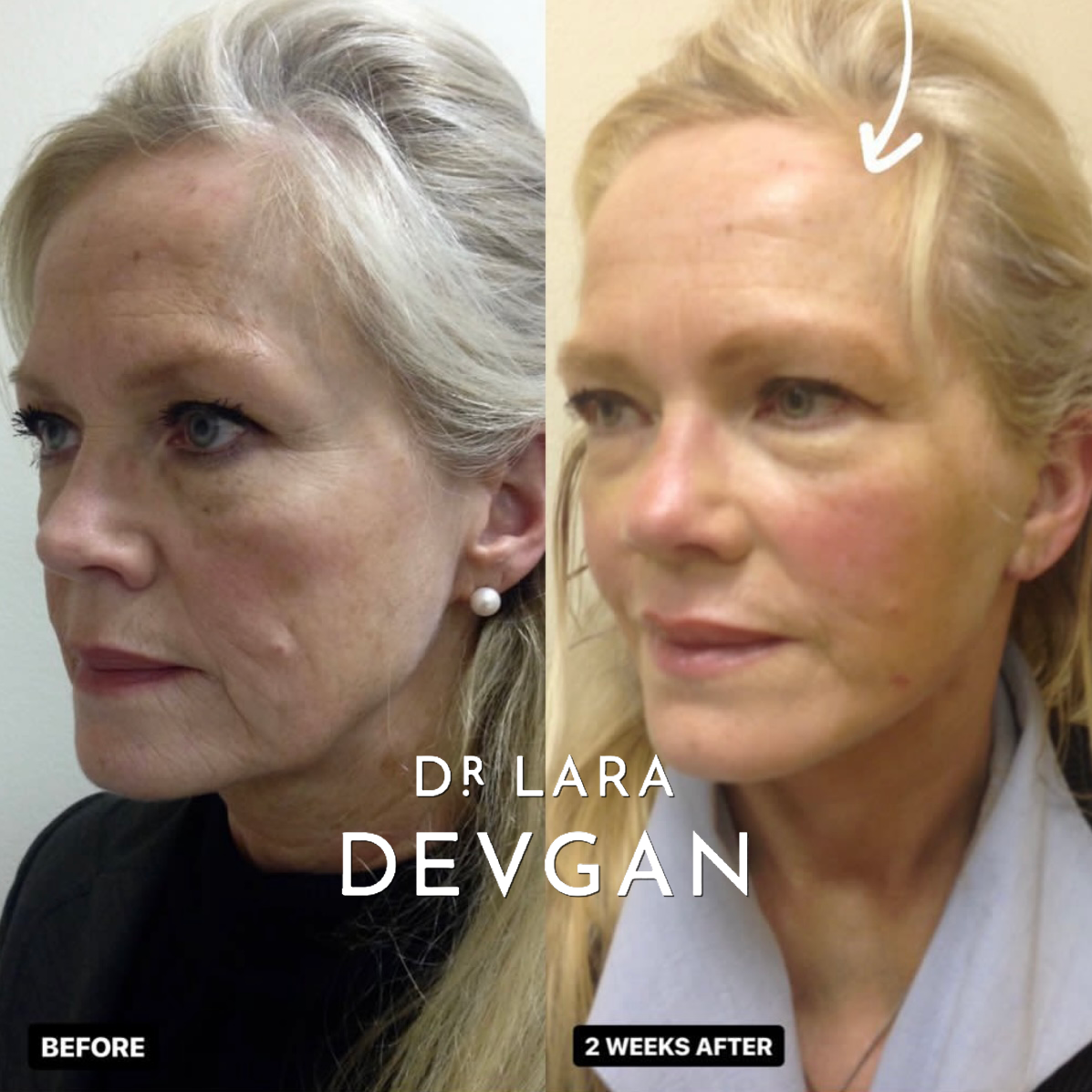
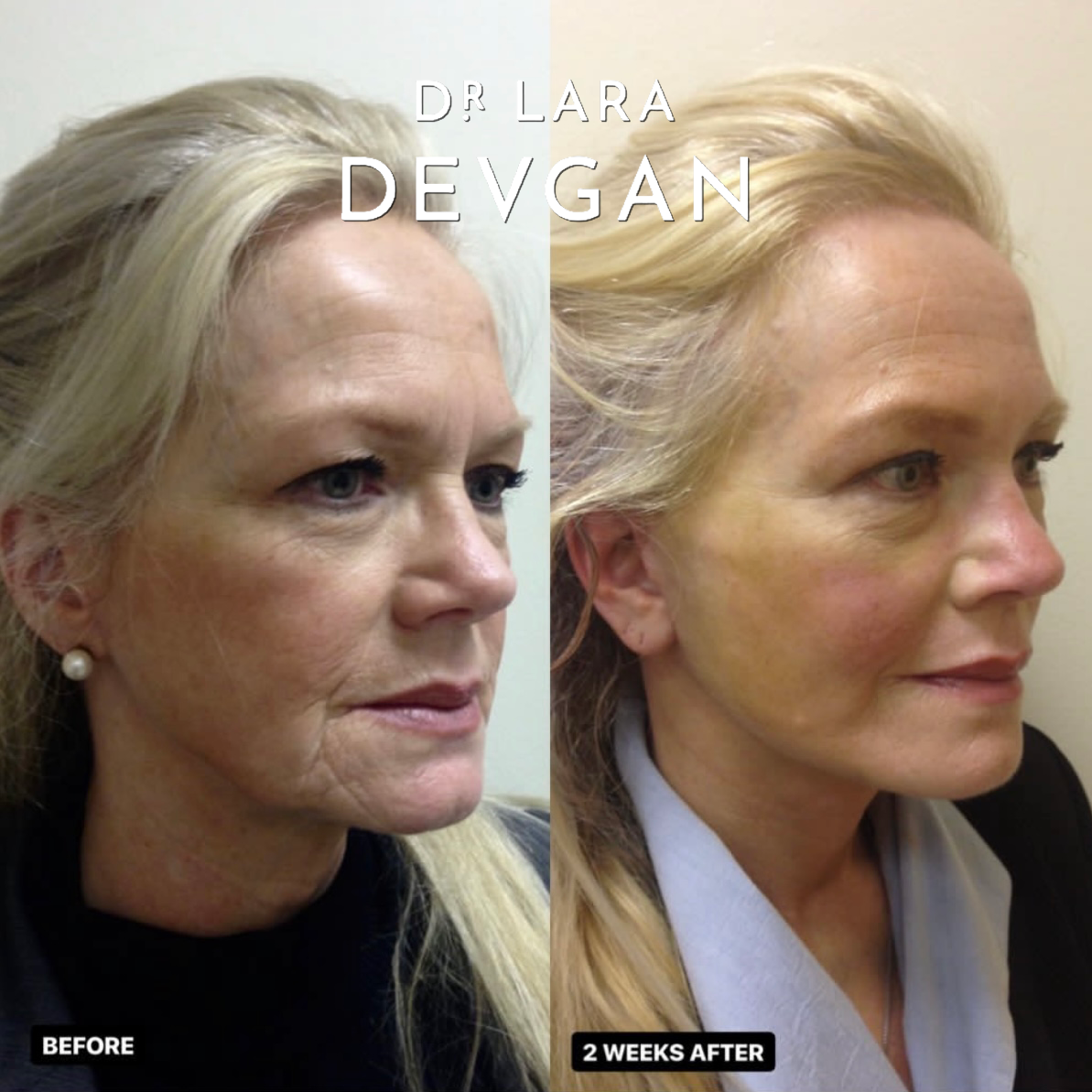
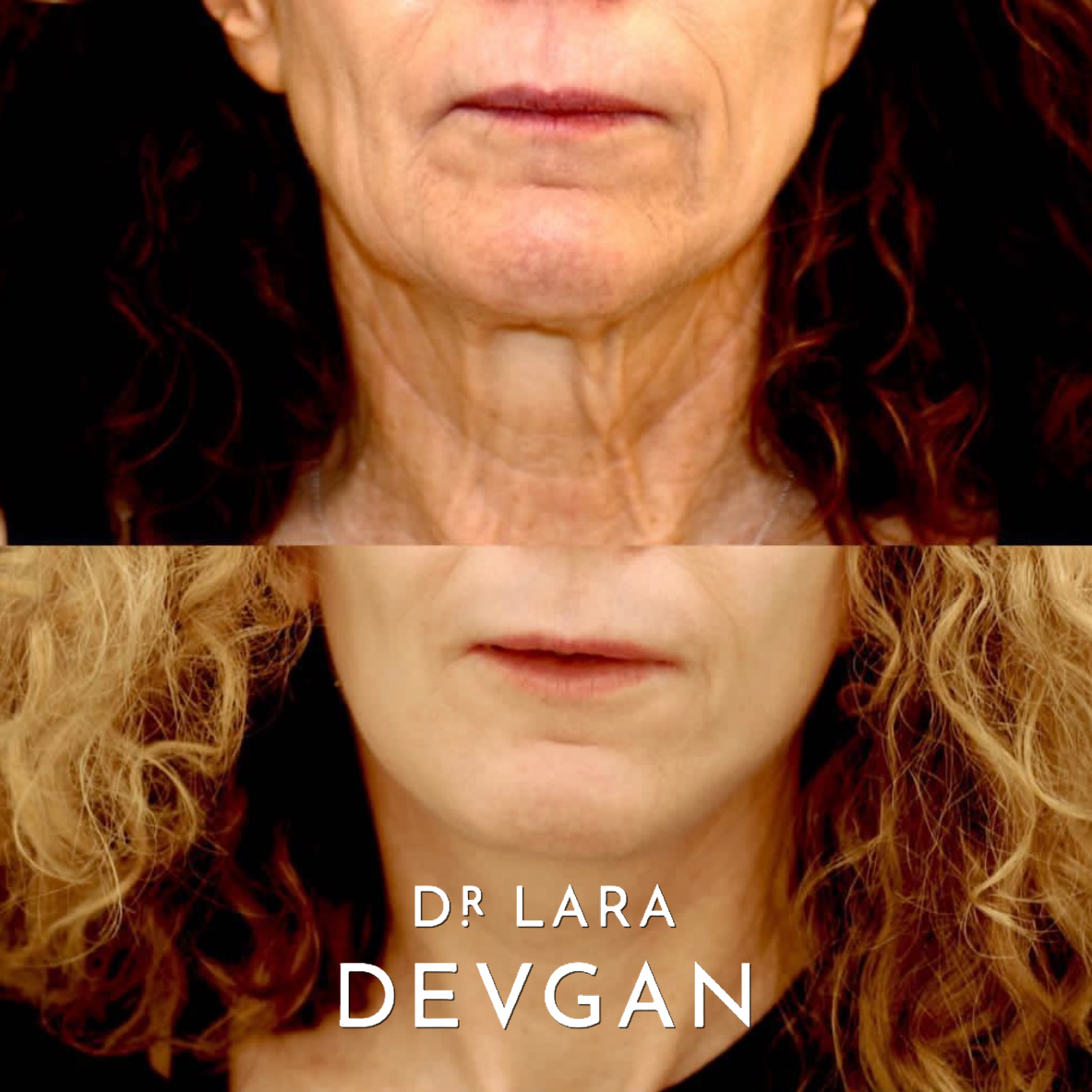
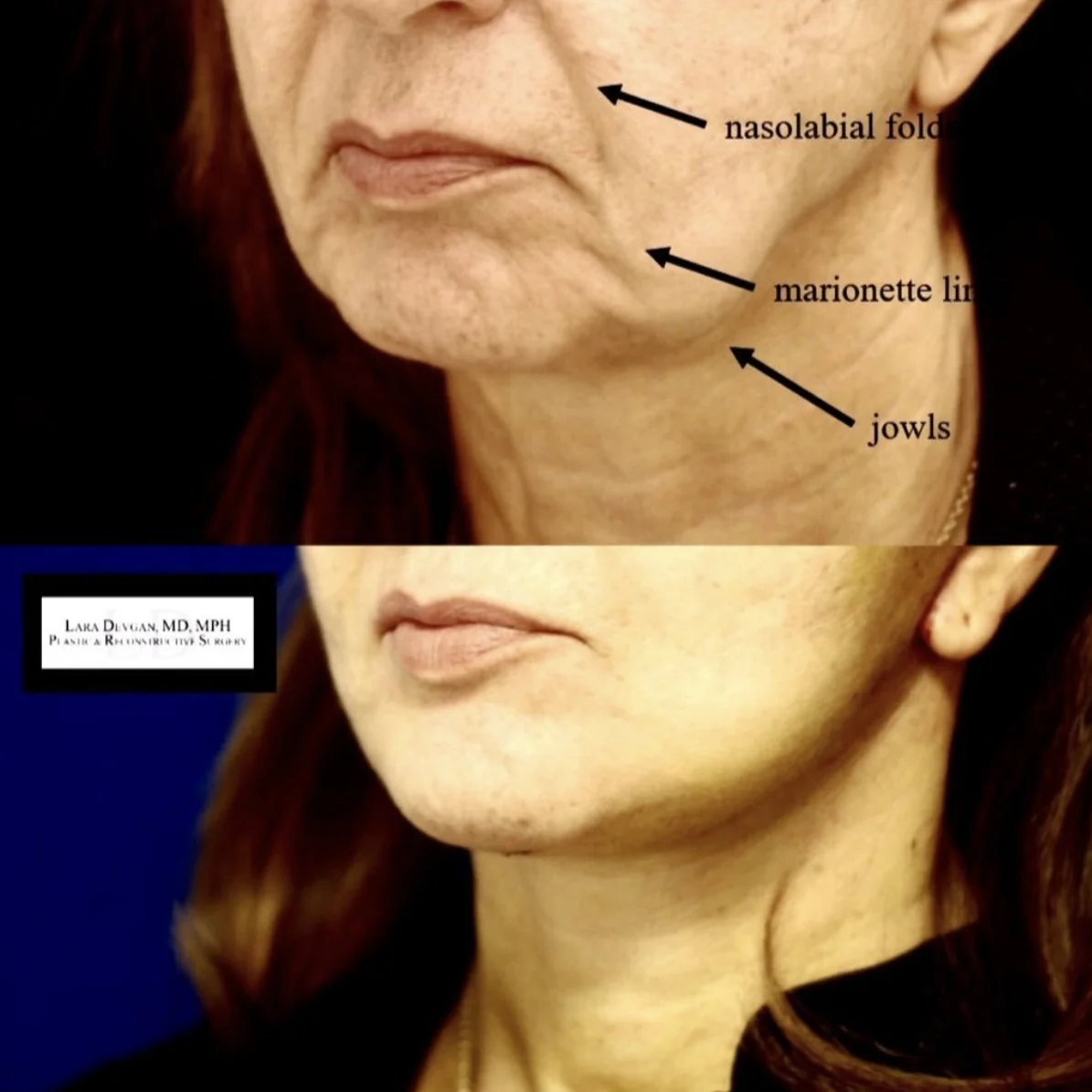
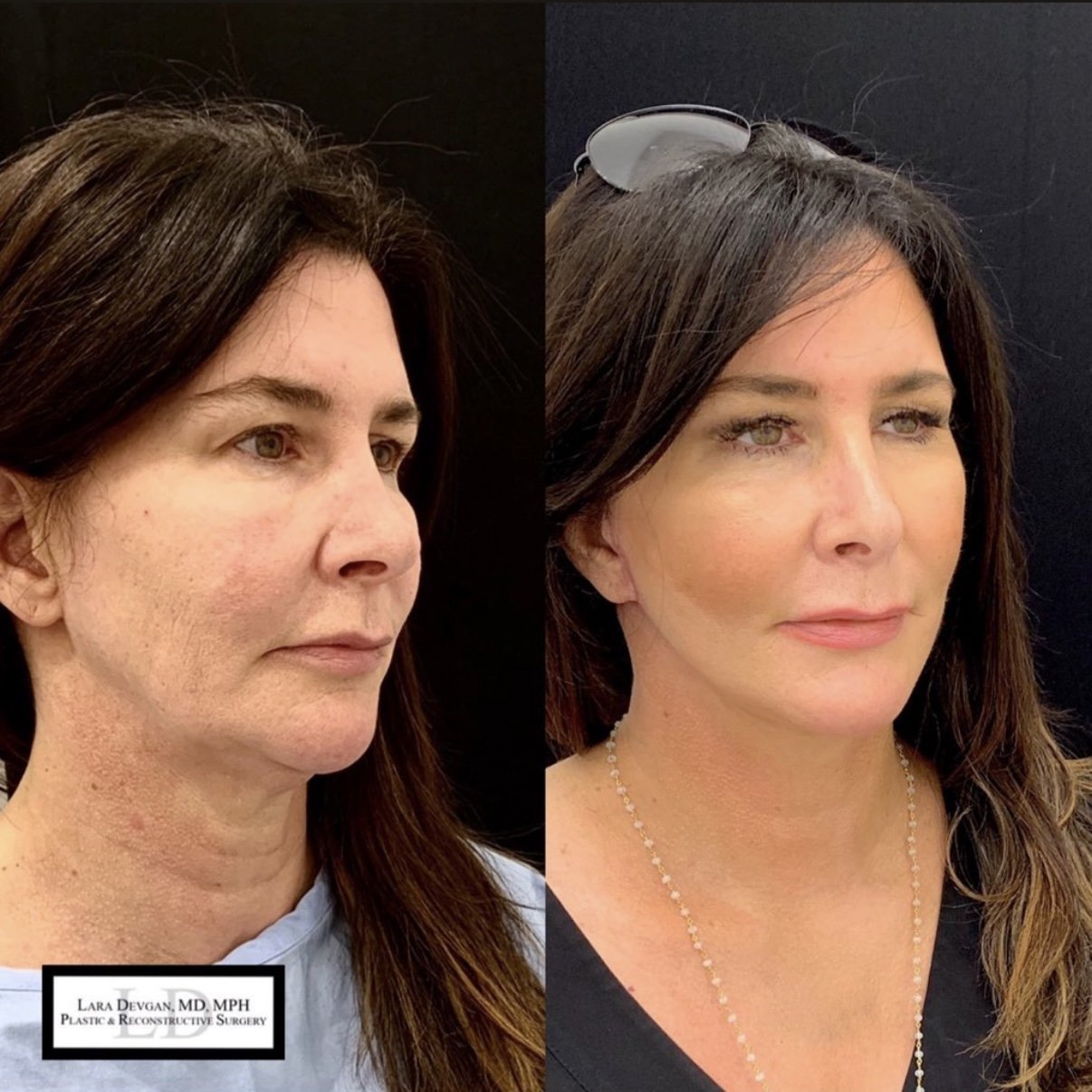
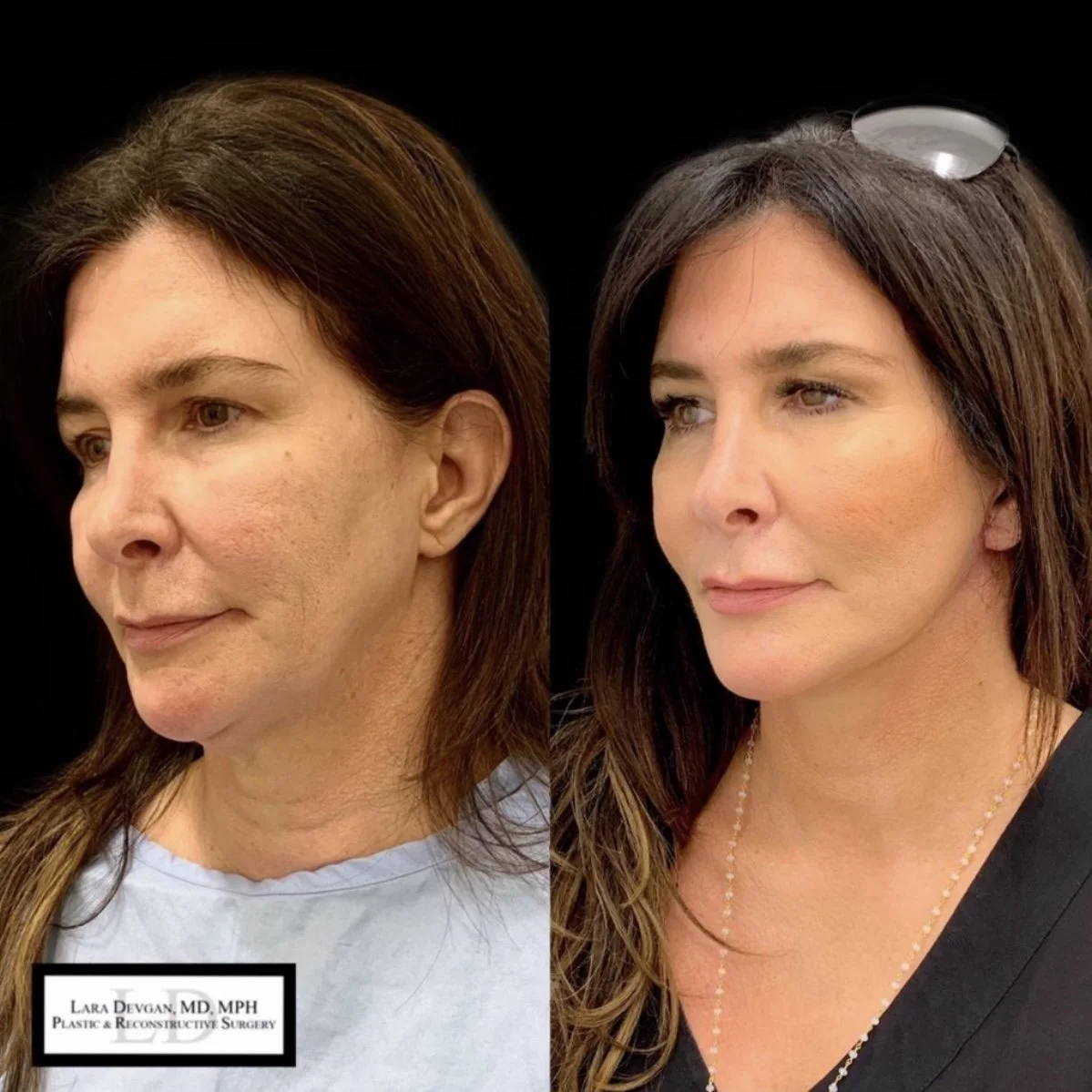
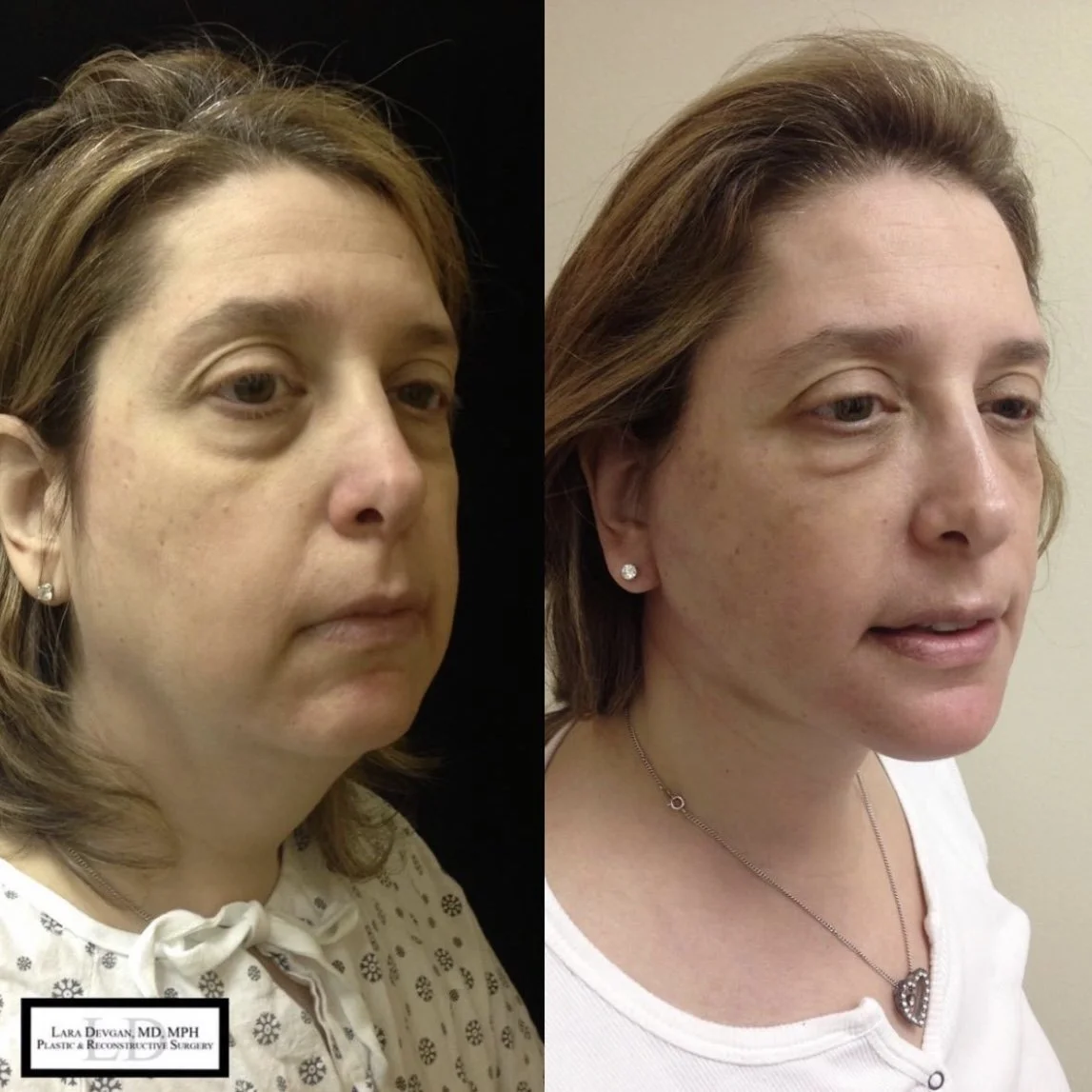
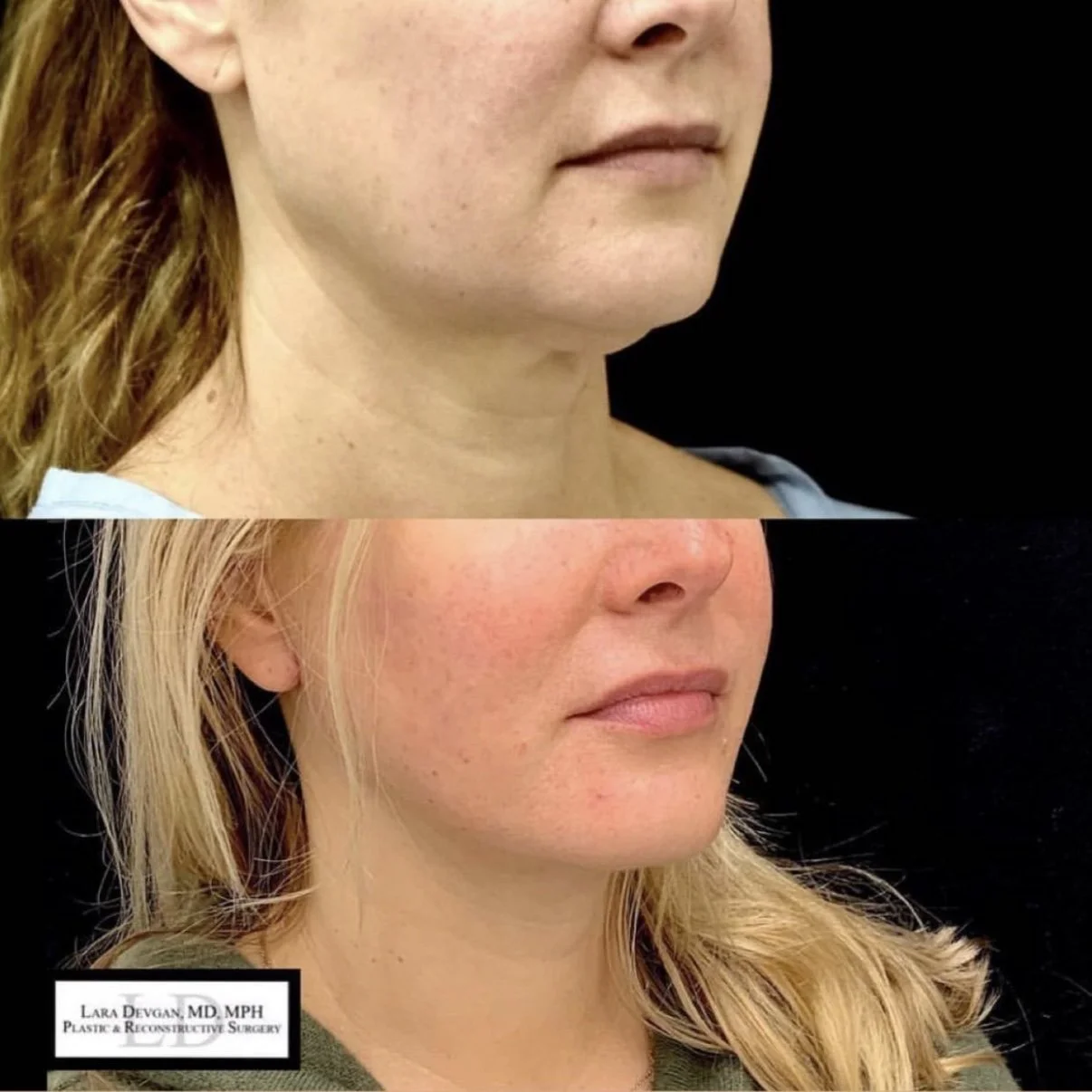
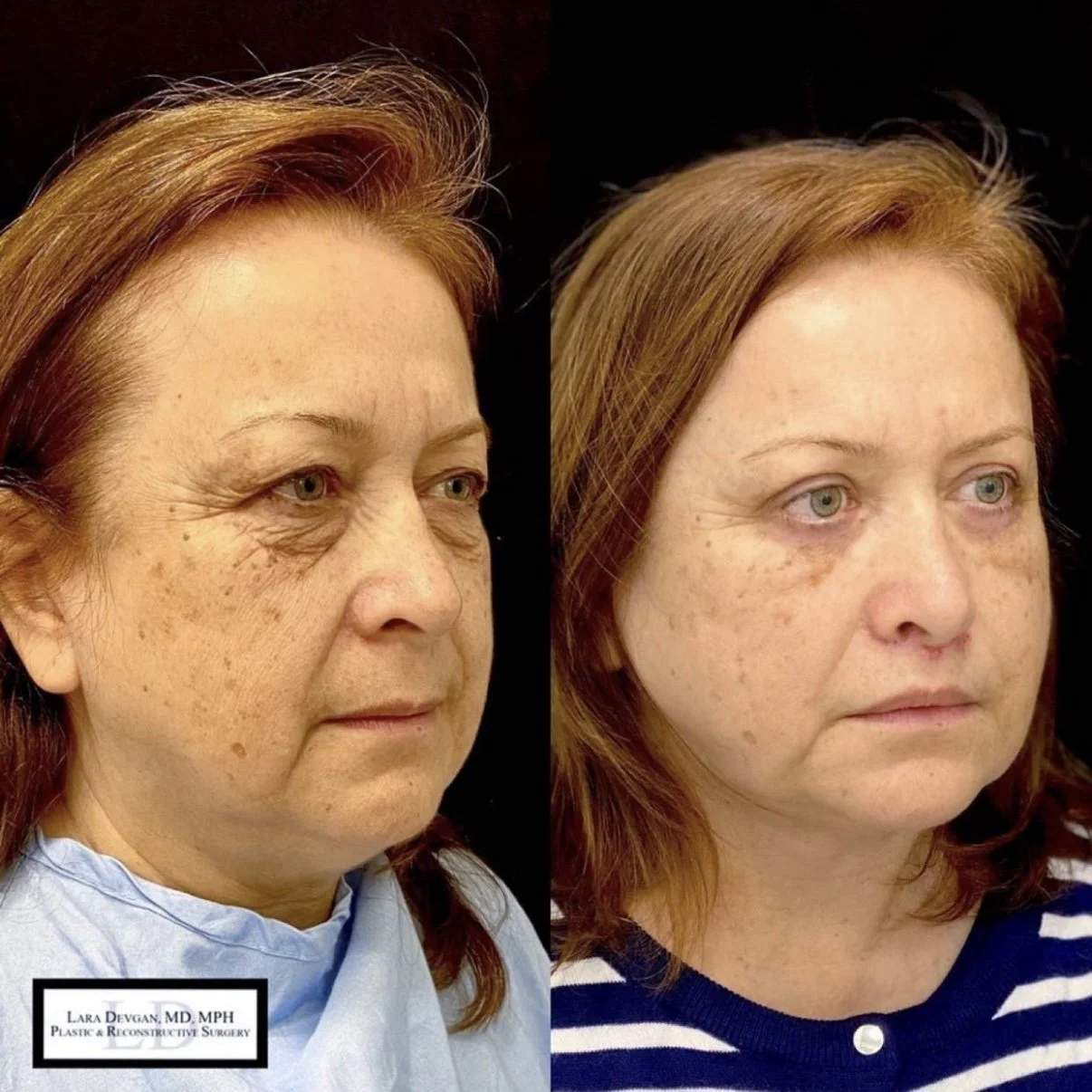
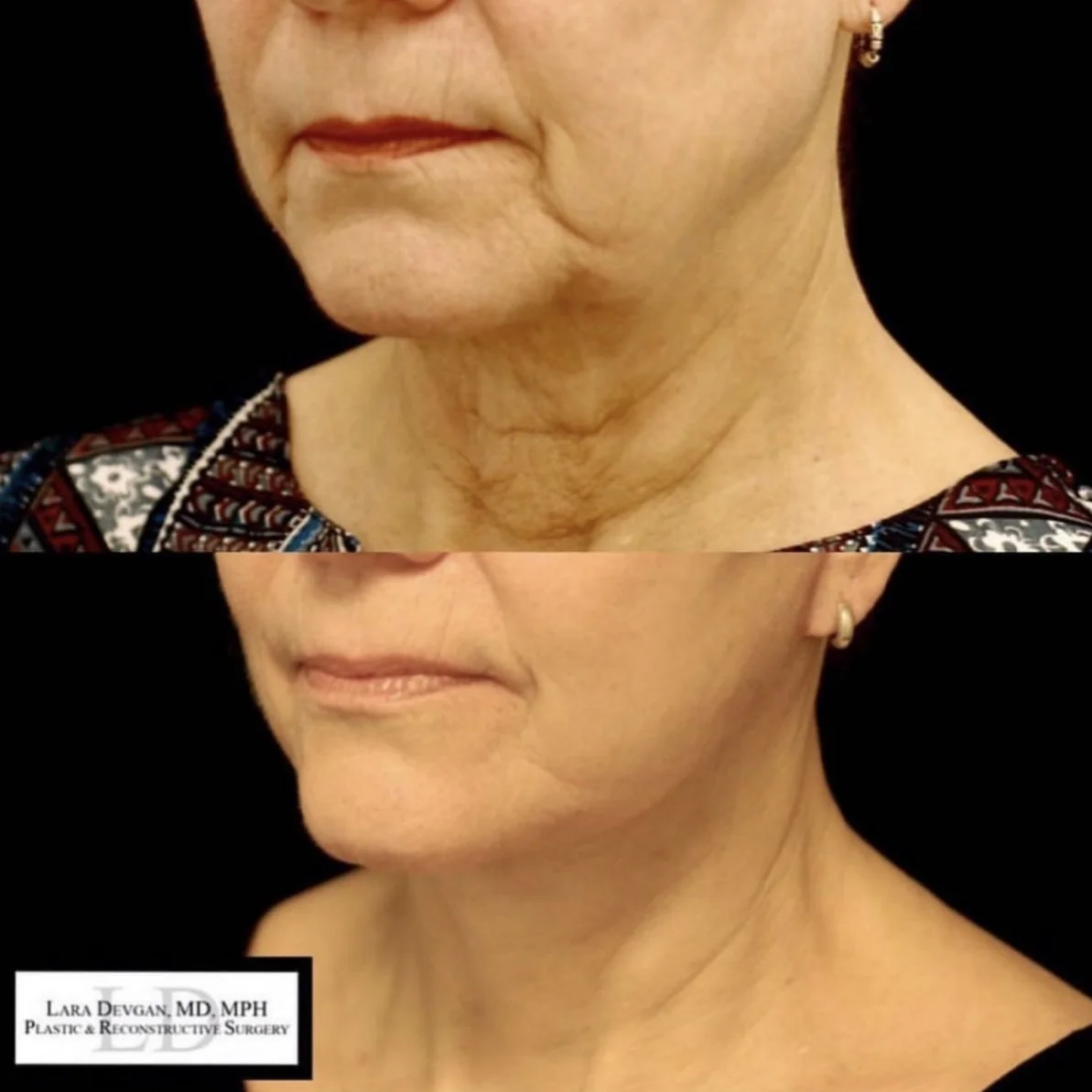
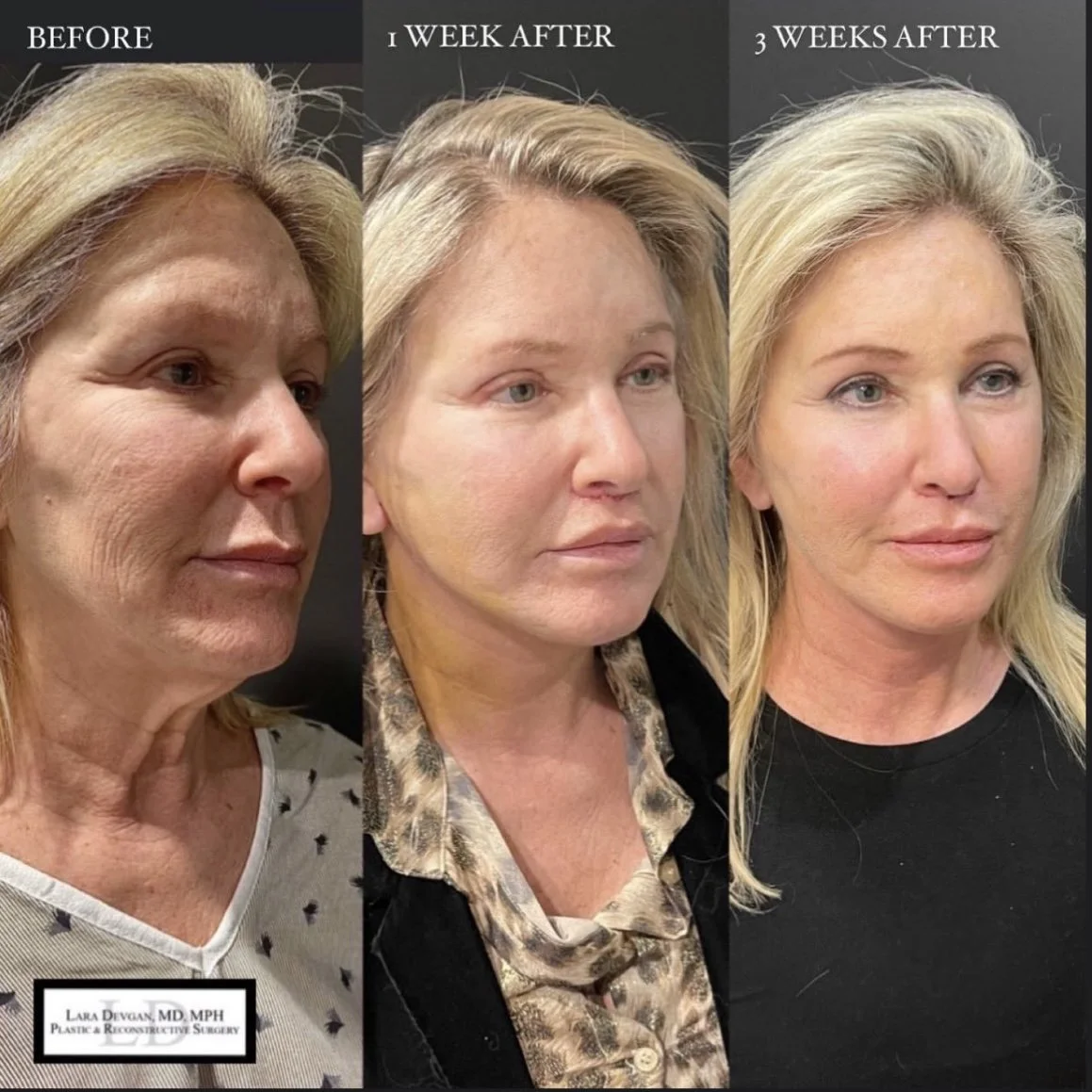
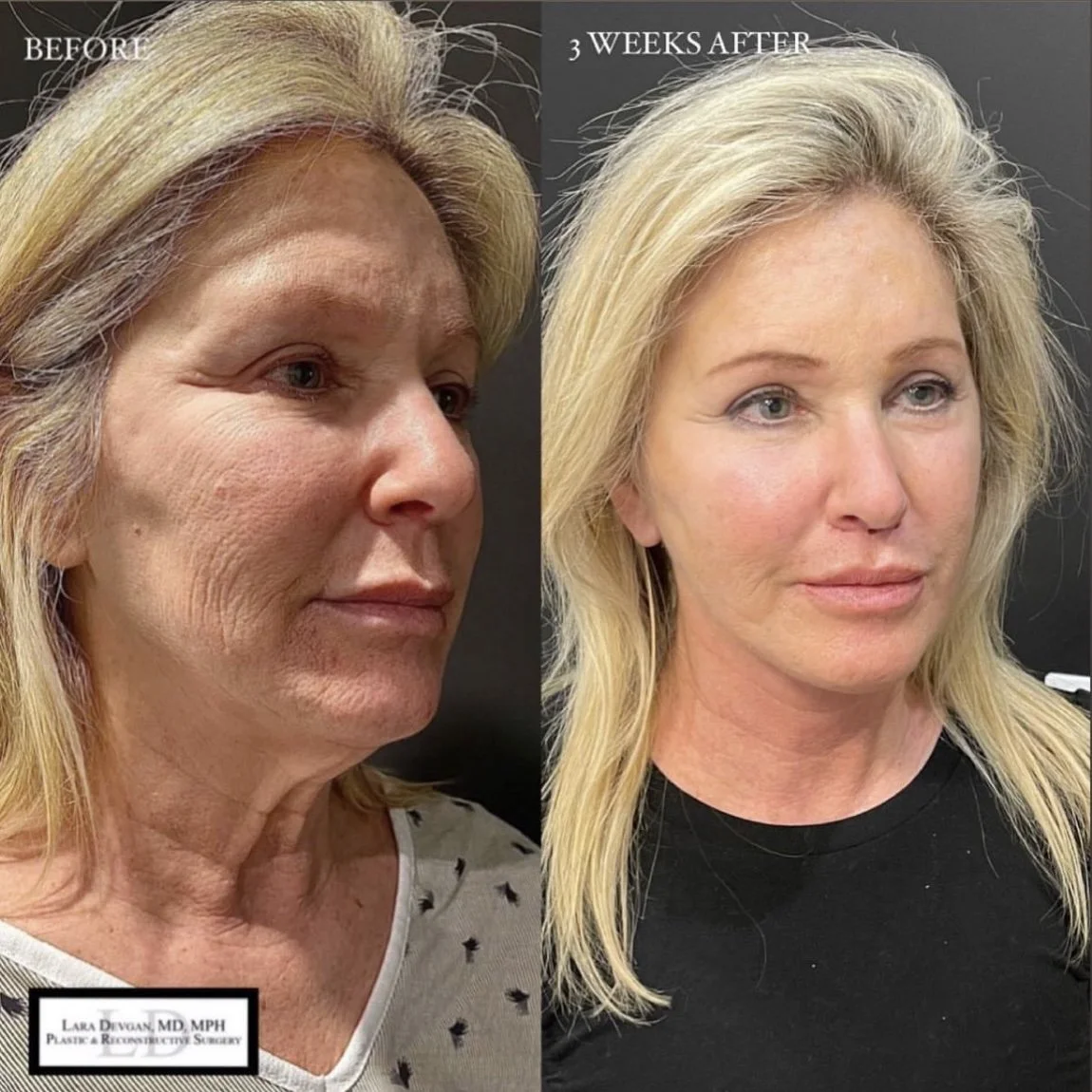
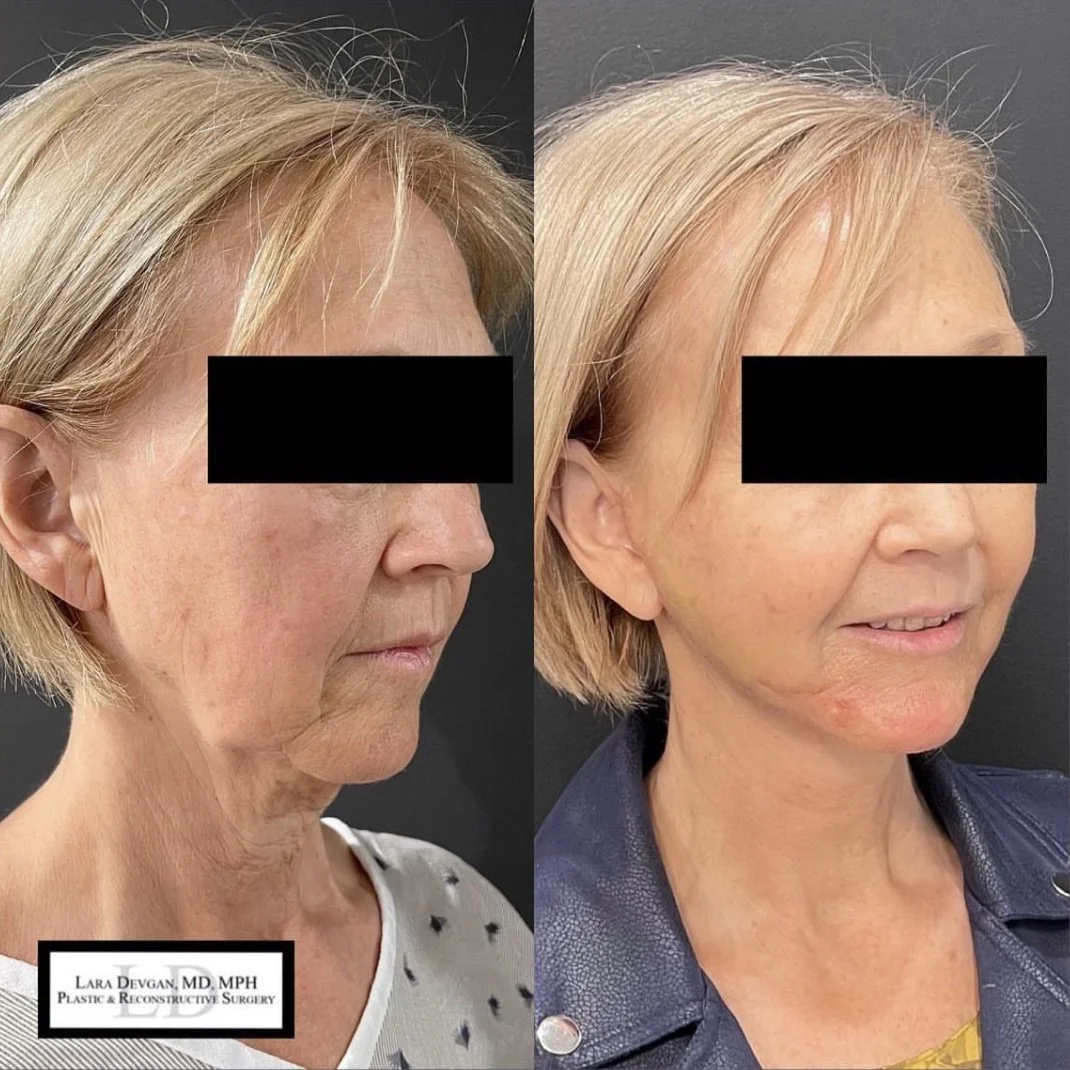
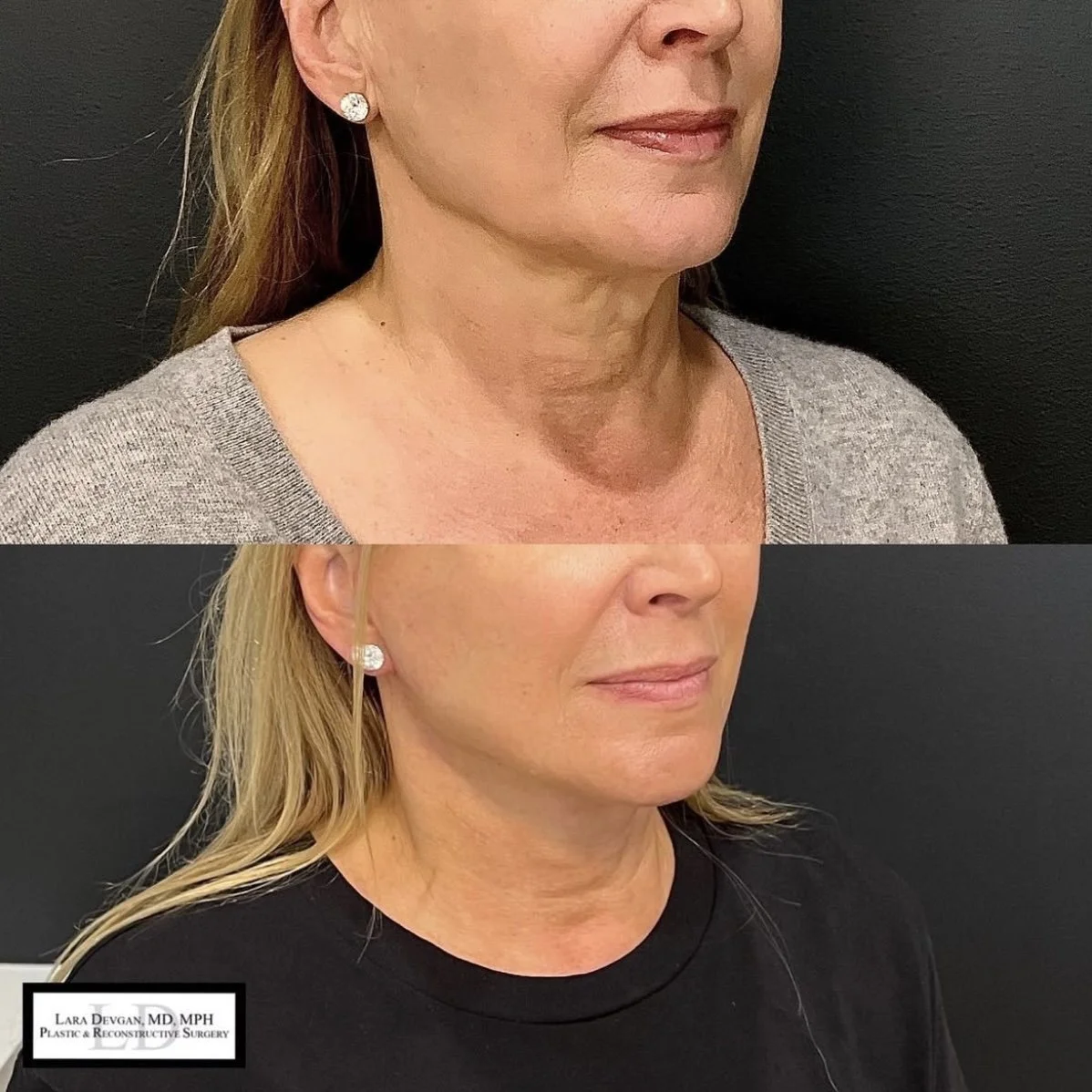
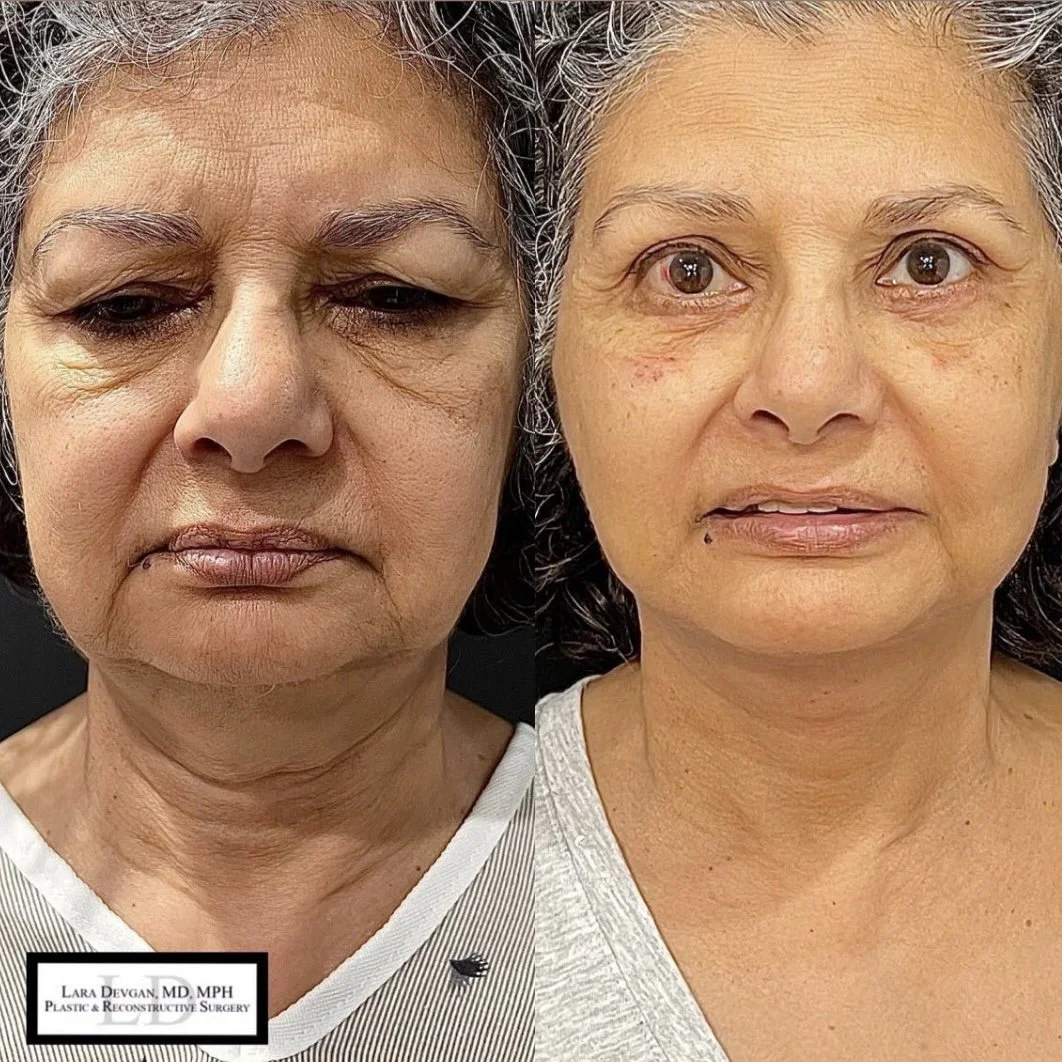
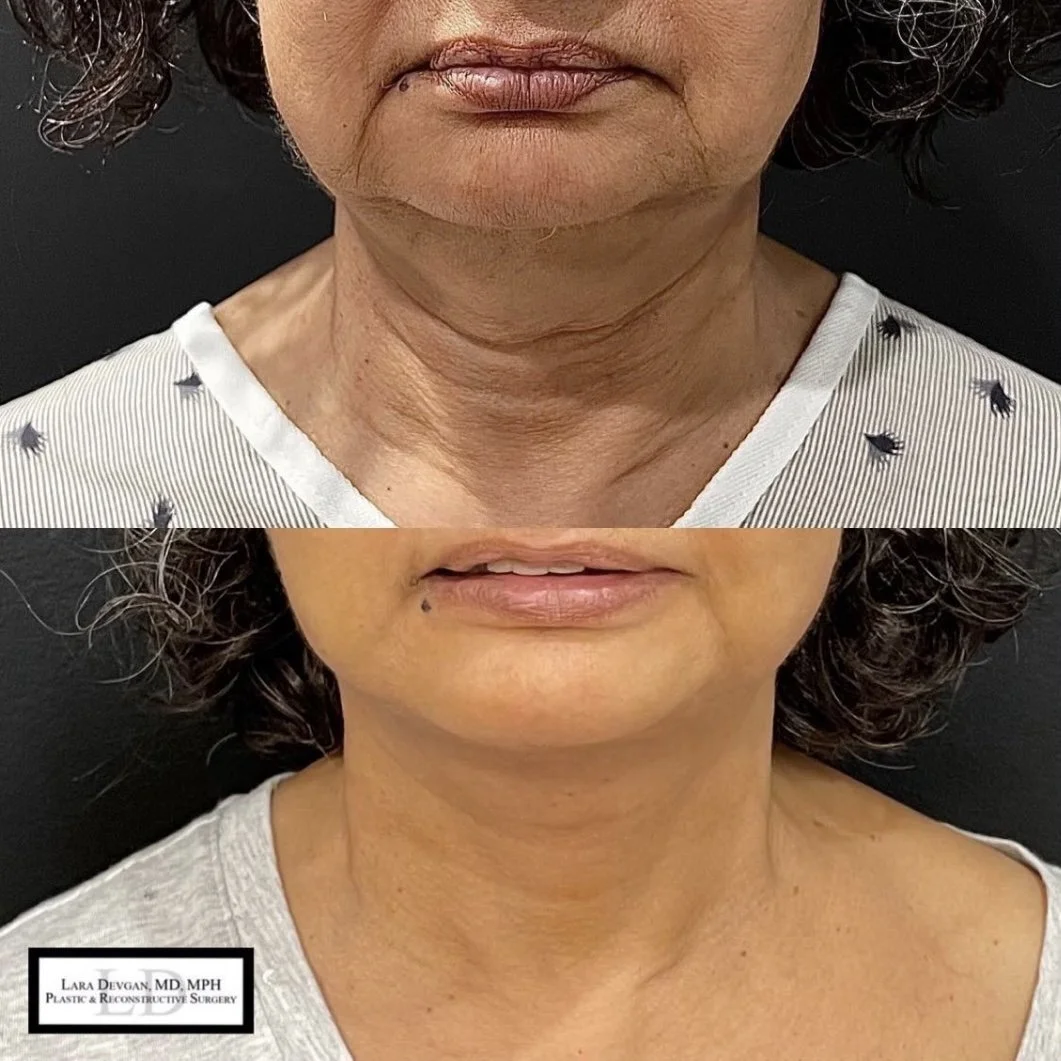
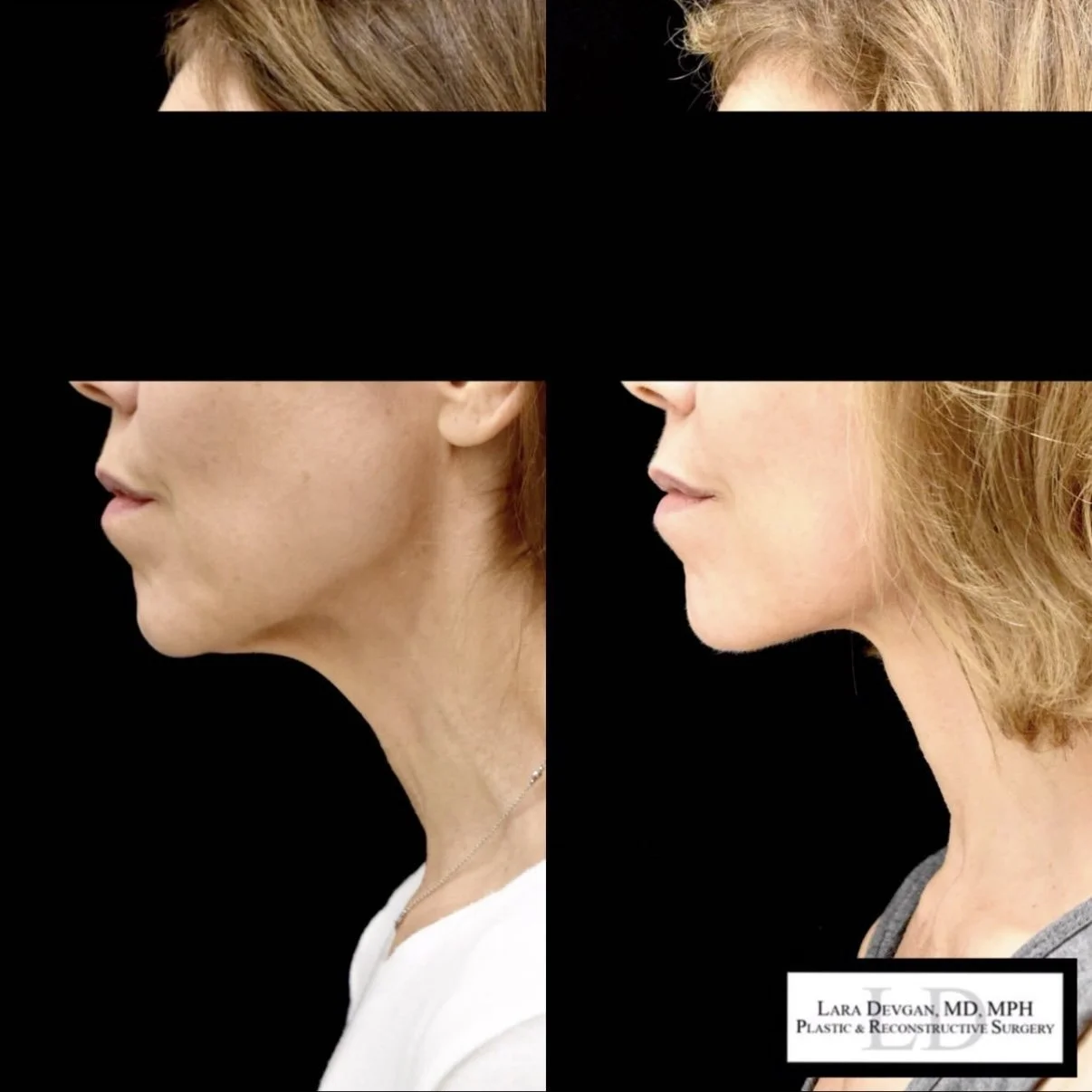

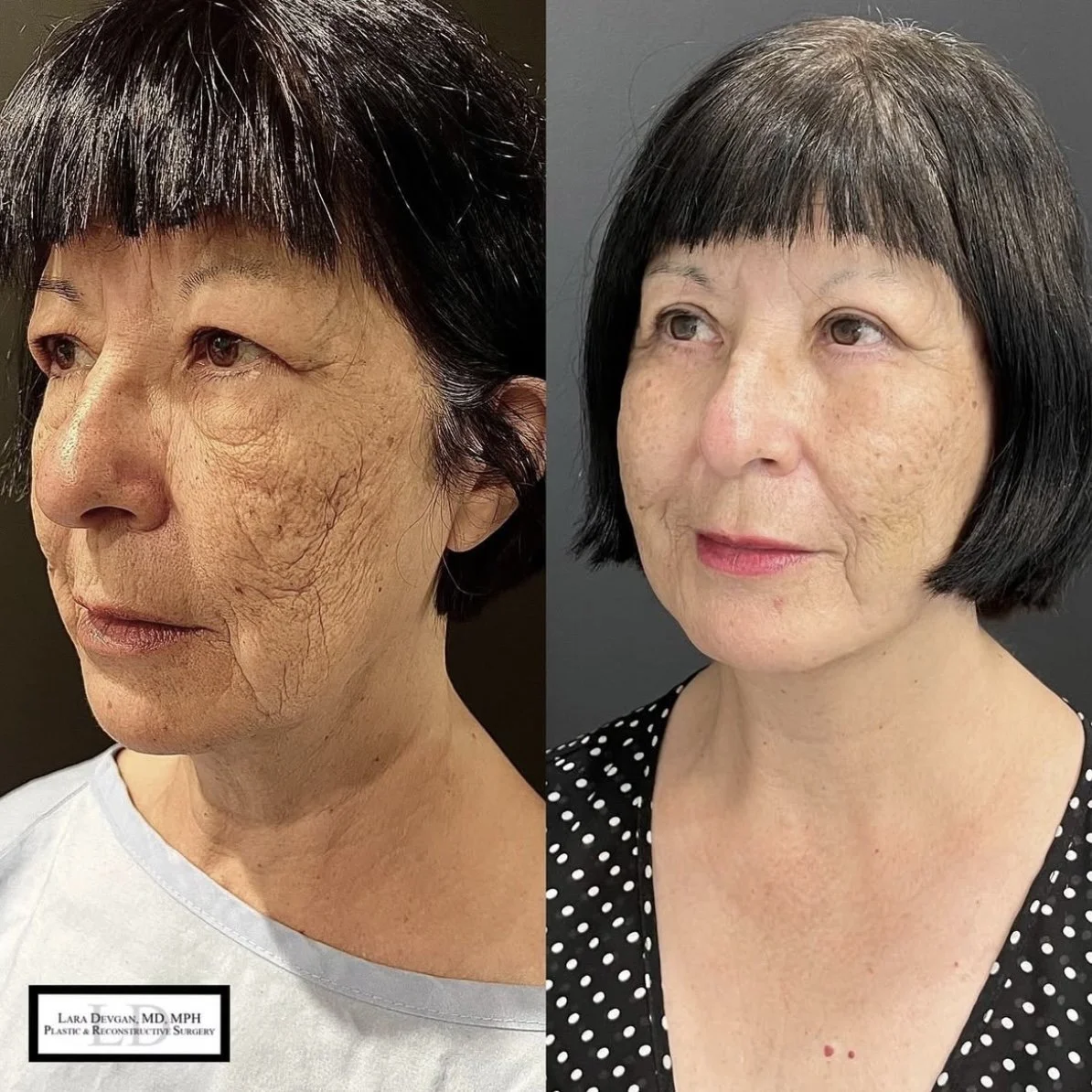
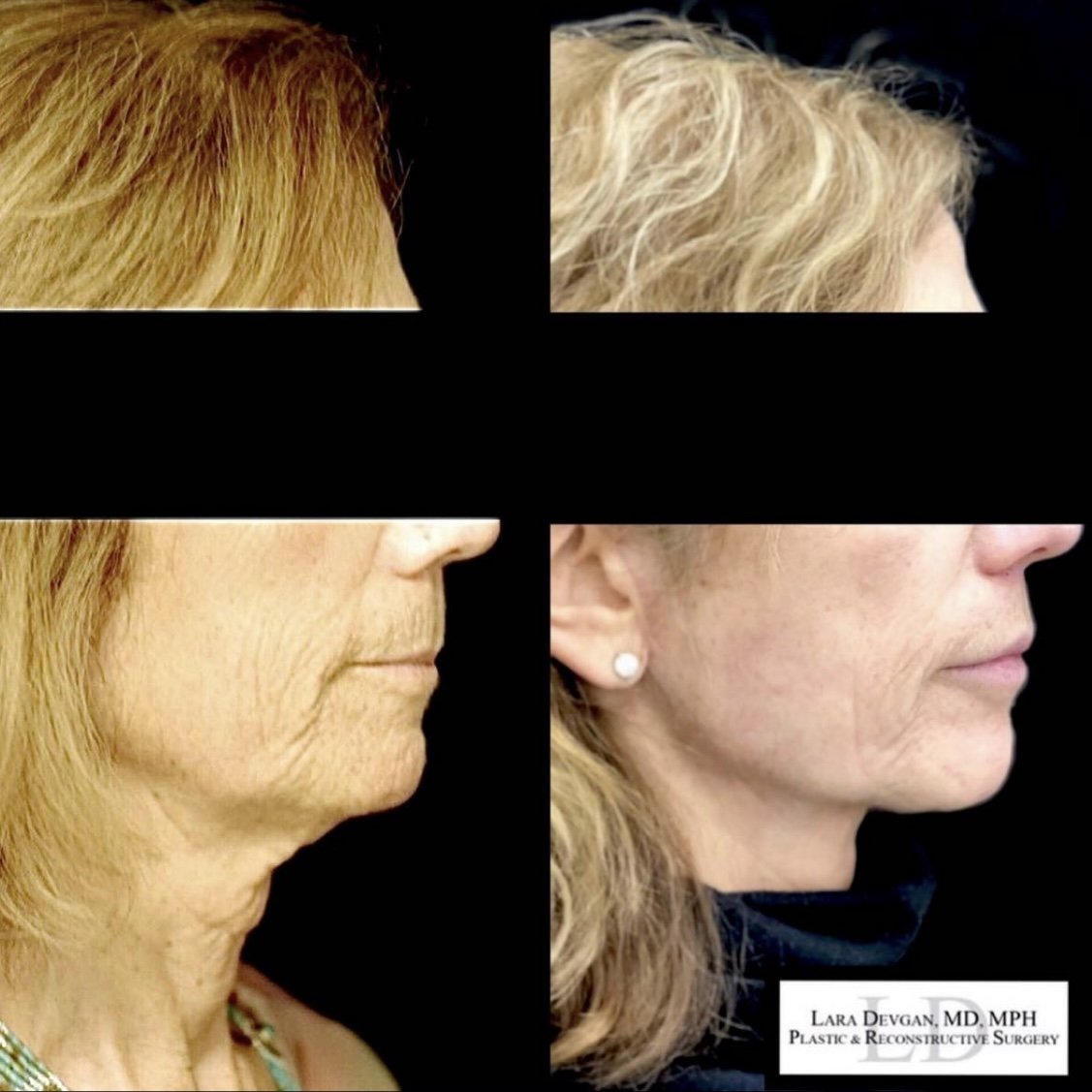
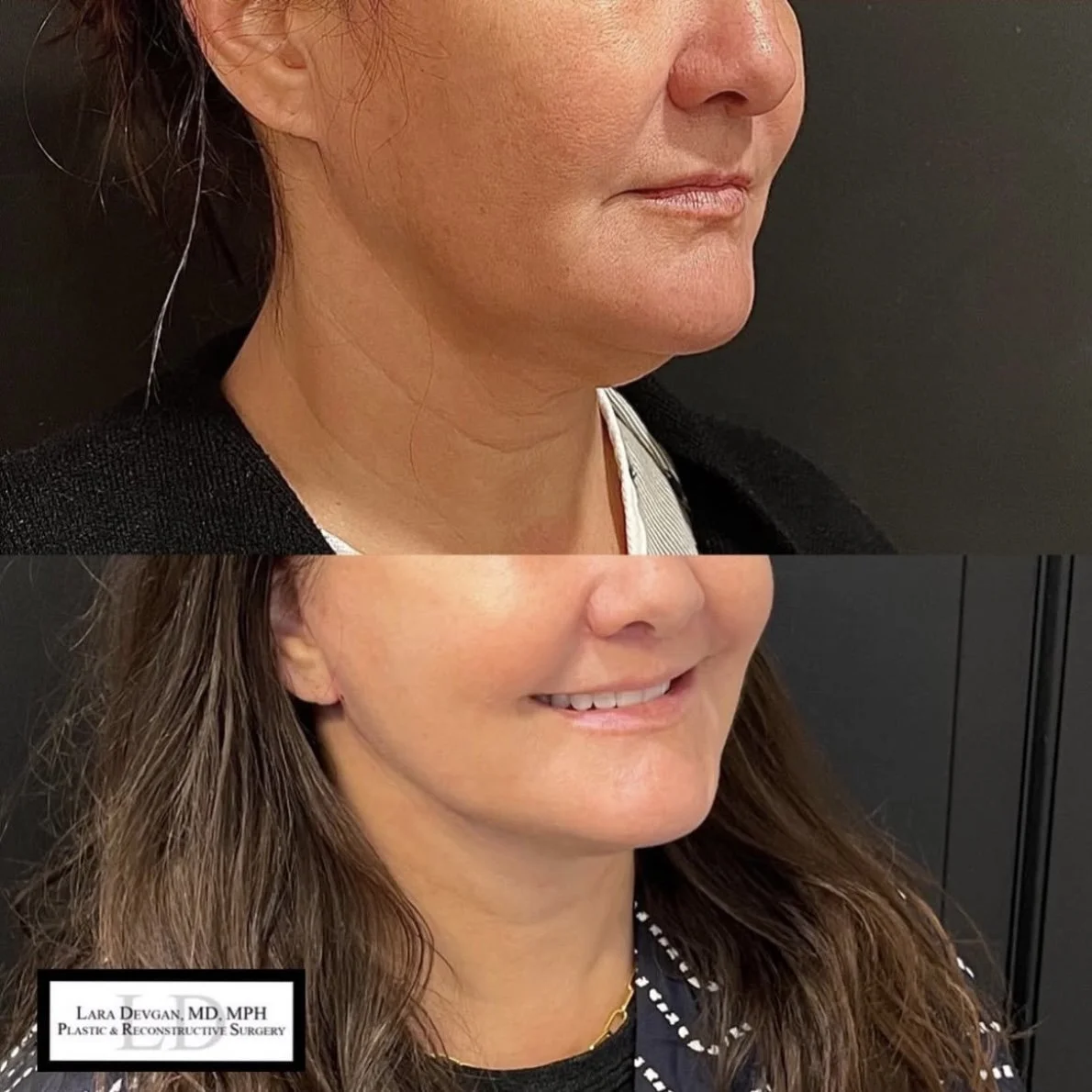
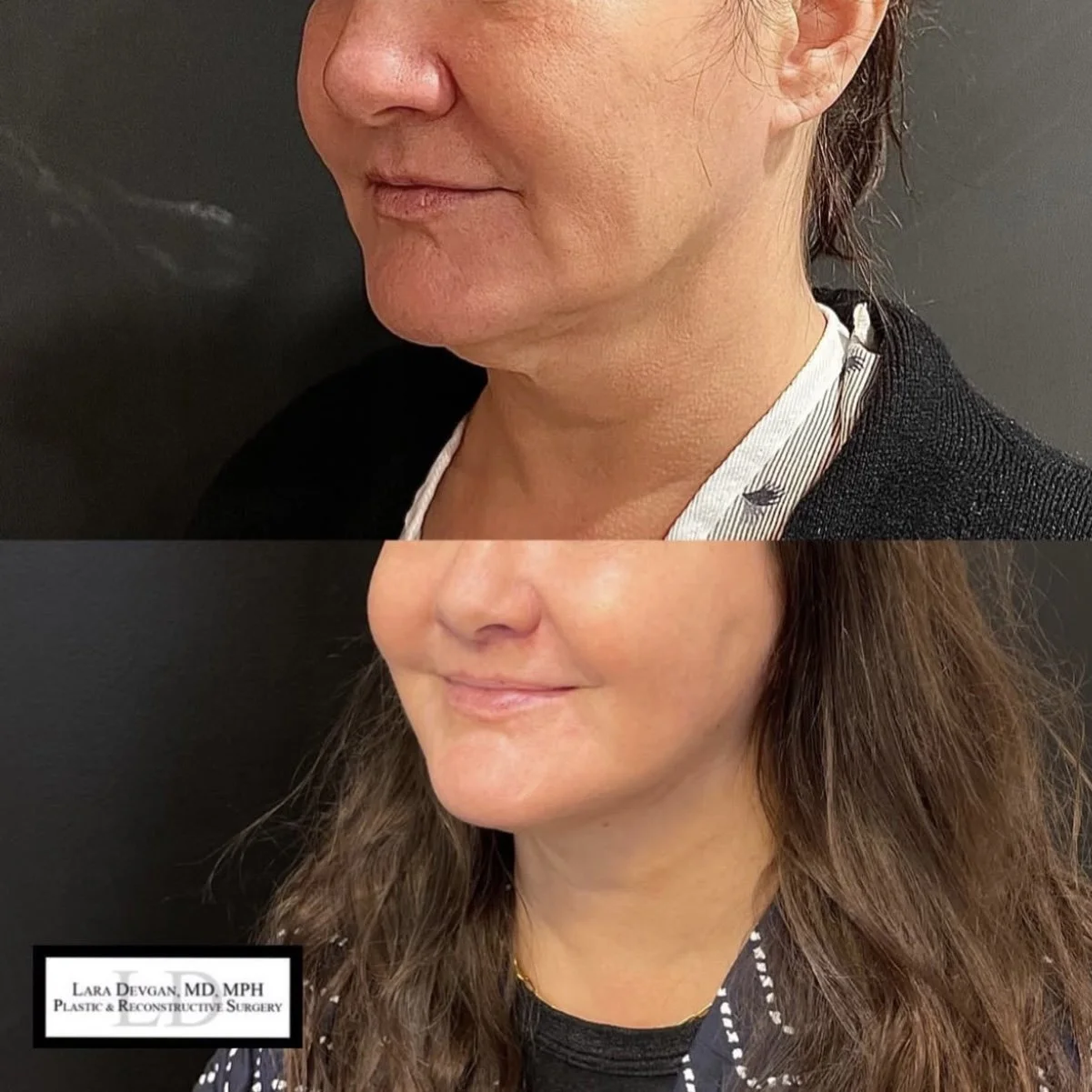
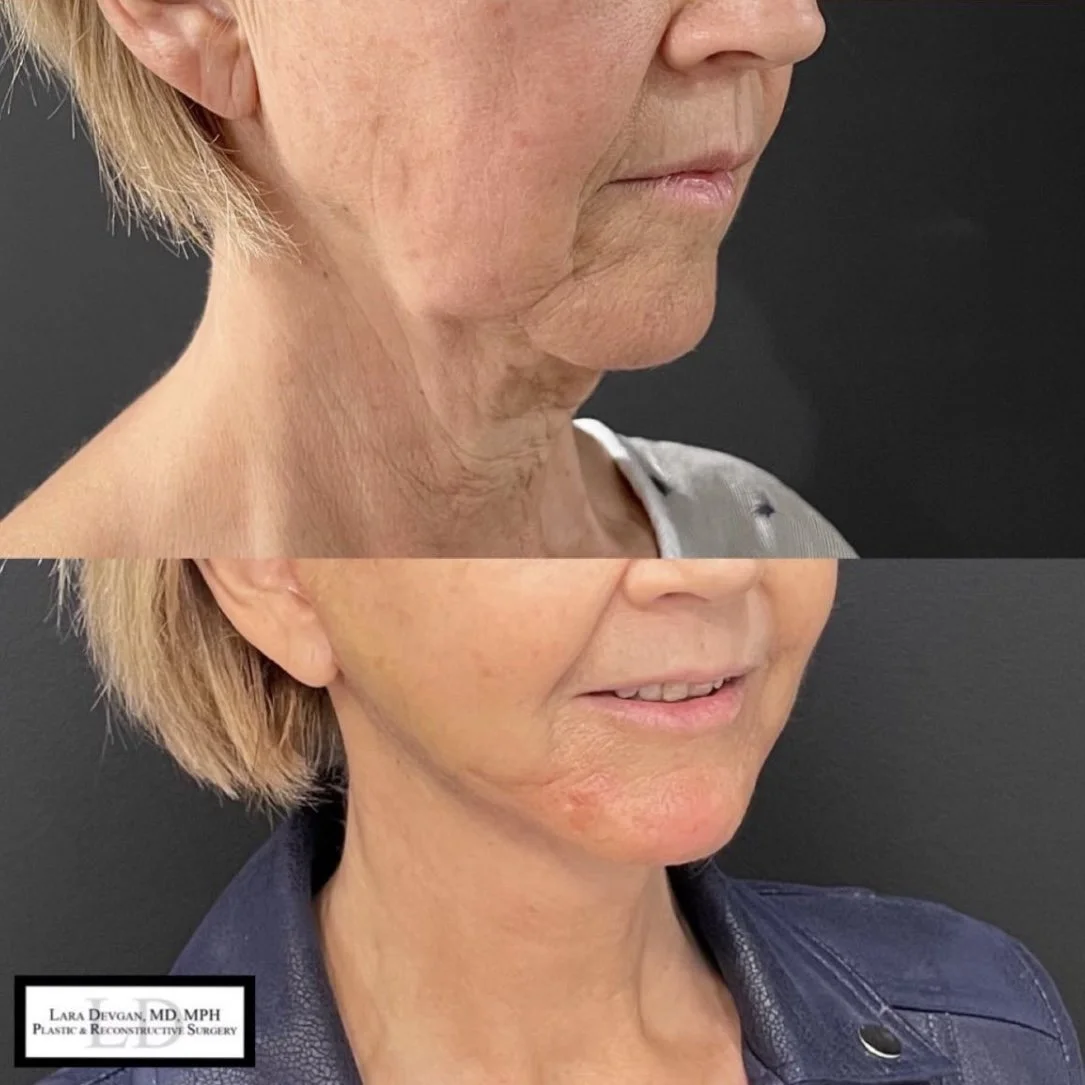
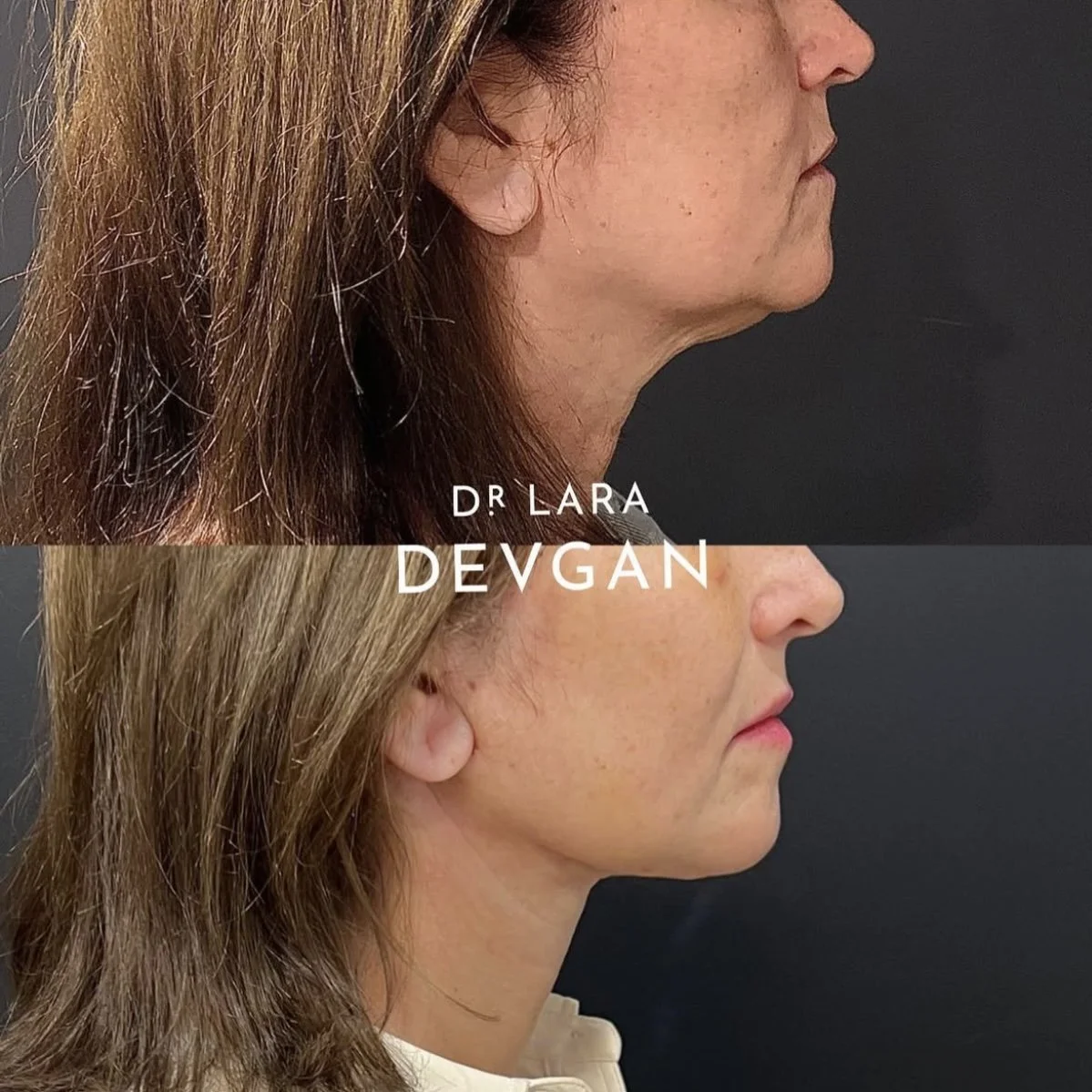
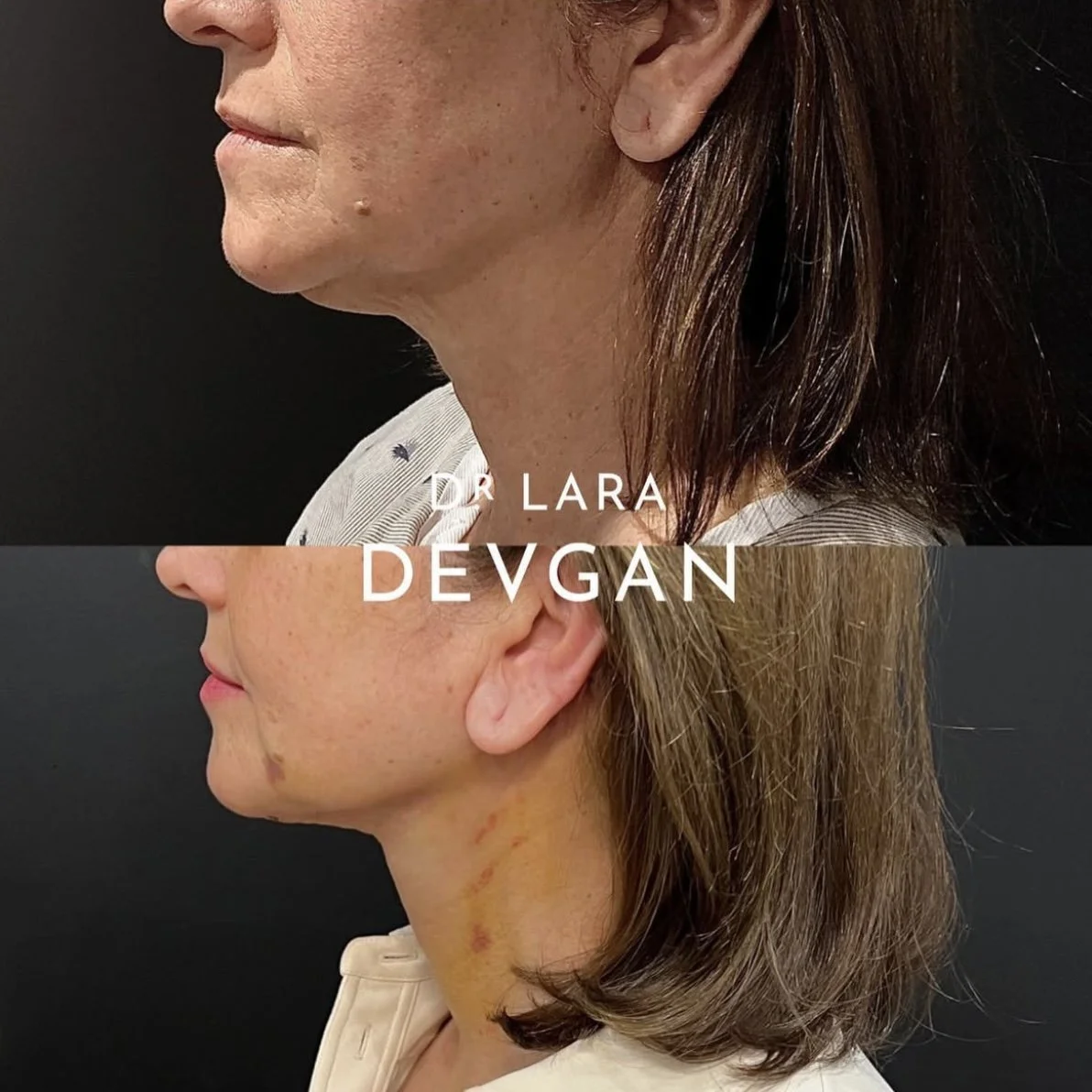
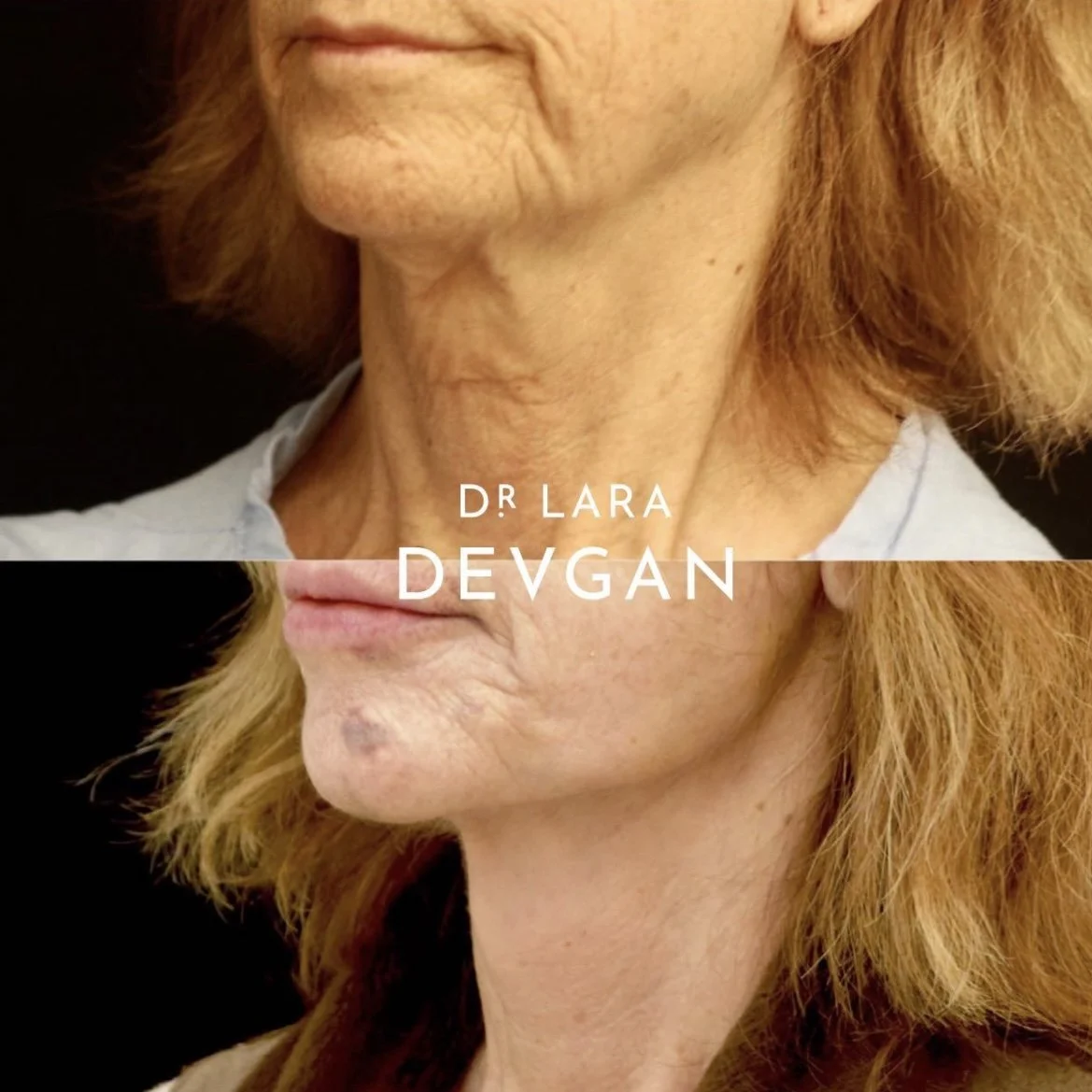
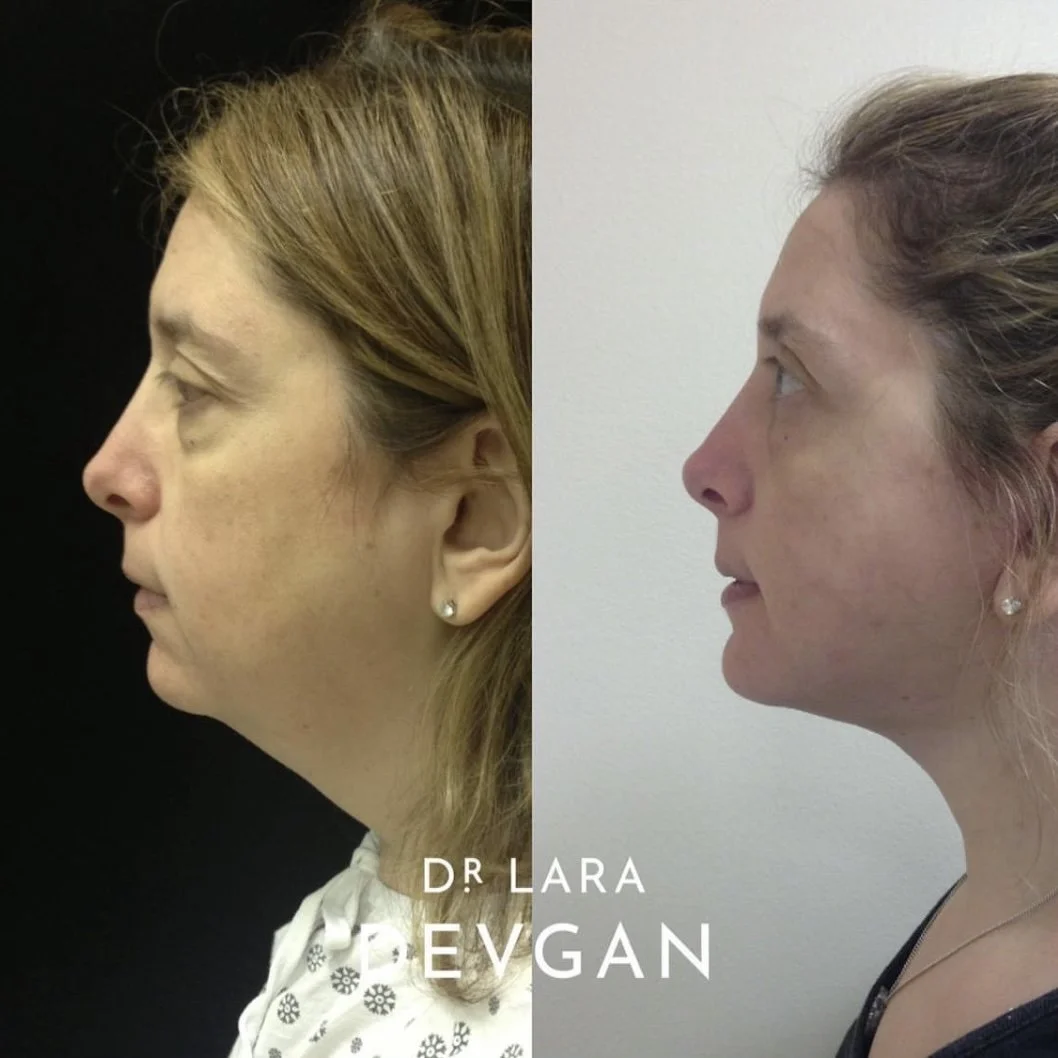
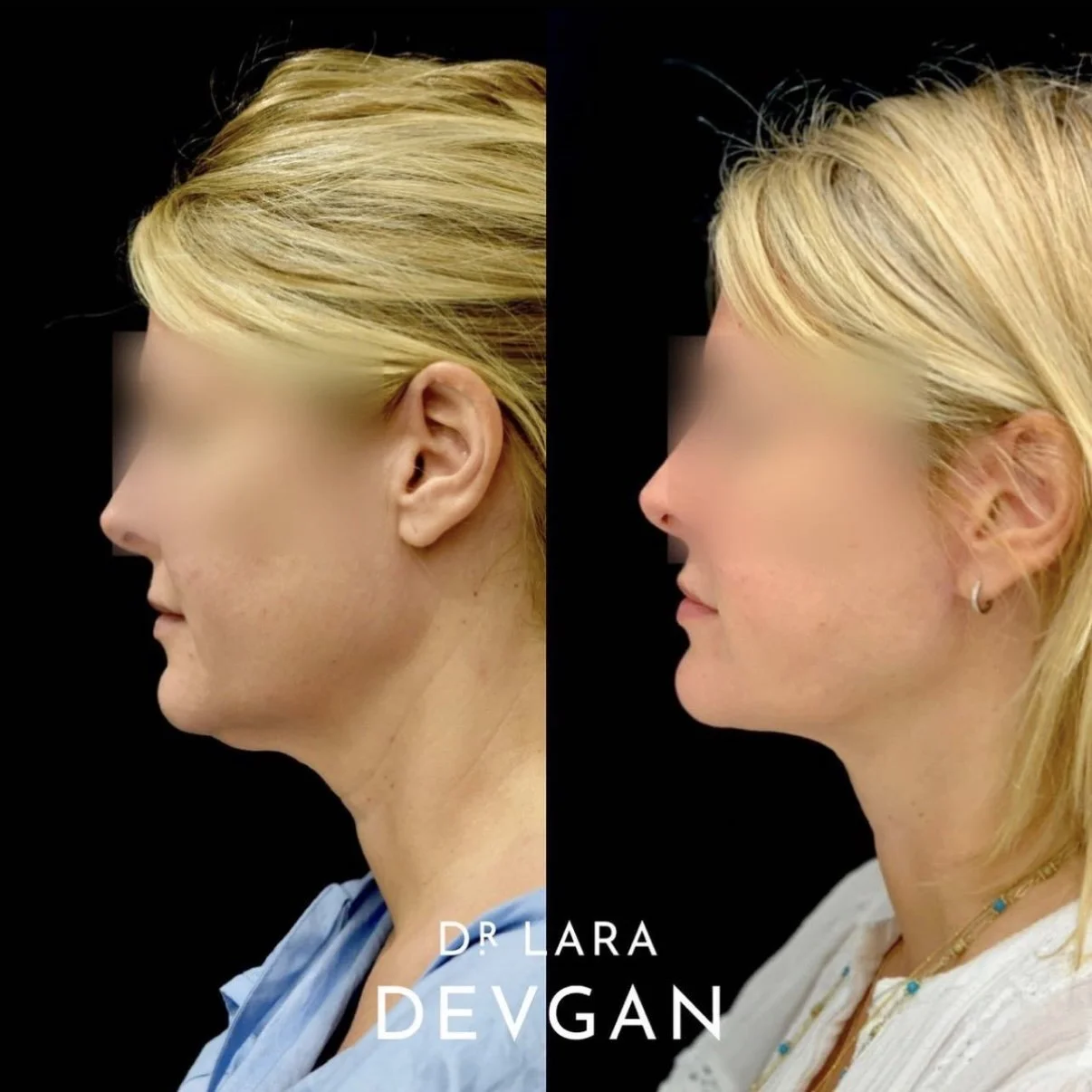
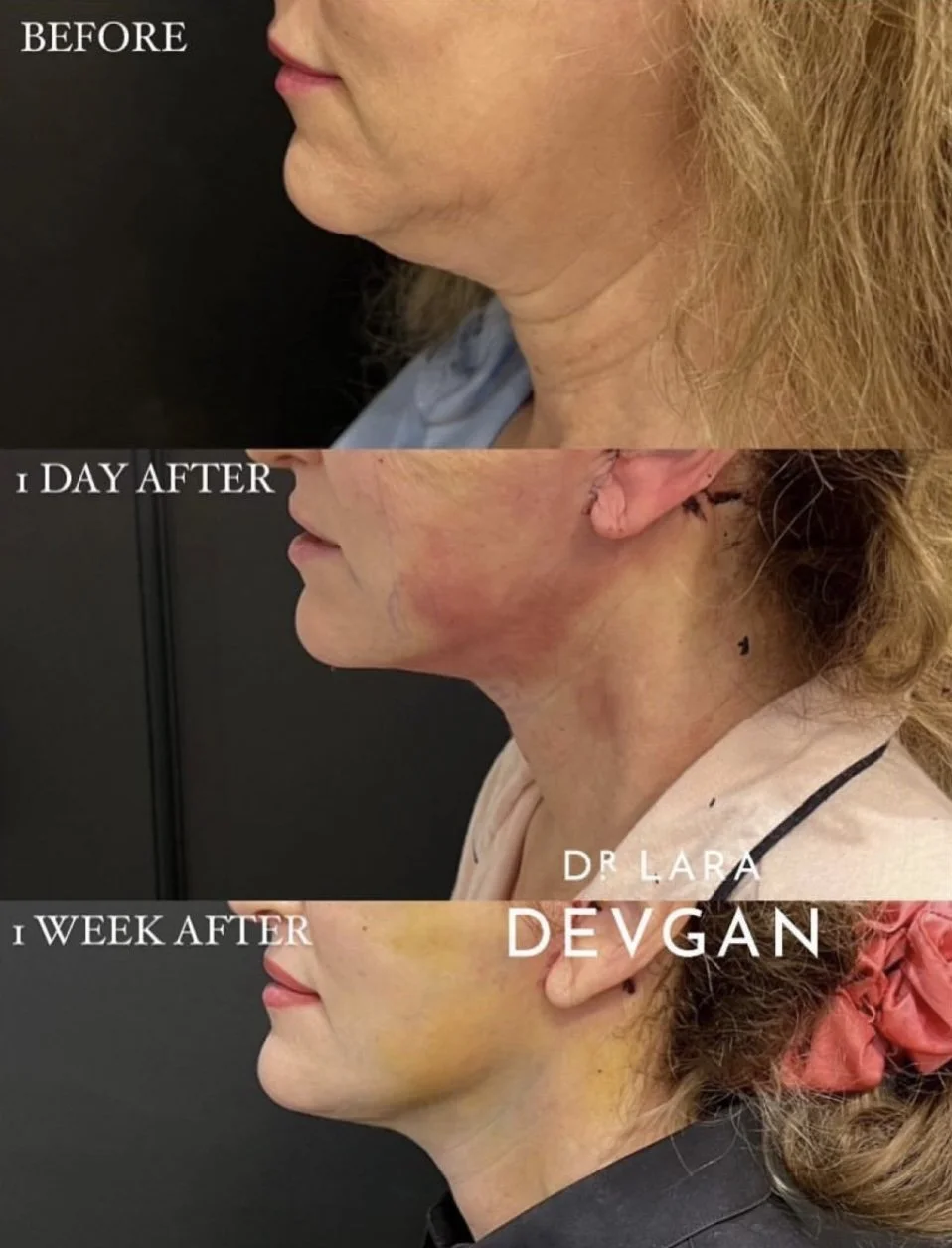

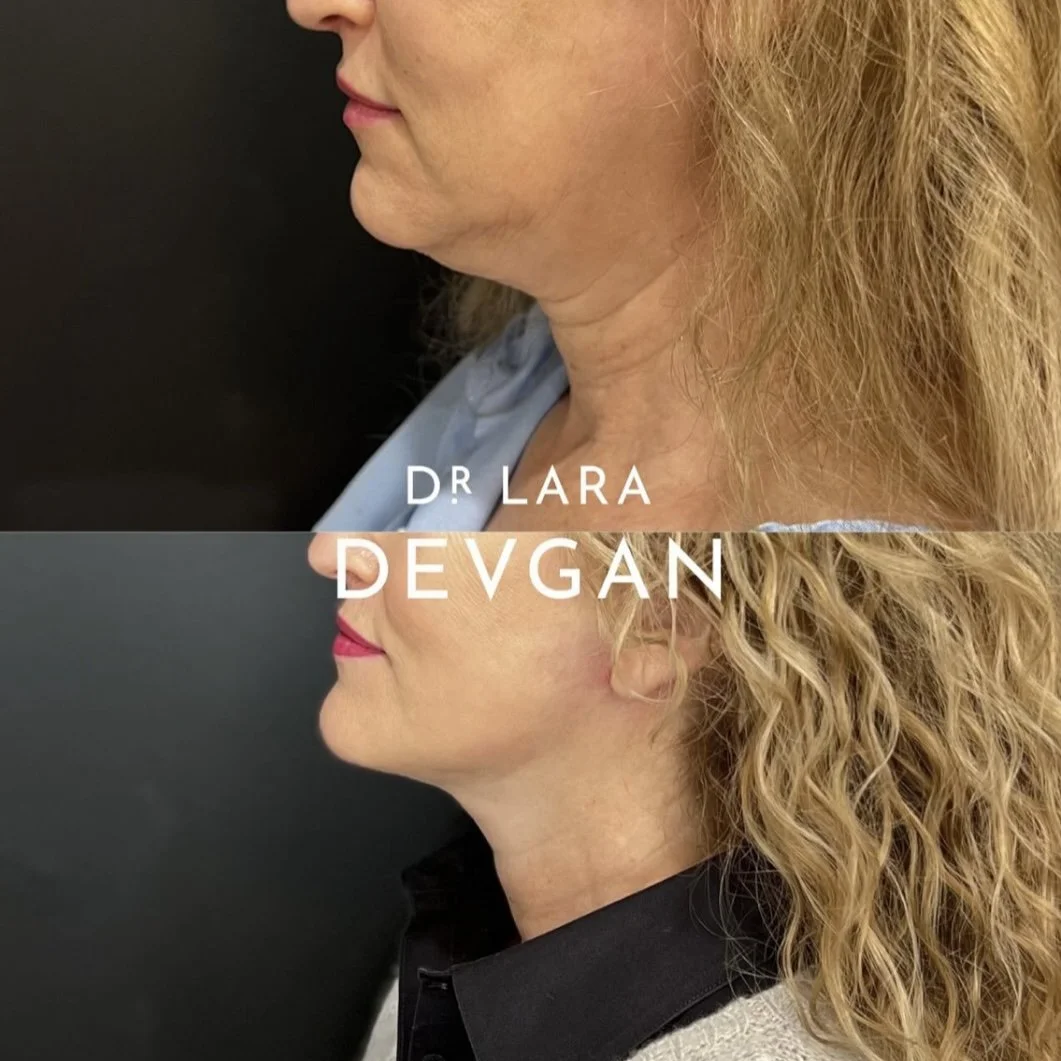
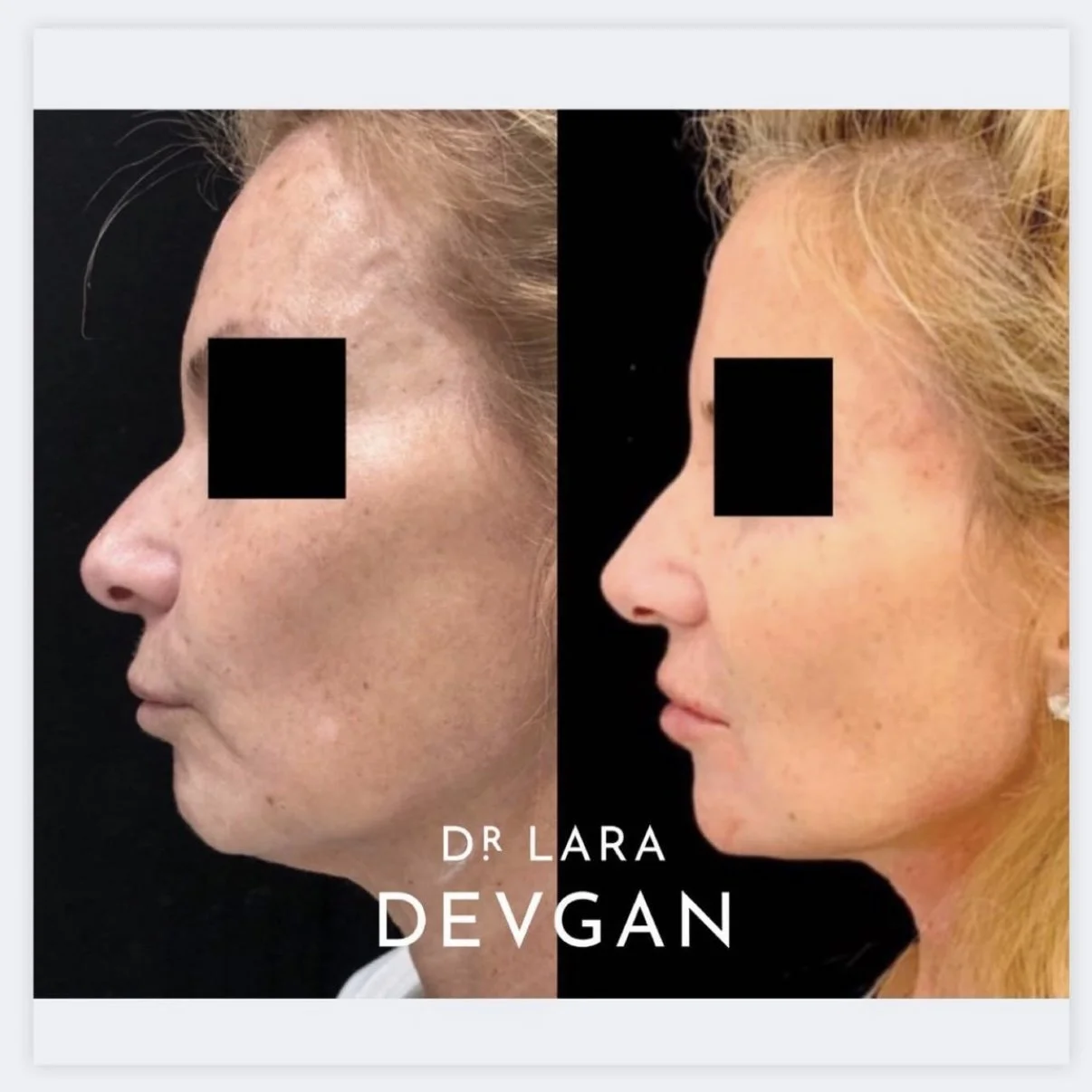
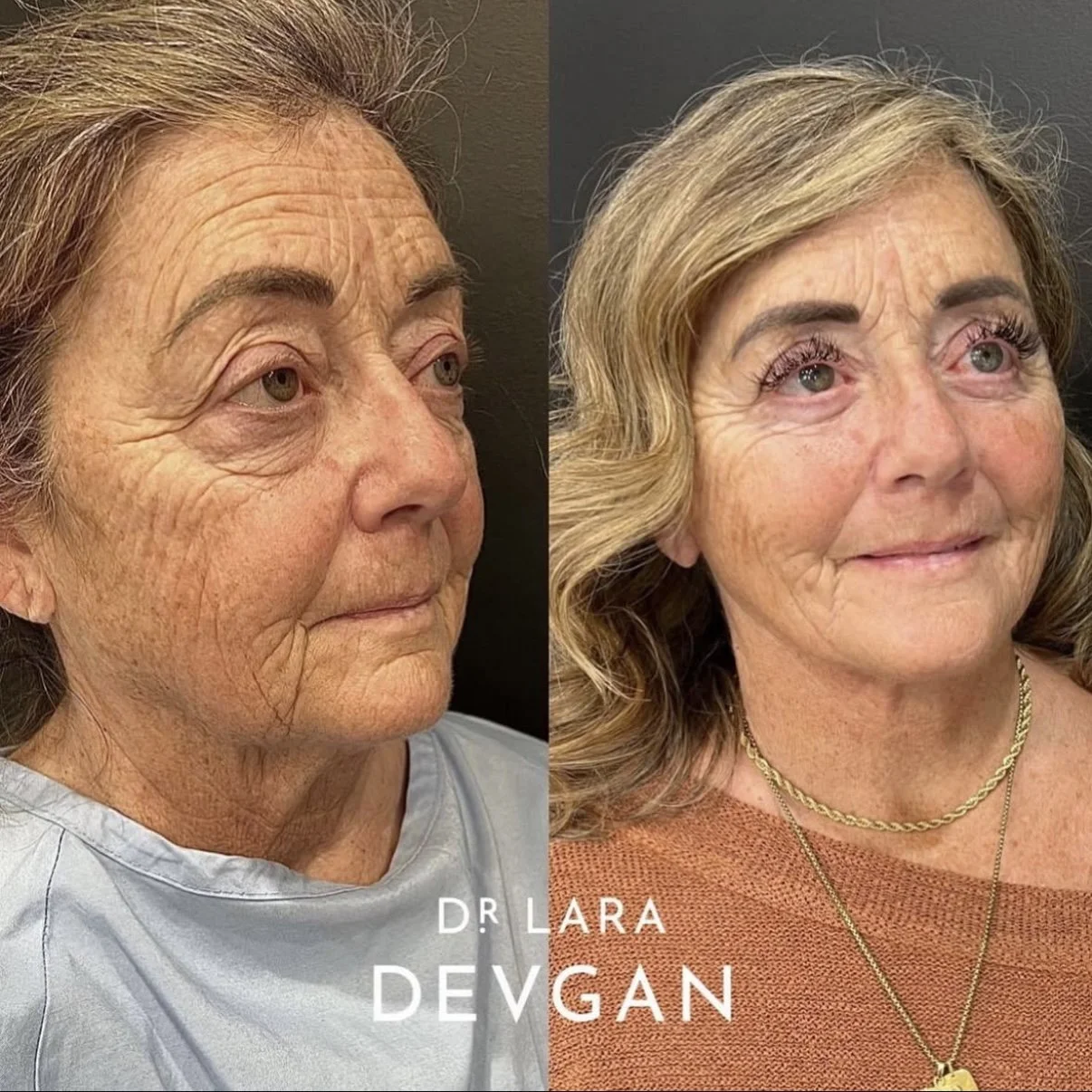
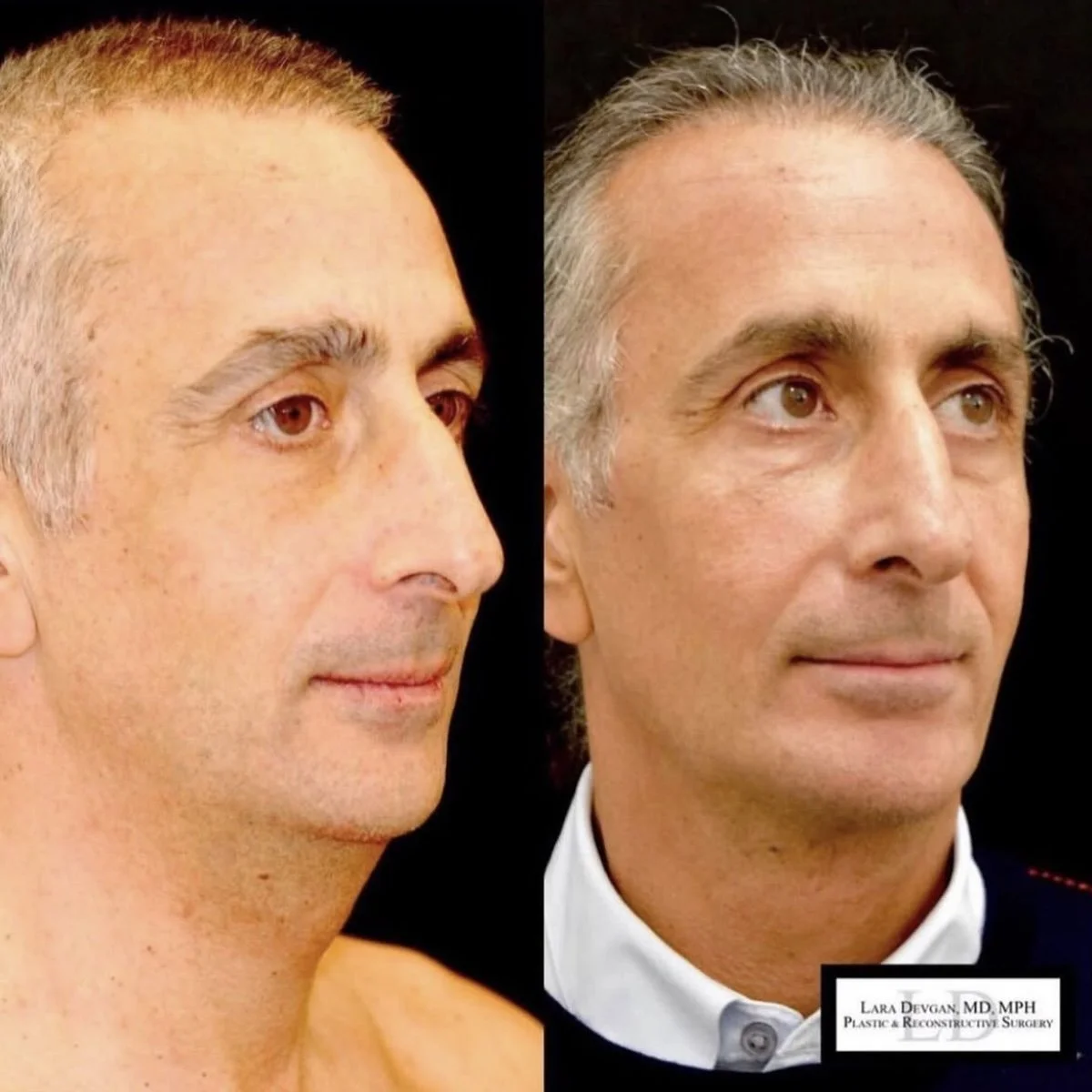
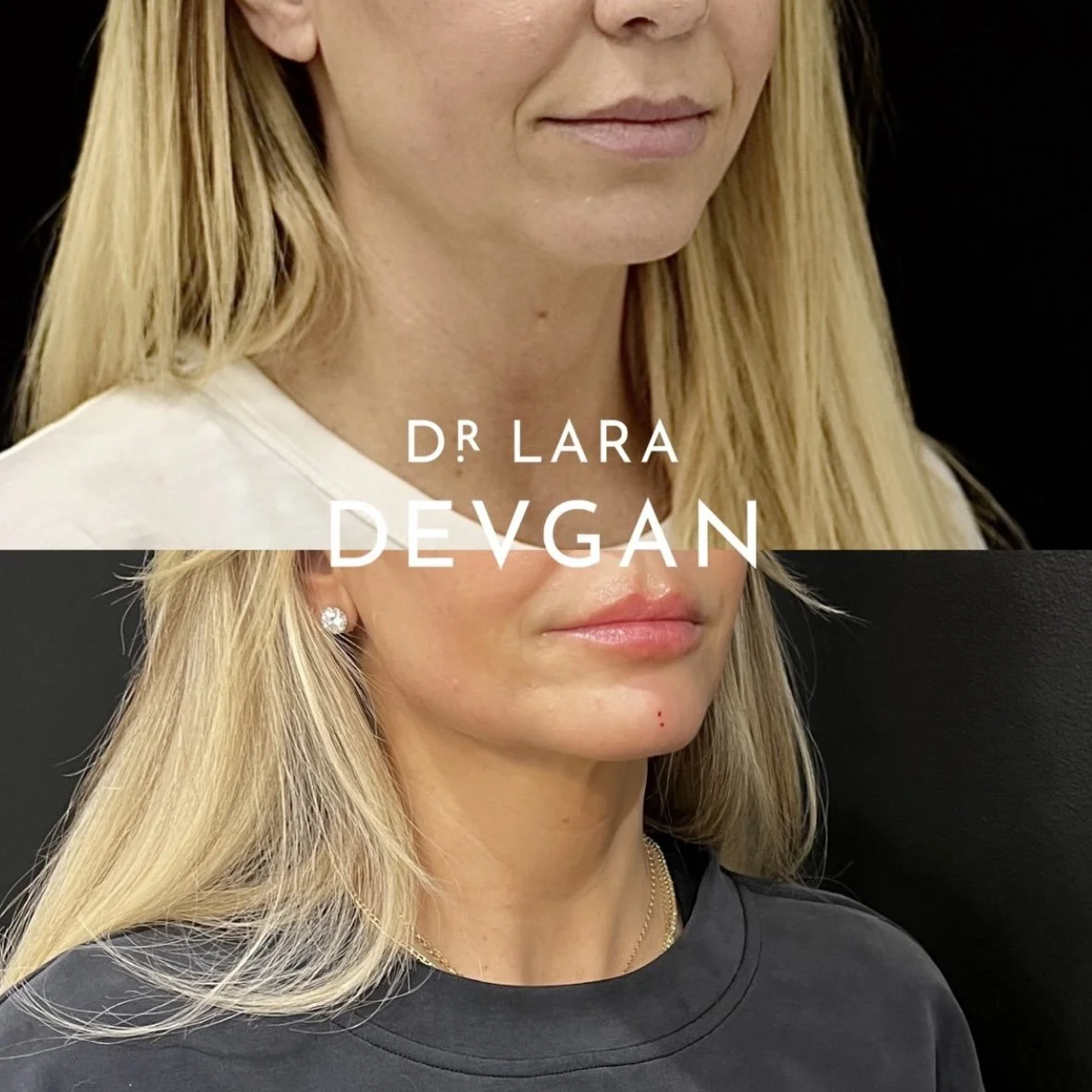
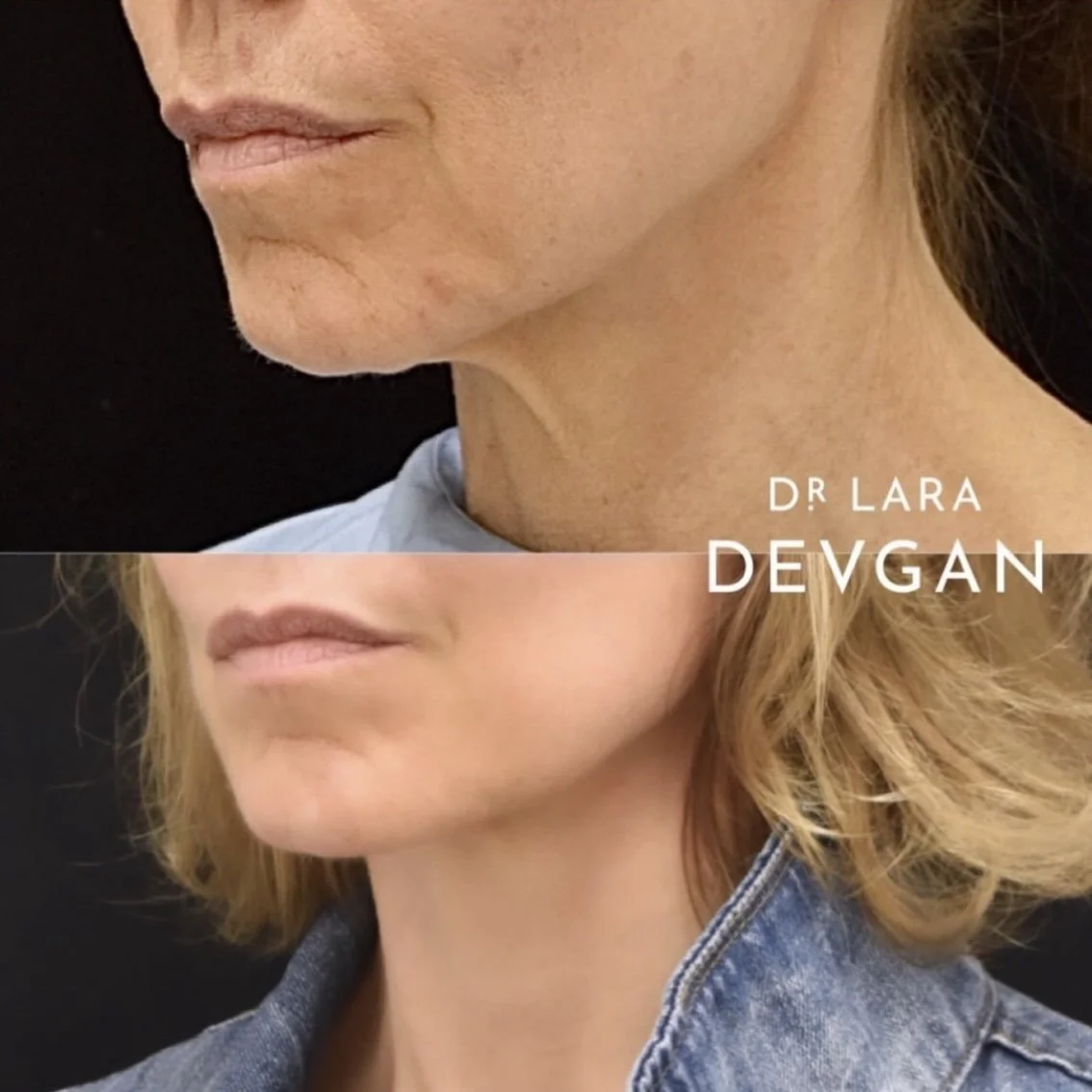
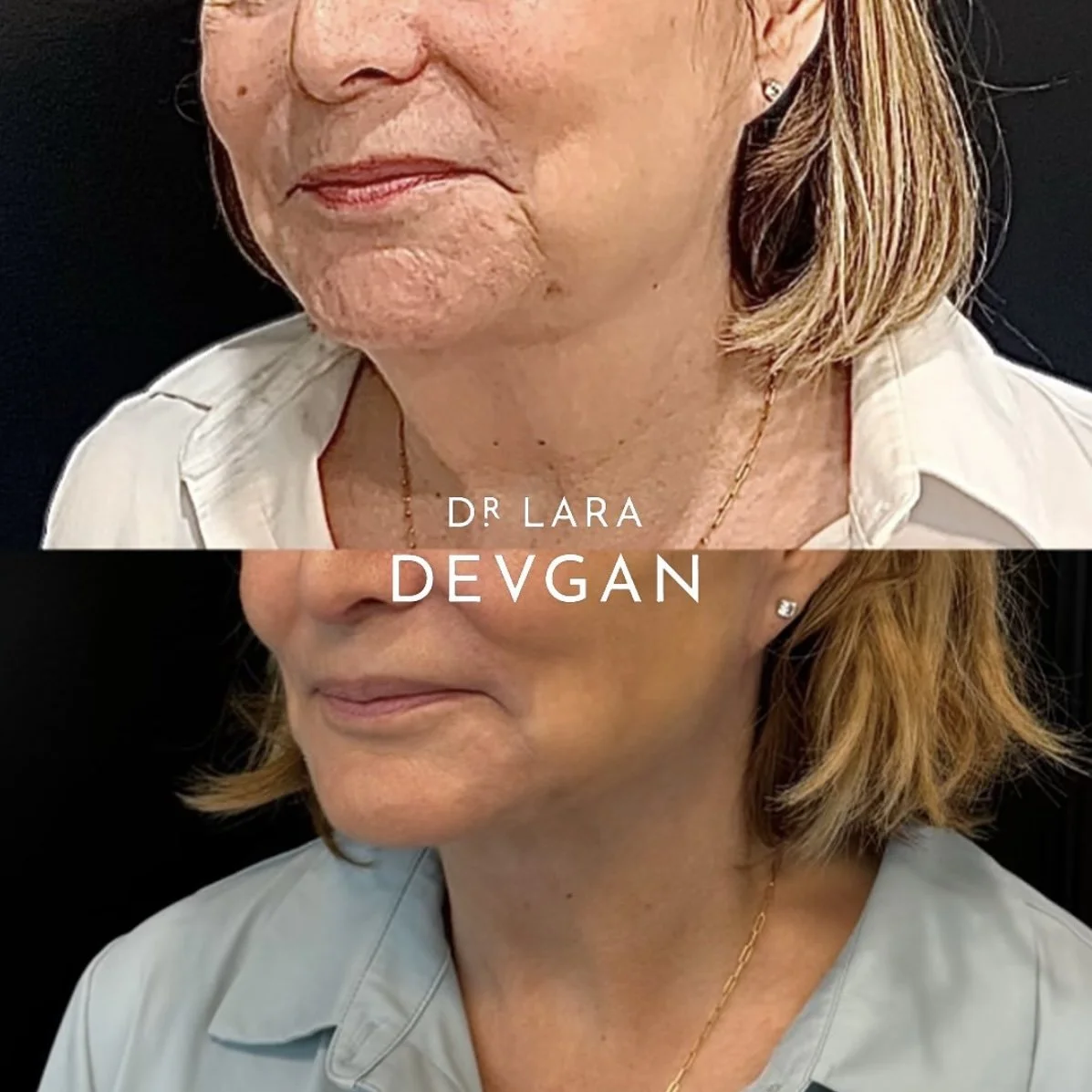
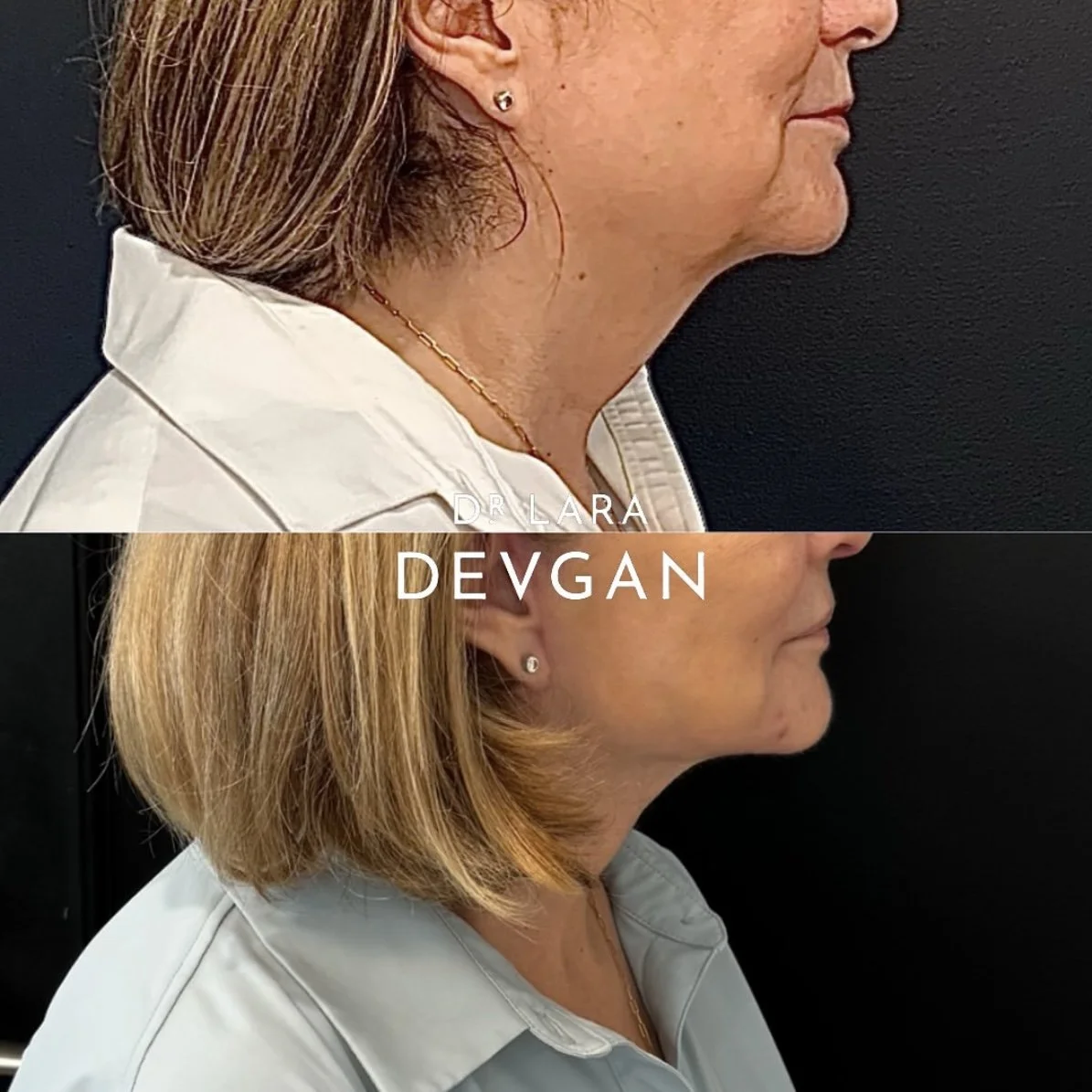
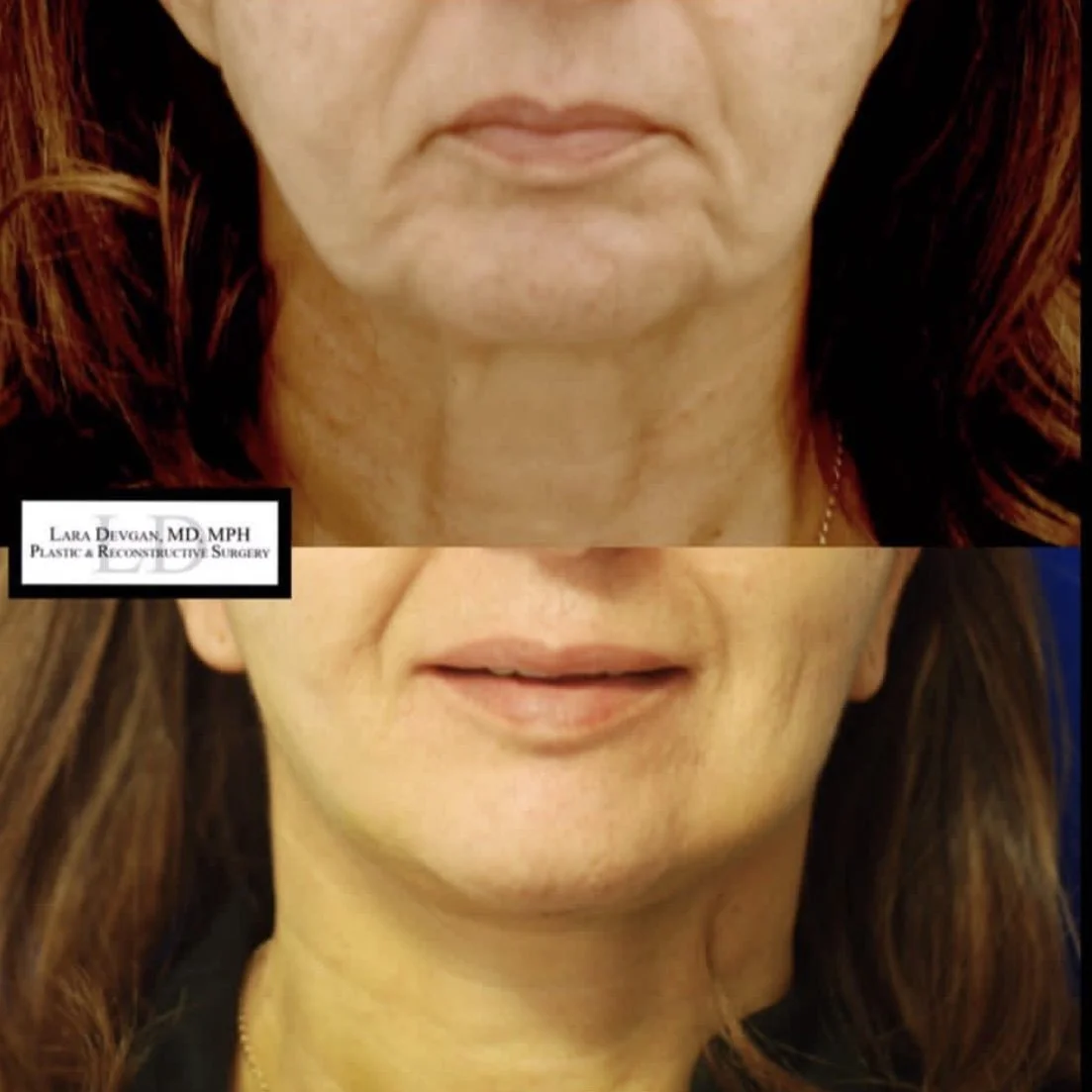
Facelift Surgery in New York City
A facelift is not simply a procedure to make the face look tighter. At its best, it is a carefully planned operation designed to restore youthful facial structure, improve soft-tissue support, refine the jawline and neck, and preserve the features that make a patient look like themselves.
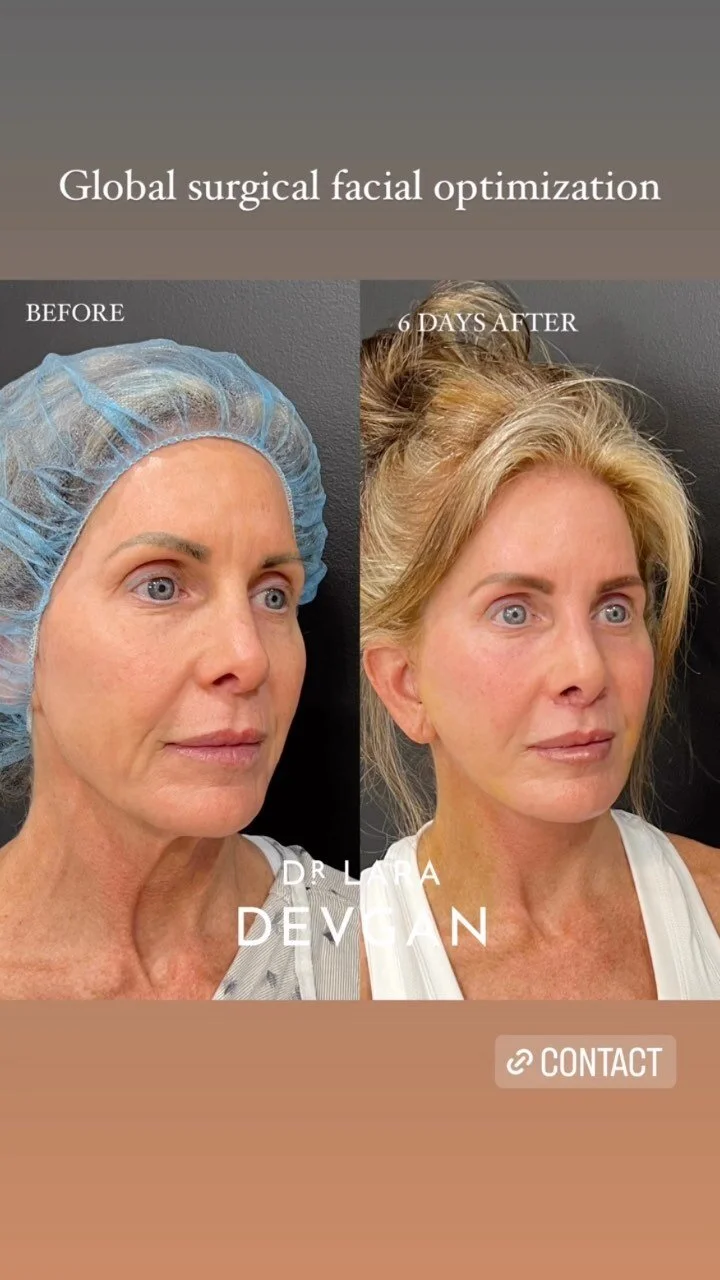
Dr. Lara Devgan approaches facelift surgery as a form of facial optimization. Her goal is not to create an artificial or overcorrected appearance, but to restore balance, definition, and proportion through precise anatomic surgery. Every operation is individualized according to facial structure, skin quality, soft-tissue descent, bone support, and the patient’s unique pattern of aging.
The most elegant facelift results are often the least obvious. A patient should look refreshed, rested, and more refined without appearing pulled, changed, or surgically altered.
What Is a Facelift?
A facelift is a surgical procedure that repositions descended facial tissues and removes or redistributes excess skin. Depending on the technique, the operation may address the cheeks, jowls, jawline, lower face, and neck.
Modern facelift surgery focuses on the deeper supportive layers of the face rather than relying on skin tension alone. The skin is gently redraped after the underlying tissues have been elevated and repositioned.
A facelift may improve:
Jowls
Loss of jawline definition
Lower facial heaviness
Midface descent
Deepened nasolabial folds
Neck laxity
Platysmal banding
Submental fullness
Loose skin beneath the chin
Facial imbalance caused by age-related tissue descent
A facelift does not erase every line or change the natural architecture of the face. It restores support and proportion while preserving expression and identity.
When Is It Time for a Facelift?
Patients often begin considering facelift surgery when nonsurgical treatments no longer provide meaningful improvement.
One practical sign is more than approximately one centimeter of pinchable laxity in the neck, jowl, or midface. At this point, filler, neuromodulators, and skin treatments may improve isolated features, but they cannot adequately reposition descended tissue.
A facelift may be appropriate when you notice:
Increasing jowl formation
Loss of a smooth jawline
Neck skin that remains loose despite weight stability
Heaviness around the mouth
A tired or downward facial appearance
Midface flattening or descent
Platysmal bands in the neck
Excess tissue beneath the chin
Facial changes that no longer respond to nonsurgical treatment
There is no single correct age for facelift surgery. Candidacy is based more on anatomy, tissue quality, degree of laxity, health, and personal goals than on chronological age.
The Dr. Lara Devgan Approach
Dr. Devgan’s philosophy is based on precision, restraint, and preservation of identity.
She evaluates the face as an integrated anatomic system. The cheeks, jawline, neck, eyes, brows, lips, chin, and skin surface all influence one another. A successful facelift therefore depends on understanding both local anatomy and global facial balance.
Her approach emphasizes:
Deep structural support
Multivector tissue repositioning
Tension-free skin closure
Careful preservation of facial identity
Avoidance of an overpulled appearance
Meticulous scar placement
Natural restoration of facial proportions
Individualized treatment rather than a standardized operation
The objective is not to make every patient look the same. It is to reveal the most refined version of each patient’s own anatomy.
Types of Facelift Surgery
Facelift surgery is not one single operation. Different techniques address different regions of the face and varying degrees of tissue descent.
Midface Lift
A midface lift addresses descent of the cheeks and the central face.
With aging, cheek tissue can move downward, contributing to flattening of the upper cheek, deepening of the nasolabial folds, and a heavier appearance around the mouth.
A midface lift repositions the cheek soft tissues to restore:
Upper cheek contour
Midfacial support
A more youthful transition between the lower eyelid and cheek
Improved facial proportions
Reduced heaviness in the central face
A midface lift may be performed alone in selected patients, but it is often combined with a lower facelift, necklift, blepharoplasty, or autologous fat grafting.
Lower Facelift
A lower facelift focuses on the jowls, jawline, lower cheeks, and tissues around the mouth.
It may improve:
Jowl formation
Loss of mandibular definition
Lower facial heaviness
Marionette-line depth
Tissue descent around the mouth
Blunting of the jawline
The deeper tissues are repositioned to restore structural support. The skin is then redraped without excessive tension.
Necklift
A necklift addresses laxity below the jawline.
The operation may involve:
Tightening or repositioning the platysma muscle
Removing excess skin
Improving submental contour
Refining the cervicomental angle
Treating platysmal bands
Reducing fullness beneath the chin
Improving the transition from the jawline to the neck
A necklift is frequently combined with a lower facelift because the face and neck age together.
Mini Facelift
A mini facelift is a more limited operation intended for patients with early lower facial laxity.
It may be appropriate for patients with:
Mild jowling
Early jawline blunting
Limited skin laxity
Minimal neck involvement
The incisions and dissection may be shorter than in a more comprehensive facelift, but a mini facelift is not necessarily a small version of every facelift. It is a distinct procedure with more limited indications.
Patients with significant neck laxity, midface descent, or advanced jowling may be better served by a more complete operation.
Revision Facelift
A revision facelift is performed after a prior facelift.
Patients may seek revision surgery because of:
Recurrent facial or neck laxity
Incomplete correction
Unfavorable scars
Pixie ear deformity
Distorted earlobe position
Asymmetry
Tethering
Overpulled features
Residual fullness
Loss of support over time
Revision surgery is often more technically complex because normal tissue planes may be altered by scar tissue and previous dissection. Careful planning is essential.
SMAS Facelift Versus Deep Plane Facelift
Many patients ask about the difference between SMAS and deep plane techniques.
SMAS Facelift
The superficial musculoaponeurotic system, or SMAS, is a fibromuscular layer beneath the facial skin.
In a SMAS facelift, this layer is tightened, repositioned, folded, or partially elevated to improve support in the cheek, jawline, and lower face.
Potential benefits include:
Strong structural support
Customizable vectors of elevation
Improved jawline contour
Reduced reliance on skin tension
Natural facial movement when performed carefully
Deep Plane Facelift
A deep plane facelift involves dissection beneath the SMAS in selected regions of the face. This allows the skin and deeper facial tissues to move together as a more unified layer.
Potential benefits may include:
Release of retaining ligaments
Repositioning of deeper facial tissues
Improvement in midface and jowl descent
Reduced surface tension
More comprehensive tissue mobilization in selected patients
Which Is Better?
There is no single technique that is best for every patient.
The most important factors are:
The surgeon’s understanding of facial anatomy
The patient’s pattern of aging
The degree and location of tissue descent
Skin quality
Prior surgery
Facial nerve safety
Vector planning
Scar management
Dr. Devgan may use SMAS, deep plane, sub-SMAS, or combined multivector techniques depending on the anatomy and goals of the individual patient.
Technique should serve the patient, not the other way around.
What Is a Multivector Facelift?
Facial aging does not occur in one direction. Different regions of the face descend along different vectors.
A multivector facelift repositions each anatomic region according to the direction that best restores its youthful relationship.
For example:
The midface may require upward and slightly lateral support.
The jowl may require a more vertical correction.
The neck may require posterior and superior redraping.
The platysma may require central or lateral tightening.
The jawline may require refinement through tissue repositioning or liposuction.
Using the same direction of pull everywhere can create distortion. Multivector planning helps avoid an overpulled mouth, widened scars, unnatural cheek position, or a stretched appearance.
Facelift Incisions and Scar Placement
Facelift incisions are typically placed around the ear and within natural contours of the face and scalp.
Depending on the operation, incisions may be placed:
Within the temporal hairline
Along the natural contour in front of the ear
Within the tragal crease
Around the earlobe
Behind the ear
Within the posterior hairline
Beneath the chin for neck access
Dr. Devgan places scars with close attention to hairline preservation, tragal anatomy, earlobe shape, ear position, and natural skin creases.
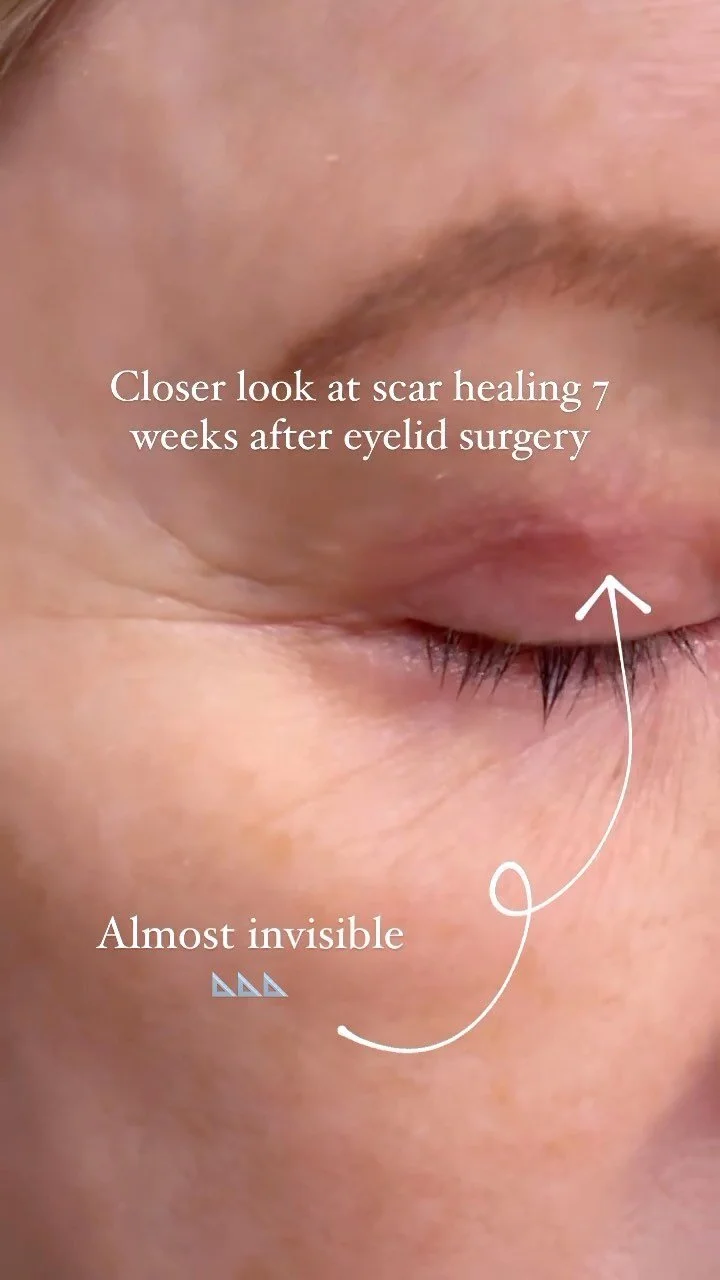
A well-planned facelift should not leave obvious scars on the visible central face.
Scar quality depends on:
Incision placement
Closure technique
Skin tension
Genetics
Smoking status
Sun exposure
Healing biology
Postoperative care
The incisions are closed meticulously to support inconspicuous healing.
Avoiding the Overpulled Facelift Look
An unnatural facelift appearance usually results from poor vector selection, excessive skin tension, distortion of the mouth, loss of facial volume, or failure to respect the underlying anatomy.
Potential signs of an overdone facelift include:
A stretched mouth
Lateral pulling of the lips
Flattened cheeks
Abnormal ear position
Visible tension around incisions
An overly sharp or hollow appearance
Loss of facial individuality
Excessive fat grafting
A tight but unnatural neck
Dr. Devgan’s goal is to restore support beneath the surface rather than stretch the skin. Minor natural irregularities are often preferable to an overcorrected face.
Facelift and Necklift Combination
The lower face and neck are anatomically continuous. For many patients, treating only one region can leave an incomplete result.
A lower facelift and necklift may be performed together to improve:
Jowls
Jawline definition
Neck laxity
Platysmal bands
Submental fullness
Lower facial heaviness
The angle between the chin and neck
Combining the procedures can create a more balanced transition from the cheek to the jawline and from the jawline to the neck.
Adjunctive Procedures
Facelift surgery is often combined with additional procedures when they contribute meaningfully to facial harmony.
Autologous Fat Grafting
A facelift repositions tissue but does not always replace age-related volume loss.
Autologous fat grafting uses the patient’s own fat to restore selected areas such as:
Temples
Upper cheeks
Lower eyelid-cheek junction
Nasolabial folds
Lips
Chin
Earlobes
Perioral region
The goal is not to overfill the face. Small, carefully placed amounts can support facial contour and soften areas of deflation.
Upper Blepharoplasty
Upper blepharoplasty removes or repositions excess upper eyelid skin and, when appropriate, fat.
It may improve:
Eyelid heaviness
Hooding
Visual obstruction
Loss of eyelid definition
A tired upper-face appearance
Lower Blepharoplasty
Lower blepharoplasty addresses lower eyelid bags, contour irregularities, and the transition between the eyelid and cheek.
It may include:
Fat repositioning
Conservative fat removal
Skin refinement
Muscle support
Integration with midface surgery
Brow Lift
A brow lift may improve brow descent, temporal heaviness, or upper facial imbalance.
Options may include:
Temporal brow lift
Coronal brow lift
Internal brow pexy
Limited-incision brow lift
The procedure is selected according to brow position, forehead anatomy, hairline, and eyelid relationship.
Lip Lift
A lip lift shortens the distance between the nose and upper lip and increases visible upper vermilion.
It may improve:
A long upper lip
Reduced tooth show
Age-related elongation
Flattening of the upper lip
Imbalance between the nose, lips, and chin
Buccal Fat Pad Excision
Buccal fat pad excision may be appropriate for carefully selected patients with persistent lower-cheek fullness.
It is not appropriate for every face. Overremoval can create premature hollowing or an aged appearance.
Submental Liposuction
Submental liposuction removes localized fat beneath the chin and along the upper neck.
It may be performed alone in younger patients with good skin elasticity or combined with a facelift and necklift when additional contour refinement is needed.
Chin Augmentation
Chin augmentation may improve facial proportions and strengthen the relationship between the lower face and neck.
Options include:
Chin implant
Fat grafting
Hyaluronic acid filler
Structural soft-tissue refinement
Laser Resurfacing
Laser resurfacing addresses the skin surface rather than deep tissue descent.
It may improve:
Fine lines
Sun damage
Texture
Pigmentation
Superficial wrinkles
Perioral lines
Erbium laser resurfacing may be combined with facelift surgery in selected patients.
What a Facelift Does Not Treat
A facelift does not directly correct every aspect of facial aging.
It may not fully treat:
Fine surface lines
Pigmentation
Sun damage
Eyelid bags
Brow descent
Lip shape
Significant skeletal imbalance
Dynamic wrinkles
Poor skin texture
These concerns may require adjunctive procedures or nonsurgical treatments.
Facelift Consultation
The consultation is an opportunity to evaluate anatomy, goals, medical history, and surgical candidacy.
Dr. Devgan will assess:
Facial proportions
Skin quality
Degree of laxity
Midface support
Jowls
Jawline
Neck anatomy
Platysmal bands
Submental fullness
Fat distribution
Bone structure
Prior surgery
Scars
Hairline and ear anatomy
Eyelids and brow position
Patients should be prepared to discuss:
Their main concerns
Previous procedures
Medical conditions
Medications and supplements
Smoking or nicotine use
Prior anesthesia history
Desired recovery timeline
Expectations for surgery
The most successful plan is one that addresses the patient’s priorities while remaining anatomically appropriate.
Who Is a Good Candidate?
A good facelift candidate is generally someone who:
Has visible facial or neck laxity
Is in good overall health
Has realistic expectations
Does not smoke or use nicotine
Can follow postoperative instructions
Understands the recovery process
Wants a natural improvement rather than a different identity
Certain medical conditions, medications, healing disorders, or lifestyle factors may affect candidacy.
Preparing for Surgery
Preoperative instructions vary by patient but may include:
Medical clearance
Laboratory testing
Medication review
Discontinuing nicotine
Avoiding medications or supplements that increase bleeding risk
Arranging transportation
Organizing postoperative support
Preparing appropriate recovery supplies
Planning time away from work and social obligations
Patients should follow only the personalized instructions provided by their surgical team.
Anesthesia
Facelift surgery may be performed under general anesthesia or intravenous sedation, depending on the procedure, patient, and surgical plan.
The anesthesia approach is selected to prioritize comfort, safety, and operative control.
How Long Does Surgery Take?
The duration depends on the number of areas treated and the complexity of the operation.
A limited procedure may take several hours. A comprehensive facelift, necklift, fat grafting, and eyelid operation may take longer.
Surgical duration should be determined by what is necessary to perform the operation carefully rather than by speed alone.
What Happens After Surgery?
Patients are monitored after the operation and receive individualized instructions regarding wound care, activity, medications, positioning, and follow-up.
Early recovery commonly includes:
Swelling
Bruising
Tightness
Temporary numbness
Mild asymmetry
Fatigue
Changes in facial sensation
These findings generally improve as healing progresses.
Facelift Recovery Timeline
Recovery varies, but a general timeline may include:
First 48 Hours
Swelling and bruising are often most noticeable during the early postoperative period. Patients should rest, keep the head elevated, and follow medication and wound-care instructions closely.
First Week
Bruising and swelling remain present but begin to improve. Sutures may be removed in stages depending on incision location and healing.
Two Weeks
Many patients feel comfortable returning to light work or limited social activities, although residual swelling may still be visible.
Three to Four Weeks
Most bruising has resolved. Swelling continues to decrease, and the result begins to look more natural.
Six Weeks
Many patients appear socially presentable and may resume a broader range of activities with surgeon approval.
Three to Six Months
Residual swelling, firmness, and numbness continue to improve. Incisions mature and soften.
One Year
Scars and tissue contours continue to refine. Final healing is a gradual process.
When Can I Return to Work?
Many patients plan approximately two weeks away from work, although this depends on the extent of surgery, bruising, swelling, occupation, and comfort with social visibility.
Patients undergoing multiple procedures may require additional recovery time.
When Can I Exercise?
Walking is usually encouraged early, but strenuous exercise, heavy lifting, bending, and activities that raise blood pressure may need to be avoided during the initial healing period.
Exercise should resume gradually and only after clearance from the surgical team.
How Long Do Facelift Results Last?
A facelift does not stop the aging process, but it can create a lasting improvement in facial structure.
Many patients continue to look younger than they would have without surgery for years afterward. Longevity depends on:
Genetics
Skin quality
Sun exposure
Smoking
Weight stability
Facial anatomy
Surgical technique
Lifestyle
Ongoing aging
The face will continue to age naturally, but from a more supported starting point.
Can a Facelift Be Repeated?
Yes. Some patients may consider revision or secondary facelift surgery years after their first operation.
A repeat procedure may address:
Recurrent laxity
New aging changes
Scar refinement
Neck recurrence
Jowl recurrence
Volume loss
Prior technical problems
Secondary surgery requires careful evaluation of scar tissue, anatomy, and prior operative changes.
Risks of Facelift Surgery
All surgery involves risk.
Potential risks may include:
Bleeding
Hematoma
Infection
Delayed healing
Scarring
Hairline changes
Hair loss near incisions
Numbness
Facial nerve weakness
Asymmetry
Skin irregularity
Skin loss
Fluid collection
Prolonged swelling
Contour irregularity
Unfavorable ear position
Need for revision
Anesthesia-related complications
Smoking and nicotine use significantly increase healing risk.
A detailed discussion of risks, benefits, and alternatives is part of the consultation and informed-consent process.
Facelift Versus Filler
Filler and facelift surgery address different problems.
Filler may improve:
Localized volume loss
Chin projection
Cheek contour
Tear troughs
Lips
Selected folds and depressions
A facelift addresses:
Tissue descent
Jowls
Skin laxity
Neck laxity
Loss of structural support
Adding filler to a face with significant laxity can sometimes create heaviness without correcting the underlying descent. Surgery may be more appropriate when the central problem is excess or displaced tissue.
Facelift Versus Nonsurgical Skin Tightening
Nonsurgical devices may offer modest improvement in selected patients, but they do not reproduce the tissue repositioning achieved through surgery.
Patients with meaningful jowls, neck laxity, or descended facial tissues should understand that no nonsurgical device can reliably replace a facelift.
Facelift for Men
Male facelift surgery requires particular attention to:
Beard-bearing skin
Sideburn position
Hairline
Scar placement
Jawline strength
Facial width
Avoidance of feminization
Preservation of masculine proportions
The goal is typically to create a fresher, sharper appearance without changing the patient’s fundamental identity.
Facelift for Younger Patients
Some younger patients develop early facial or neck laxity because of genetics, weight loss, anatomy, or premature tissue descent.
A younger patient may be a candidate for a limited facelift, necklift, or targeted structural procedure if nonsurgical options cannot address the concern.
The operation should be based on anatomy rather than age alone.
Facelift After Weight Loss
Significant weight loss may produce:
Facial deflation
Jowling
Neck laxity
Loose skin
Temporal hollowing
Midface flattening
Treatment may require a combination of facelift, necklift, and selective fat grafting.
Weight should generally be stable before surgery.
Natural Facelift Results
A natural facelift should preserve:
The shape of the eyes
The position of the mouth
The patient’s smile
Facial expression
Ethnic identity
Gender characteristics
Individual asymmetries that contribute to recognizability
The goal is not perfection or uniformity. It is harmony.
Frequently Asked Questions
Will I look different?
The intention is for you to look like yourself, but more rested, refined, and structurally supported. A well-executed facelift should not erase your identity.
Will my face look tight?
Tightness is common early in recovery, but the final appearance should not look tight or stretched. The deeper tissues are repositioned so the skin can be redraped with minimal tension.
Are facelift scars visible?
Facelift scars are placed around the ears and within natural creases and hair-bearing areas. They are visible during early healing but generally fade over time.
Is a deep plane facelift always better?
No. Deep plane surgery is one technique. The best approach depends on anatomy, prior surgery, tissue quality, and the surgeon’s experience.
Can I combine a facelift with eyelid surgery?
Yes. Facelift surgery is often combined with upper or lower blepharoplasty, brow surgery, fat grafting, or skin resurfacing.
Does a facelift improve wrinkles?
A facelift improves wrinkles caused by tissue descent and laxity, but it does not treat every fine surface line. Laser resurfacing or skincare may be recommended for texture and superficial wrinkles.
Can filler delay a facelift?
Filler can improve volume loss and proportion, but it cannot meaningfully remove excess skin or reposition significant jowls and neck laxity.
How soon will I see the final result?
Improvement is visible as swelling resolves, but the face continues to refine over several months.
Is facelift surgery painful?
Most patients describe tightness, pressure, soreness, and swelling rather than severe pain. Comfort varies, and postoperative medications are prescribed as appropriate.
How do I choose a facelift surgeon?
Look for a board-certified plastic surgeon with extensive facial surgery experience, a detailed understanding of anatomy, a consistent record of natural results, and an approach that aligns with your goals.
Why Choose Dr. Lara Devgan?
Dr. Lara Devgan is a renowned board-certified plastic and reconstructive surgeon in New York City. Her approach combines technical precision, anatomic depth, meticulous scar planning, and a commitment to natural results.
Her facial surgery philosophy is based on the belief that beauty is found in small decisions: incision placement, vector selection, tissue handling, volume balance, scar tension, and preservation of identity.
The result should not announce itself as surgery. It should appear elegant, harmonious, and entirely at home on the patient’s face.
Schedule a Facelift Consultation in New York City
A private consultation is the first step in determining whether facelift surgery is appropriate for your anatomy and goals.
Dr. Lara Devgan is a renowned board-certified plastic surgeon in New York City. For consultation inquiries, please contact the office at 212.452.2400.