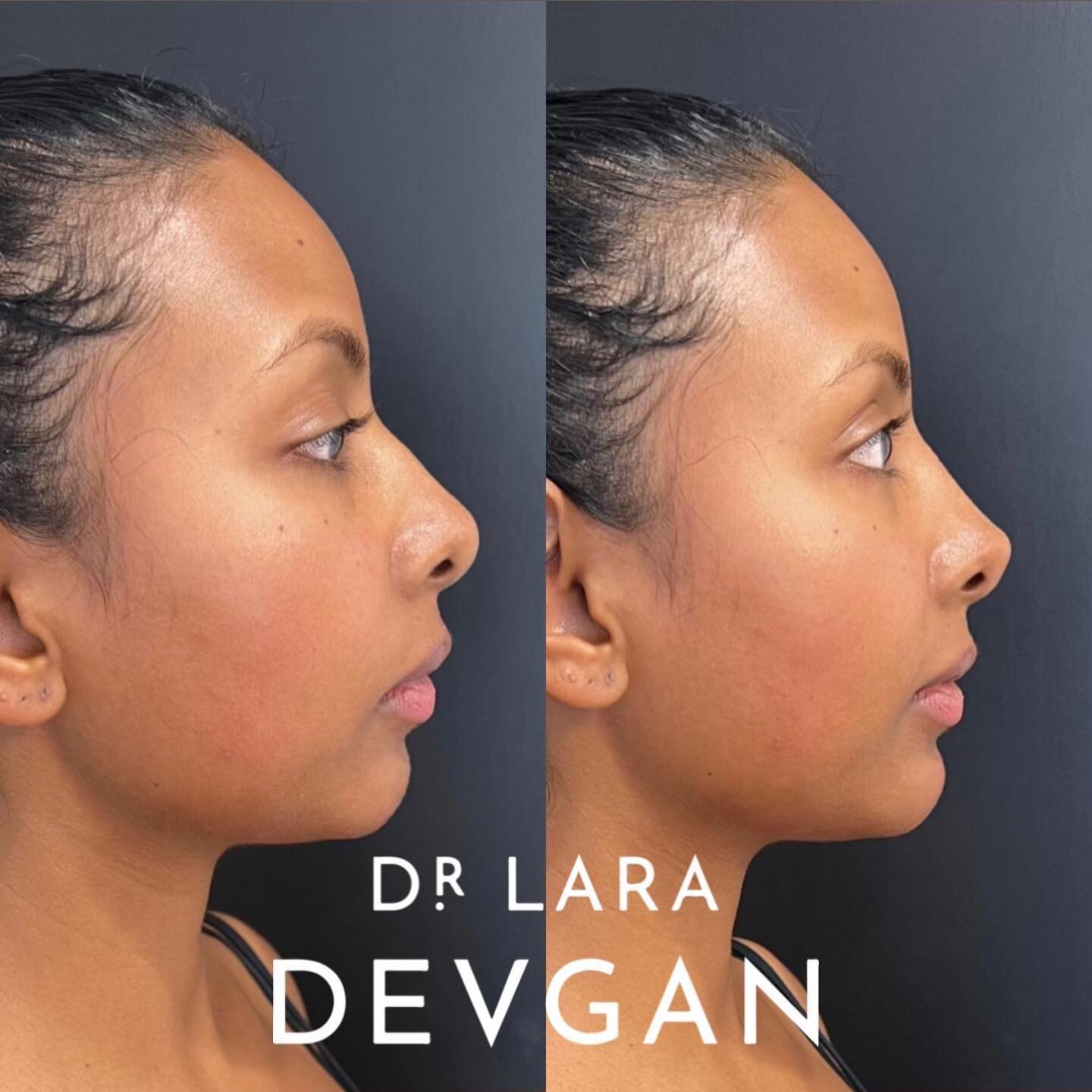
Signature Procedure | Profile Balancing

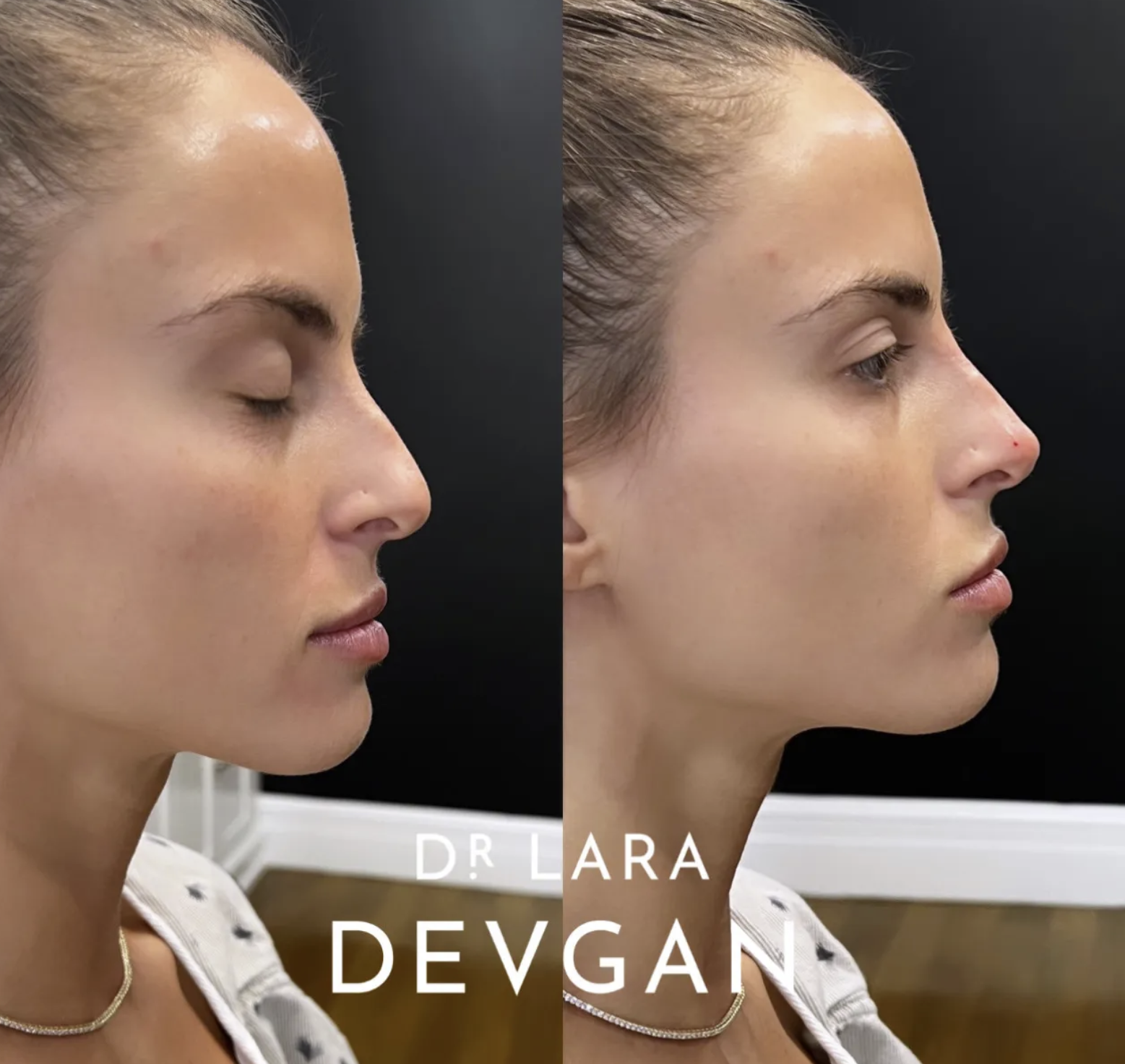
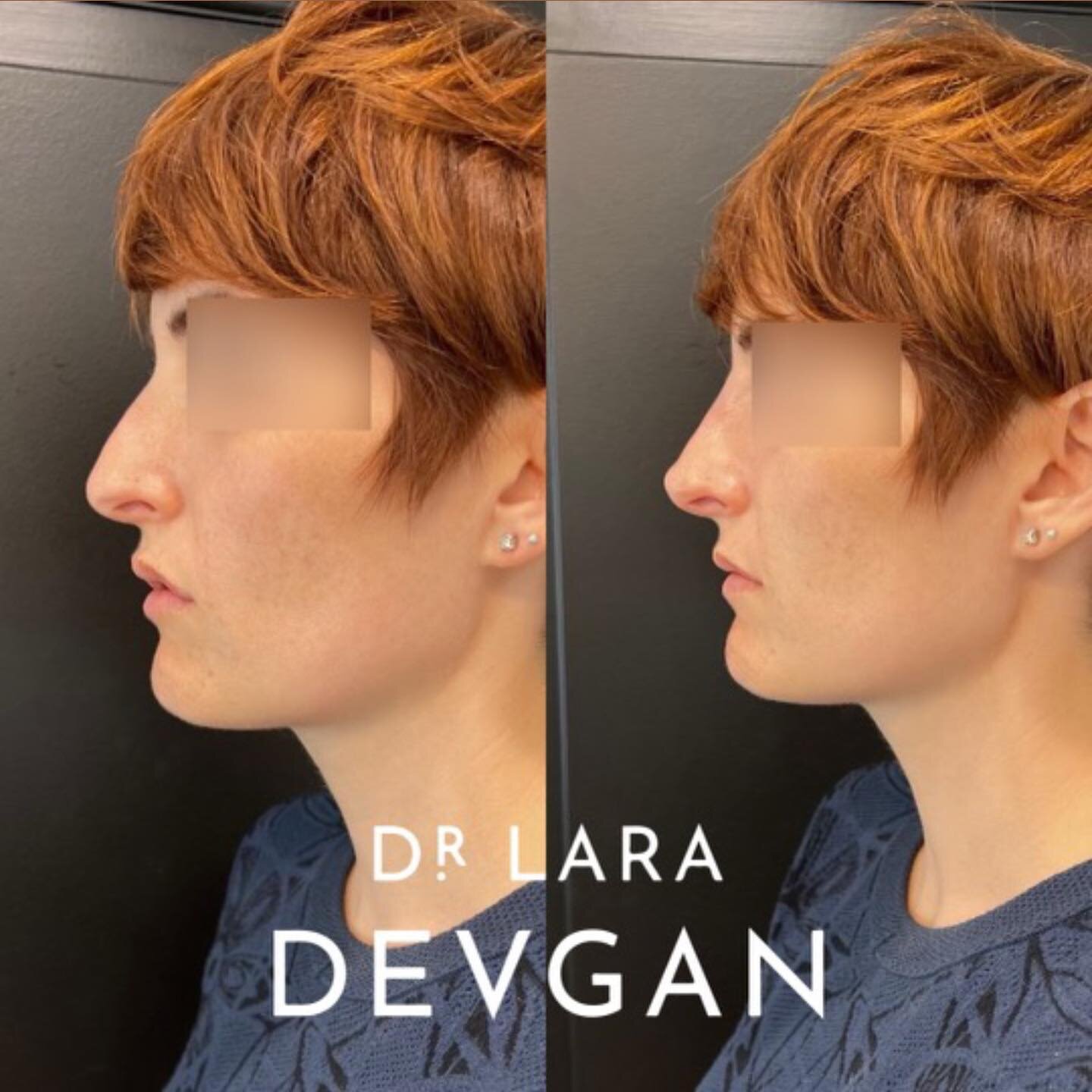
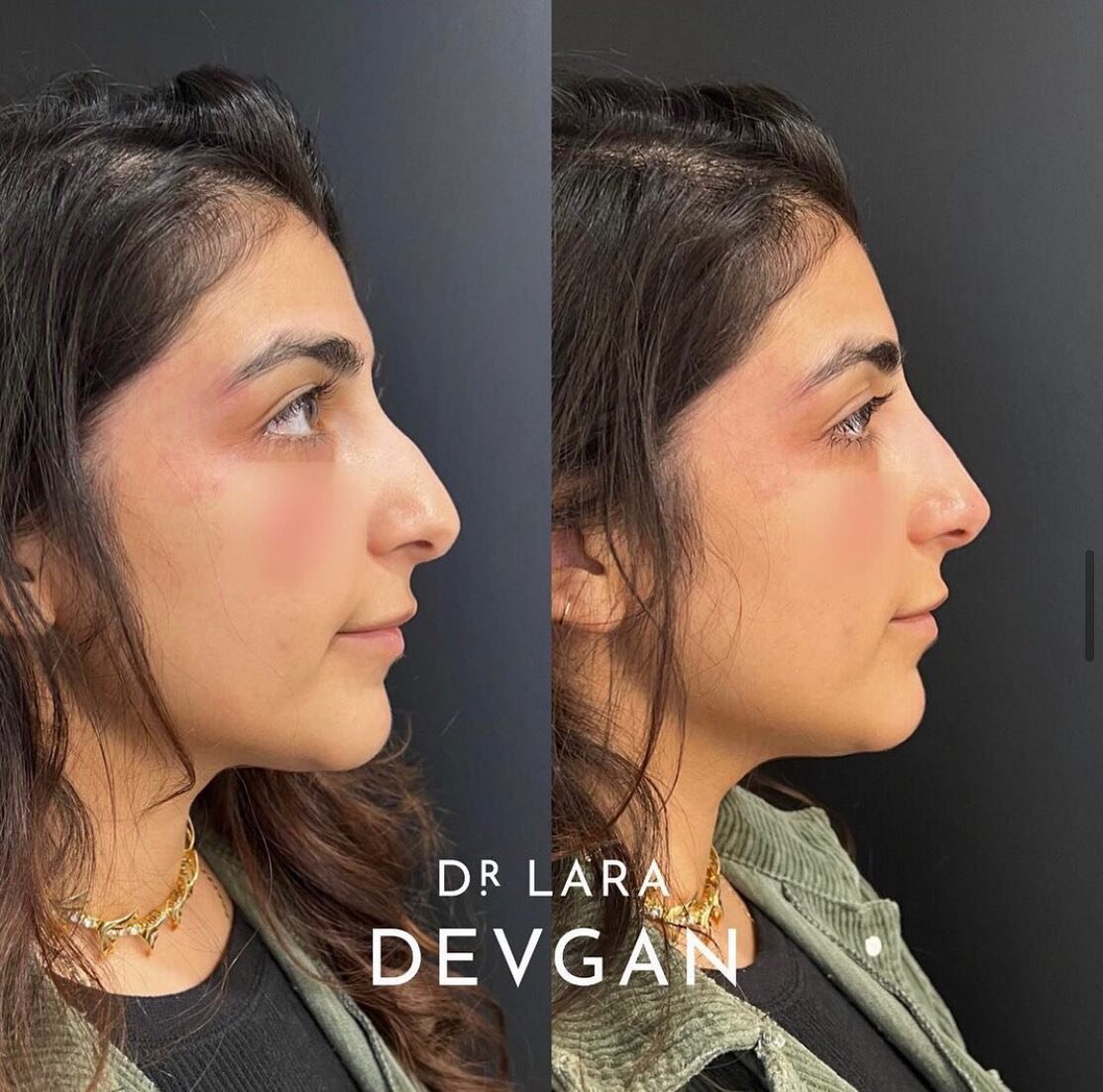
Dr. Lara Devgan demonstrates her signature profile balancing procedure in this TikTok.


Profile Balancing in Plastic Surgery: Enhancing Facial Harmony

Profile balancing is a strategic approach in cosmetic enhancement that focuses on achieving a harmonious relationship between the nose, lips, and chin. By addressing these key facial features together, surgeons and aesthetic practitioners can create a more proportionate and balanced profile.

Why Consider Profile Balancing?

Facial proportions play a significant role in overall aesthetics. An imbalance—such as a receding chin, a prominent nose, or an undefined jawline—can affect facial harmony. Profile balancing can help:

  • Improve overall facial symmetry

  • Enhance the relationship between the nose, lips, and chin

  • Create a more youthful and proportionate appearance

  • Boost confidence and self-image

Methods of Profile Balancing

  1. Rhinoplasty (Nose Surgery):

    • Adjusts the size, shape, and projection of the nose

    • Can refine the nasal bridge, tip, and nostrils

    • May be performed surgically or with non-surgical fillers for minor adjustments

  2. Chin Augmentation:

    • Can be achieved with implants or dermal fillers

    • Strengthens a weak or recessed chin

    • Enhances jawline definition and overall facial structure

  3. Lip Augmentation:

    • Uses dermal fillers to enhance volume, shape, and definition

    • Improves the balance between the upper and lower lips

    • Can be combined with chin augmentation for optimal results

Who Is a Good Candidate?

Ideal candidates for profile balancing include individuals who:

  • Feel their nose, lips, or chin are disproportionate to their face

  • Have a recessed chin or overly prominent nose

  • Want a subtle, natural enhancement rather than an exaggerated change

  • Are in good health and have realistic expectations

Recovery and Results

Recovery time varies depending on the procedures chosen. Surgical rhinoplasty and chin augmentation require a few weeks of healing, while non-surgical procedures like dermal fillers have minimal downtime. The results can be long-lasting, with surgical changes being permanent and fillers requiring periodic maintenance.

Conclusion

Profile balancing is an effective way to enhance facial harmony by refining the proportions of the nose, lips, and chin. Whether through surgery or non-surgical treatments, a tailored approach can create a naturally balanced and aesthetically pleasing profile. Consulting with an experienced plastic surgeon or aesthetic professional is key to achieving the best results.

Learn More

Appointment Inquiries

For inquiries and appointments, please email appointments at appointments@laradevganmd.com or call 212-452-2400. You may also use the following button to schedule an appointment online. We look forward to hearing from you. Thank you!

Schedule Online

Signature Procedure | Cheekbone Augmentation

Dr. Lara Devgan demonstrates her signature cheekbone augmentation procedure in this TikTok.


Cheekbone Augmentation in Plastic Surgery: Enhancing Facial Contours

Cheekbone augmentation is a cosmetic procedure designed to enhance the shape, definition, and prominence of the cheekbones. Whether through implants, fillers, or fat grafting, this procedure can create a more sculpted and youthful facial appearance.

Why Consider Cheekbone Augmentation?

Many people seek cheekbone augmentation to achieve a more balanced facial structure. High, well-defined cheekbones are often associated with beauty and youth. Some individuals may naturally have flatter cheekbones, while others may experience volume loss due to aging. Cheekbone augmentation can:

  • Enhance facial symmetry

  • Restore lost volume due to aging

  • Improve overall facial harmony

  • Create a more youthful and lifted appearance

Methods of Cheekbone Augmentation

  1. Cheek Implants:

    • Made of silicone or other biocompatible materials

    • Surgically placed over the cheekbones

    • Provides a permanent and dramatic enhancement

    • Requires recovery time, with swelling and bruising common post-surgery

  2. Dermal Fillers:

    • Non-surgical option using hyaluronic acid-based fillers

    • Provides immediate but temporary results (lasting 6-24 months)

    • Less downtime and minimal discomfort

    • Ideal for those looking for subtle enhancement

  3. Fat Grafting:

    • Uses the patient’s own fat, harvested from another body area

    • Provides a natural and long-lasting result

    • Lower risk of rejection compared to implants

    • Requires minor liposuction and may involve some swelling and bruising

Who Is a Good Candidate?

Ideal candidates for cheekbone augmentation include individuals who:

  • Desire more prominent or defined cheekbones

  • Have lost facial volume due to aging

  • Are in good overall health and have realistic expectations

  • Are willing to undergo either surgical or non-surgical procedures

Recovery and Results

Recovery varies based on the chosen method. Surgical implants require a few weeks of healing, while fillers and fat grafting have shorter recovery times. Results from implants are permanent, while fillers require periodic maintenance. Fat grafting provides long-lasting but slightly variable results, as some of the transferred fat may be reabsorbed by the body.

Conclusion

Cheekbone augmentation is a highly effective way to enhance facial structure, restore lost volume, and achieve a more youthful appearance. Whether opting for implants, fillers, or fat grafting, consulting with a qualified plastic surgeon is essential to determine the best approach for your individual goals. If you’re considering this procedure, take time to research, ask questions, and ensure you choose an experienced professional for the best possible results.

Learn More

Appointment Inquiries

For inquiries and appointments, please email appointments at appointments@laradevganmd.com or call 212-452-2400. You may also use the following button to schedule an appointment online. We look forward to hearing from you. Thank you!

Schedule Online

SUBSTACK: Plastic by Dr. Lara Devgan | The Rise of Preventative Aesthetics

The Risk of Preventative Aesthetics

In the past, people waited until their 50s or 60s to "do something." Today, the paradigm has shifted. From Botox in our 20s to regenerative facelifts in our 40s, aesthetic interventions are no longer reactive—they're preventative.

This isn’t just a trend. It’s the emergence of a new frontier: aesthetic medicine as a form of biohacking—a science-driven, personalized strategy to extend the appearance and functionality of youth.

Let’s look at the numbers, the psychology behind the shift, and what the future holds.

Cheekbone, Jawline, and Chin Augmentation Plastic Surgery NYC

Signature Procedure | Cheekbone, Jawline and Chin Augmentation: Before & After (click for more info.)

The Numbers: A Global Boom in Early Intervention

According to the American Society of Plastic Surgeons (ASPS):

  • Botox usage in 20- to 29-year-olds increased by 28% from 2010 to 2022.

  • Patients aged 30–39 now account for nearly 25% of all aesthetic procedures.

  • Preventative neurotoxin use has become one of the fastest-growing segments in cosmetic dermatology.

A 2023 RealSelf Aesthetics Trend Report found that:

  • 72% of surveyed adults said they were interested in cosmetic procedures to maintain their appearance, not to change it.

  • 38% of millennial patients now list their aesthetic treatments under "wellness expenses" alongside supplements, therapy, and fitness memberships.

Additionally, a 2021 report by McKinsey & Company projected the global aesthetics market to exceed $22 billion by 2025, largely fueled by younger demographics seeking minimally invasive and preventative treatments.

Nose/Profile Balancing Plastic Surgery NYC

Signature Procedure | Nose & Profile Balancing: Before & After (click for more info.)

The Psychology of Prevention

So why this shift? Several psychological and sociocultural factors converge:

  • Millennials and Gen Z are the first generations raised with wellness culture as a lifestyle. They don’t wait for problems—they aim to prevent them.

  • Digital self-awareness (Zoom, selfies, filters) has made facial aging more immediate and visible.

  • Preventative aesthetics are now part of a broader self-optimization mindset.

A 2020 study published in the Journal of Cosmetic Dermatology showed that individuals who received preventative Botox reported higher self-confidence scores and lower stress levels, even when no visible signs of aging were present.

The key mindset shift:

"If I start early, I won’t have to do as much later."

This concept is echoed in clinical studies on muscle memory and early neuromodulation, which suggest that early, consistent use of neurotoxins may reduce the depth and permanence of dynamic wrinkles over time.

Necklift Plastic Surgery NYC

Signature Procedure | Necklift: Before & After (click for more info.)

Plastic Surgery as Longevity Biohacking

Biohacking has evolved from bulletproof coffee and cryotherapy to precision, regenerative aesthetics.

Biohacking Principle Aesthetic Equivalent Cellular regeneration PRP, exosomes, stem cell-derived skincare Hormonal and collagen support Biostimulators (Sculptra, Radiesse), peptides Muscle modulation Preventative Botox to train facial expression patterns Fat remodeling Non-surgical body contouring + liposuction Functional skin preservation Custom skincare, lasers, and broadband light therapy

Emerging evidence supports this integration:

  • A 2021 review in Plastic and Reconstructive Surgery confirmed that biostimulatory injectables increase dermal thickness and collagen content by up to 66% within 12 weeks.

  • A 2022 clinical trial on early Botox use demonstrated that initiating neuromodulators in the mid-to-late 20s can delay the onset of moderate-to-severe glabellar lines by an average of 7 to 10 years.

  • Long-term PRP users (per Dermatologic Surgery, 2023) showed measurable improvement in skin elasticity and dermal collagen at 6 and 12-month follow-up.

Together, these therapies form a toolkit for facial preservation much like strength training does for musculoskeletal health.

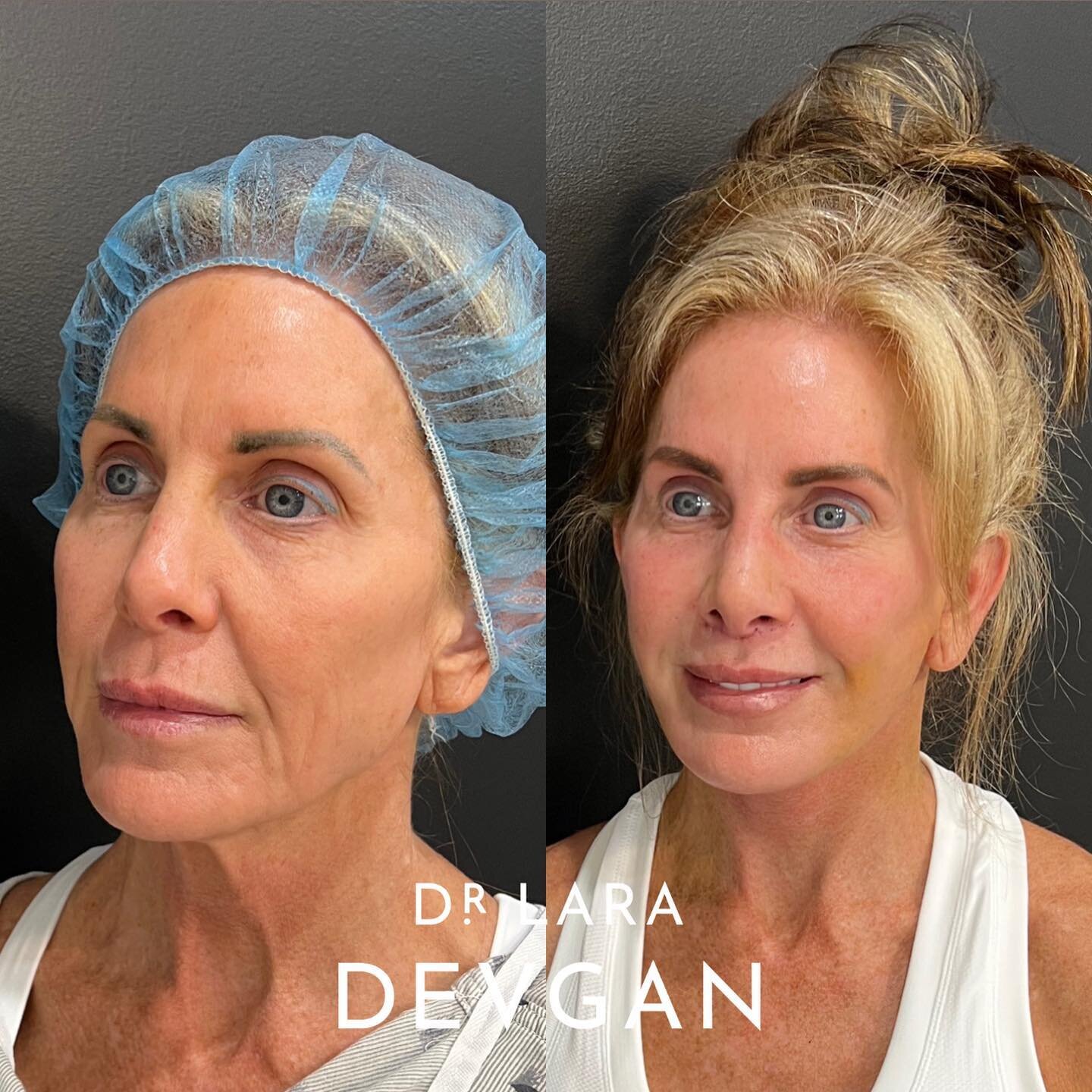
Suture Suspension, Botox, Fillers, Kybella, Erbium Laser, Gold Microinfusion Microneedling

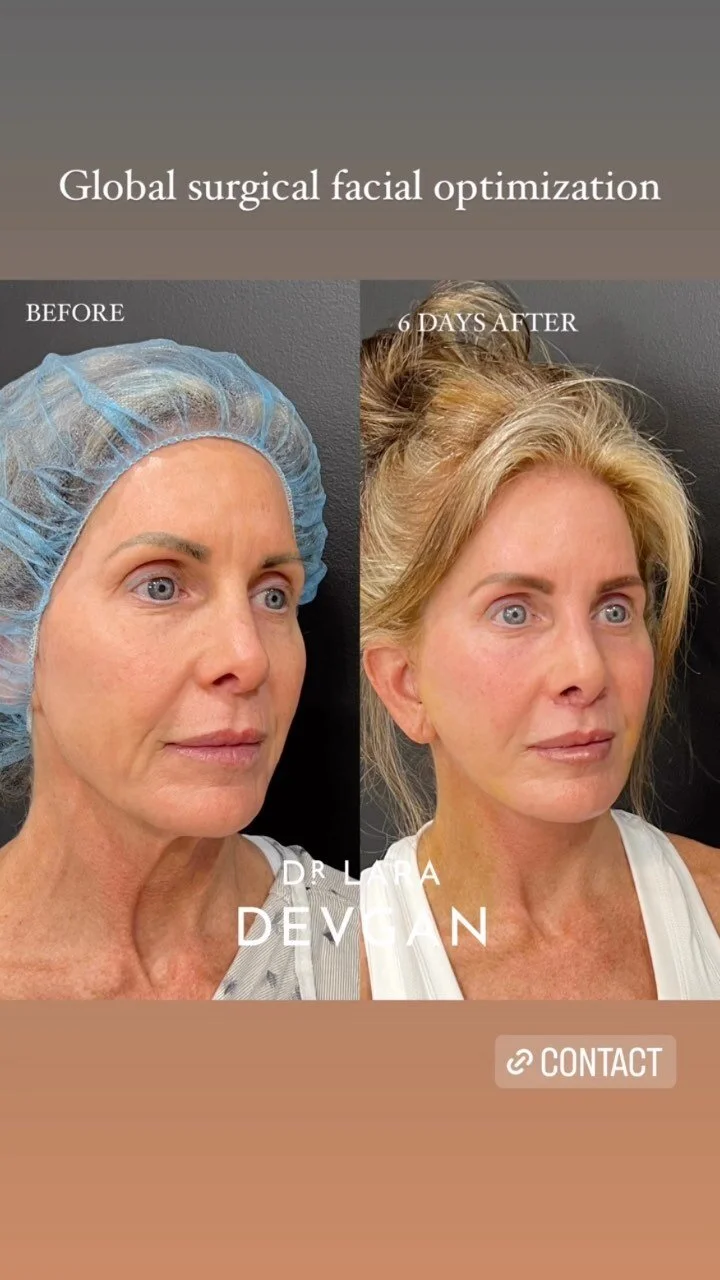
Signature Procedure | Global Facial Optimization: Before & After (click for more info.)

Where We’re Headed: The Future of Preventative Aesthetics

Here’s what I predict we’ll see more of in the next 5–10 years:

  • Genetic and microbiome-based aesthetic mapping to guide personalized regimens

  • AI-integrated facial analytics that track micro-aging patterns in real time

  • Cross-specialty longevity clinics that combine endocrinology, dermatology, and aesthetics

  • Regenerative surgeries focused not just on lifting but on restoring youthful tissue quality

  • Expanded use of peptide-based topicals that promote cellular repair without irritation

As this field matures, we will shift from an era of concealment to one of cellular-level optimization.

Giants of Modern Plastic Surgery

As the field progressed, a number of visionaries pushed the boundaries of what was surgically possible. Here are five pioneers whose techniques shaped the foundation of our specialty:

1. Sir Harold Gillies (UK) – Father of Modern Plastic Surgery

Gillies developed groundbreaking facial reconstruction techniques for soldiers disfigured in World War I. He pioneered the tubed pedicle flap, which allowed for safer skin transfers to the face. His work laid the foundation for reconstructive and aesthetic facial surgery.

2. Dr. Vilray Blair (USA) – Wartime Innovator

A contemporary of Gillies, Blair developed techniques for burn wound management and skin grafting during World War I and later helped establish protocols for cleft palate repair. His work helped bridge battlefield innovation and hospital practice.

3. Dr. Tord Skoog (Sweden) – Cleft and Craniofacial Surgery

Skoog advanced techniques in cleft lip and palate repair, emphasizing function and aesthetics in craniofacial anomalies. His contributions to reconstructive surgery had global impact, particularly in pediatrics.

4. Dr. Jacques Joseph (Germany) – Rhinoplasty Revolution

Often considered the father of modern cosmetic surgery, Joseph was a Jewish-German surgeon in the early 1900s who pioneered open rhinoplasty techniques and believed in surgery not just to correct deformities but to improve psychological well-being.

5. Dr. Suzanne Noël (France) – First Female Aesthetic Surgeon

A suffragette and trailblazer, Noël was the first to specialize in cosmetic facelifts for aesthetic reasons in the early 20th century. She performed “petite opérations” that prefigured today’s minimally invasive approach to facial rejuvenation.

Final Thoughts

In my practice, I often say: the most fulfilled patients are not the ones who look younger, but the ones who look like themselves—well-rested, radiant, and congruent with how they feel inside.

Preventative aesthetics is not about chasing perfection. It's about staying ahead of time, with intention. It's about biohacking not just lifespan, but facespan.

Welcome to the future of aesthetic medicine.


Subscribe to “Plastic by Dr. Lara Devgan” for more posts on Substack using the following button.

The Risk of Preventative Aesthetics

SUBSTACK: Plastic by Dr. Lara Devgan | Plastic Surgery and the Renaissance

Plastic Surgery and the Renaissance

A renaissance-era anatomical illustration.


Plastic Surgery and the Renaissance

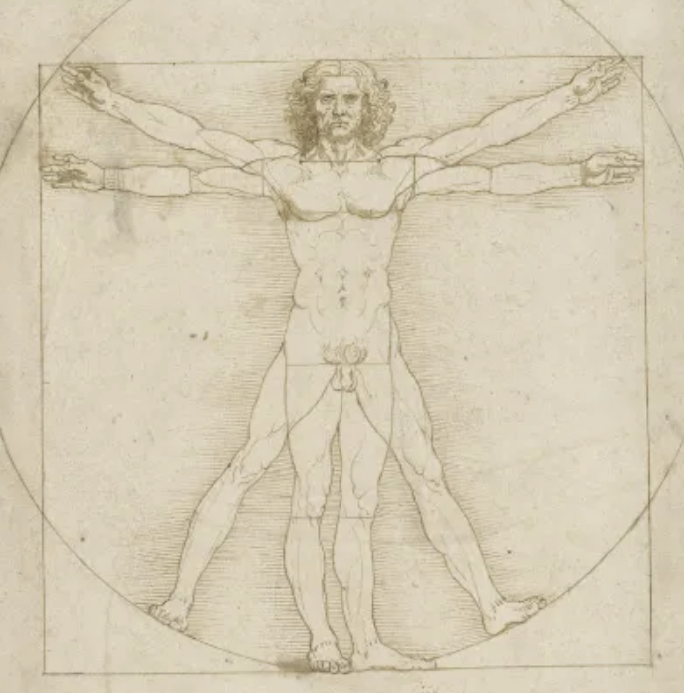
When we think of the Renaissance, we think of masterpieces—Michelangelo’s David, da Vinci’s Vitruvian Man, Botticelli’s Venus. But beneath the marble and canvas was a movement that changed not only how we see the world, but how we see ourselves.

As a modern plastic surgeon, I often find myself reflecting on this era—not just for its aesthetic beauty, but for how it revolutionized our understanding of the human body and paved the way for the very work we do today.

The Art of Anatomy

The Renaissance was a rebirth of anatomical curiosity. For the first time since antiquity, artists and physicians began dissecting cadavers—not as an act of rebellion, but in pursuit of truth.

Leonardo da Vinci’s anatomical drawings, for instance, remain breathtaking not only for their technical precision, but for their reverence of the body as both a biological system and a work of art. He saw the face as a map of muscle, bone, and proportion—principles that remain central in aesthetic surgery.

The Mind-Body Ideal

Renaissance humanism placed man—not the divine—as the center of the universe. This philosophical shift elevated the body to something worth perfecting, studying, and even enhancing. Beauty was no longer seen as vanity, but as a reflection of virtue, intellect, and harmony.

This notion still echoes today in our pursuit of natural-looking, harmonious results—where a well-performed facelift or rhinoplasty isn’t about transformation, but restoration of balance and self-perception.

Facial Optimization Plastic Surgery NYC

Signature Procedure | Facial Optimization (click for more info.)

Proportion and the Golden Ratio

Much of what we now understand as “facial balance” has its roots in Renaissance studies of mathematical proportion. Da Vinci and Alberti weren’t just artists—they were early aesthetic theorists. Their obsession with symmetry and the “divine proportion” informs our modern understanding of facial harmony.

In my own practice, I use these same principles every day—whether subtly adjusting the angle of a nasal tip or restoring volume to the midface with the golden ratio in mind.

From Barber-Surgeons to Specialists

While aesthetic surgery as we know it didn’t exist in the Renaissance, the groundwork was being laid. The earliest surgical manuals were being written. “Barber-surgeons” were performing procedures like nasal reconstructions using skin flaps—a precursor to modern techniques.

These rudimentary efforts would eventually evolve, through war-time necessity and medical advancement, into the field of plastic surgery. And yet, they were born from the same desire that drives our field today: to restore form, function, and identity.

Nose/Profile Balancing Plastic Surgery NYC

Signature Procedure | Nose/Profile Balancing (click for more info.)

Giants of Modern Plastic Surgery

As the field progressed, a number of visionaries pushed the boundaries of what was surgically possible. Here are five pioneers whose techniques shaped the foundation of our specialty:

1. Sir Harold Gillies (UK) – Father of Modern Plastic Surgery

Gillies developed groundbreaking facial reconstruction techniques for soldiers disfigured in World War I. He pioneered the tubed pedicle flap, which allowed for safer skin transfers to the face. His work laid the foundation for reconstructive and aesthetic facial surgery.

2. Dr. Vilray Blair (USA) – Wartime Innovator

A contemporary of Gillies, Blair developed techniques for burn wound management and skin grafting during World War I and later helped establish protocols for cleft palate repair. His work helped bridge battlefield innovation and hospital practice.

3. Dr. Tord Skoog (Sweden) – Cleft and Craniofacial Surgery

Skoog advanced techniques in cleft lip and palate repair, emphasizing function and aesthetics in craniofacial anomalies. His contributions to reconstructive surgery had global impact, particularly in pediatrics.

4. Dr. Jacques Joseph (Germany) – Rhinoplasty Revolution

Often considered the father of modern cosmetic surgery, Joseph was a Jewish-German surgeon in the early 1900s who pioneered open rhinoplasty techniques and believed in surgery not just to correct deformities but to improve psychological well-being.

5. Dr. Suzanne Noël (France) – First Female Aesthetic Surgeon

A suffragette and trailblazer, Noël was the first to specialize in cosmetic facelifts for aesthetic reasons in the early 20th century. She performed “petite opérations” that prefigured today’s minimally invasive approach to facial rejuvenation.

A Living Legacy

As surgeons, we are both scientists and artists. Every incision we make, every structure we refine, is guided by principles rooted in centuries of study—of proportion, harmony, and human dignity.

In many ways, we are still living in the Renaissance.

Nose/Profile Plastic Surgery NYC

Signature Procedure | Nose/Profile Balancing (click for more info.)


Subscribe to “Plastic by Dr. Lara Devgan” for more posts on Substack using the following button.

Plastic Surgery and the Renaissance

SUBSTACK: Plastic by Dr. Lara Devgan | Personal Posts from Dr. Lara Devgan Herself

Substack | Plastic by Dr. Lara Devgan

Dr. Lara Devgan


An Introduction

Dr. Lara Devgan, a board-certified plastic surgeon and CEO of a skincare company, authors the Substack newsletter "Plastic by Dr. Lara Devgan." This publication offers readers an insider's perspective on plastic surgery and aesthetics, delving into topics that range from personal experiences to broader industry insights.​

Recent Posts Include…

In her post titled "What do I do for my OWN face?", Dr. Devgan reflects on her personal plastic surgery treatment routine, providing a unique viewpoint as a surgeon, woman, and mother of six. This candid exploration offers readers a glimpse into the considerations and choices she makes regarding her own aesthetic treatments. ​drdevgan.substack.com

Another notable article, "Does One Size Fit All?", examines structural biases in surgical instrument design that may disadvantage surgeons with smaller hands. This piece highlights the importance of ergonomic considerations in surgical practice and advocates for more inclusive design standards. ​drdevgan.substack.com+1drdevgan.substack.com+1

In "Aging Gracefully, with Botox," Dr. Devgan discusses the use of Botox to restore facial balance by targeting depressor muscles. She explains how this approach can create a more lifted and relaxed appearance, contributing to a graceful aging process. ​drdevgan.substack.com

"The Ethics of Extreme Aesthetic Surgery" addresses the moral considerations involved in performing extensive cosmetic procedures. Dr. Devgan emphasizes her role in helping individuals feel more confident while also considering the ethical implications of extreme aesthetic interventions. ​Substack+8drdevgan.substack.com+8drdevgan.substack.com+8

"Plastic by Dr. Lara Devgan" serves as a valuable resource for those interested in the nuances of plastic surgery and aesthetic medicine. Through her expert commentary and personal reflections, Dr. Devgan provides readers with a comprehensive understanding of the field, blending professional insights with ethical considerations.​drdevgan.substack.com+8drdevgan.substack.com+8drdevgan.substack.com+8


Subscribe to “Plastic by Dr. Lara Devgan” for more posts on Substack using the following button.

Plastic by Dr. Lara Devgan (Substack)