I'm getting a breast augmentation at Dr. Devgan's office, what should I expect?

It’s natural to feel some level of apprehension or concern about undergoing cosmetic surgery. However, you should not let fear deter you from making the decision to go ahead and do it! Here at our office, we want you to know what the sequence of events are leading up to, on, and after your breast augmentation.

First, we’ll meet for your initial consultation, whether that be in person or via Facetime. We’ll chat about your goals and concerns, and I’ll ask you to send some inspirational photos. If you’re a good candidate for a breast augmentation, you will then meet with my surgical coordinator, who will share all surgical details with you in an in-depth meeting. Our surgical coordinator and I will be readily available throughout the whole process. Leading up to surgery day, our coordinator will be communicating via phone call, making sure all questions are answered.

On surgery day, you will come to the office one hour before your case is scheduled to start. You will first meet with my nurse who will go through all the pre-operative information, which includes your medical/surgical history, post operative medication, and incision care. A pregnancy and nicotine test will be done. Our board-certified anesthesiologist will meet with you next. All patients who undergo a breast augmentation are required to be asleep for this procedure. You will be under light IV sedation or “twilight” anesthesia. This means you’ll be breathing on your own, but you will not remember anything from the operating room. Lastly, you will meet with me, where we will go over your inspiration photos and confirm sizing. Afterwards it’s go time! My nurse will walk you to the operating room where the surgery will take place. Breast augmentations typically take one hour. Afterwards, you will wake up in the recovery room. My nurse will be monitoring your vitals, fluid intake, and incisions post operatively. Usually, after one hour in the recovery room, patients feel comfortable walking out on their own. Your escort and our nurse will help assist you into your car to travel to your recovery destination.

What is the difference between silicone and saline breast implants?

When it comes to breast implants, saline and silicone are two different types of filling materials used. Here are some key differences between saline and silicone implants:

1. Filling Material: Saline implants are filled with a sterile saline solution (saltwater), while silicone implants are filled with a cohesive silicone gel.

2. Consistency: Saline implants have a firmer feel compared to silicone implants. Silicone implants are designed to closely resemble the feel of natural breast tissue.

3. Rupture Detection: If a saline implant ruptures, it deflates quickly, and the saline solution is harmlessly absorbed by the body, making the rupture noticeable. Silicone implant ruptures are often referred to as "silent ruptures" because they can go undetected without regular imaging, such as MRI scans.

4. Appearance: Silicone implants typically provide a more natural look and feel due to their gel consistency. Saline implants may have a slightly more noticeable "water balloon" appearance, especially in patients with less breast tissue.

5. Naturalness: In very thin patients, silicone implants are less likely to show rippling and fold flaws and may thus appear more natural.

6. FDA Approval: Both saline and silicone breast implants are FDA-approved for breast augmentation in the United States.

It's important to consult with a board-certified plastic surgeon, like myself, to discuss your specific goals, medical history, and individual factors that may influence the choice between saline and silicone implants.

What is the difference between a midface lift and a lower facelift?

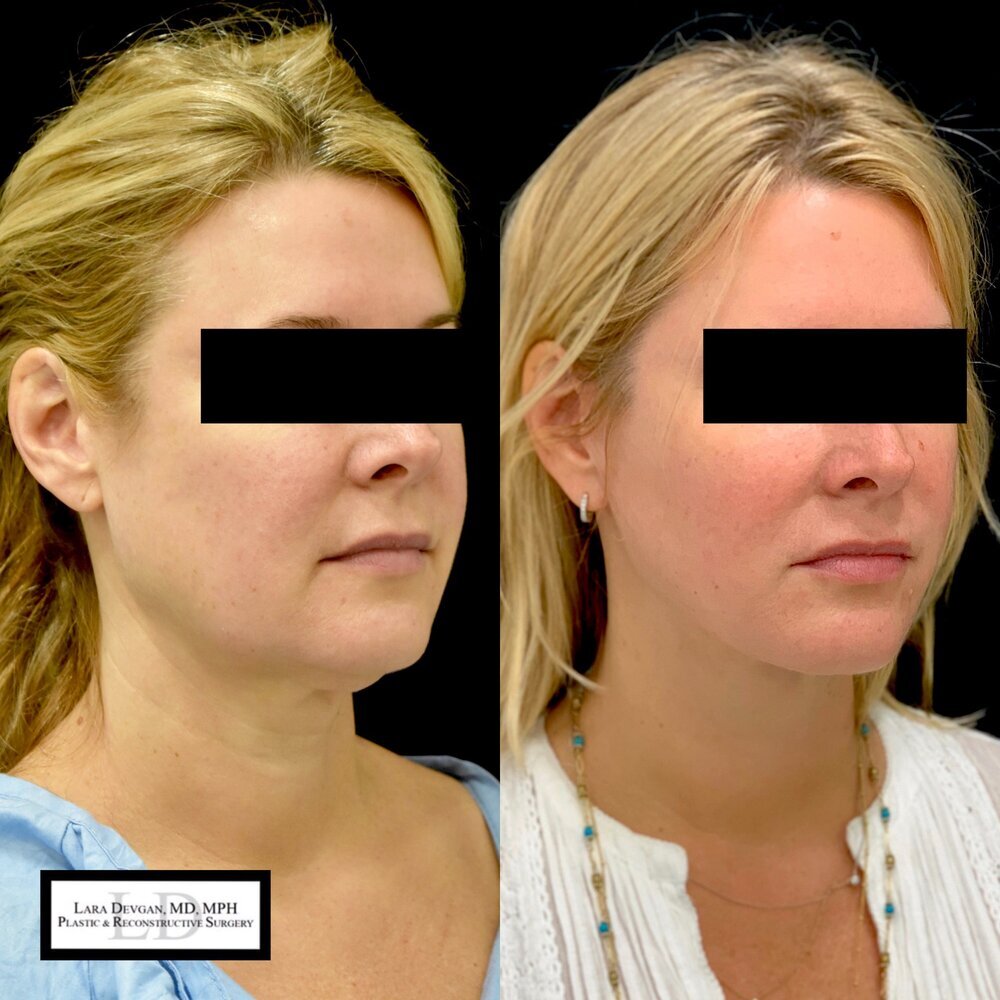
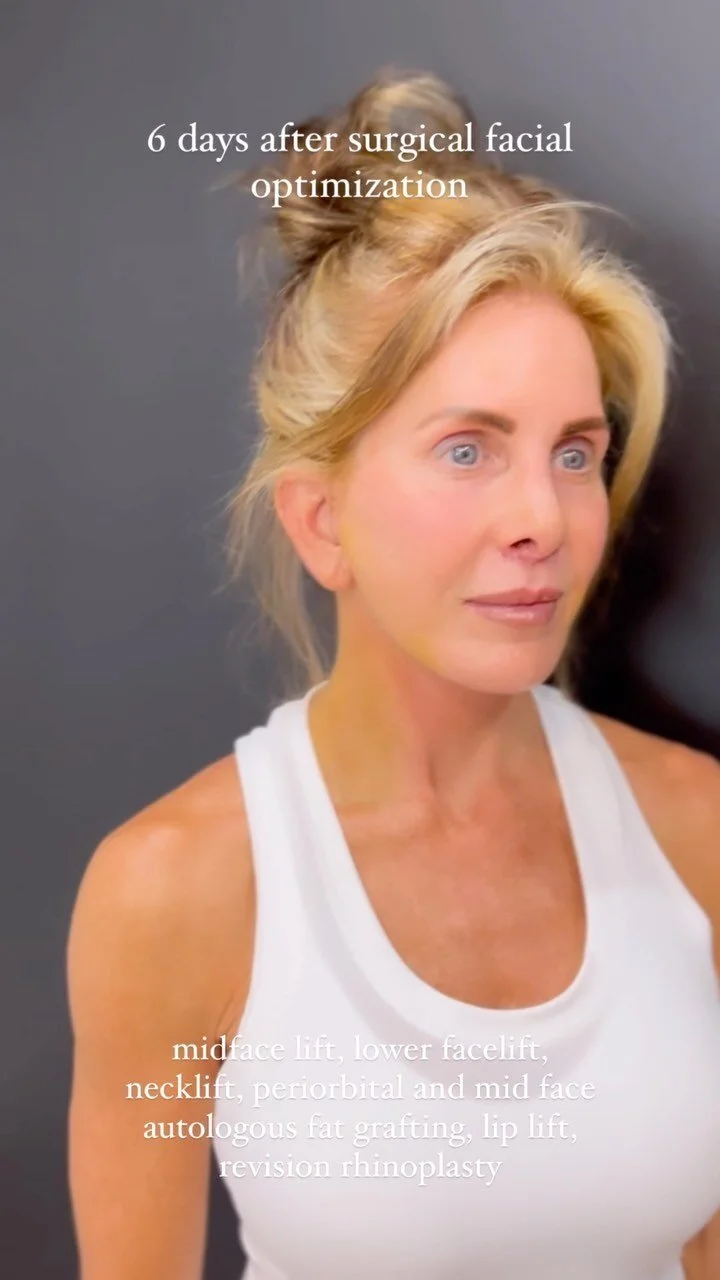
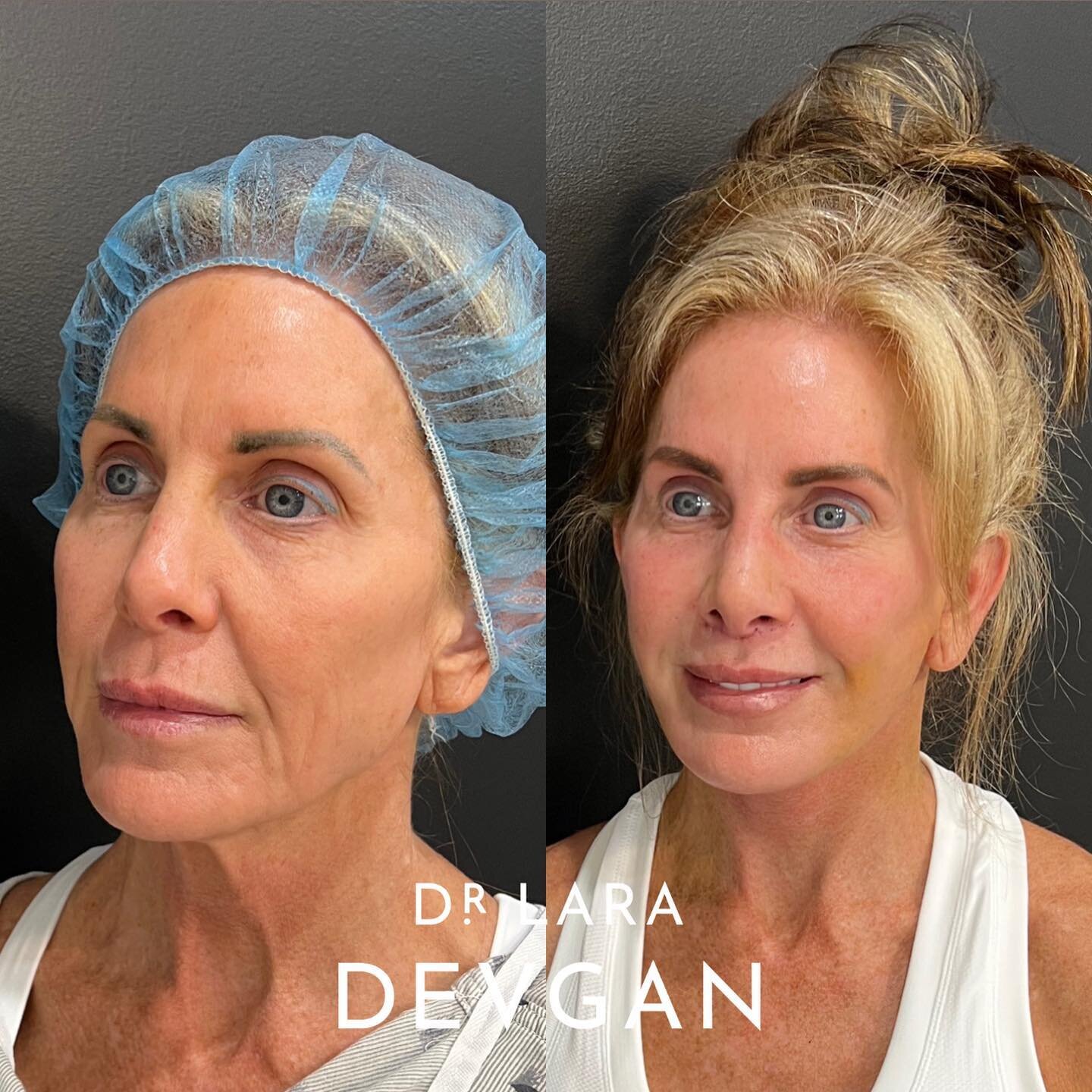
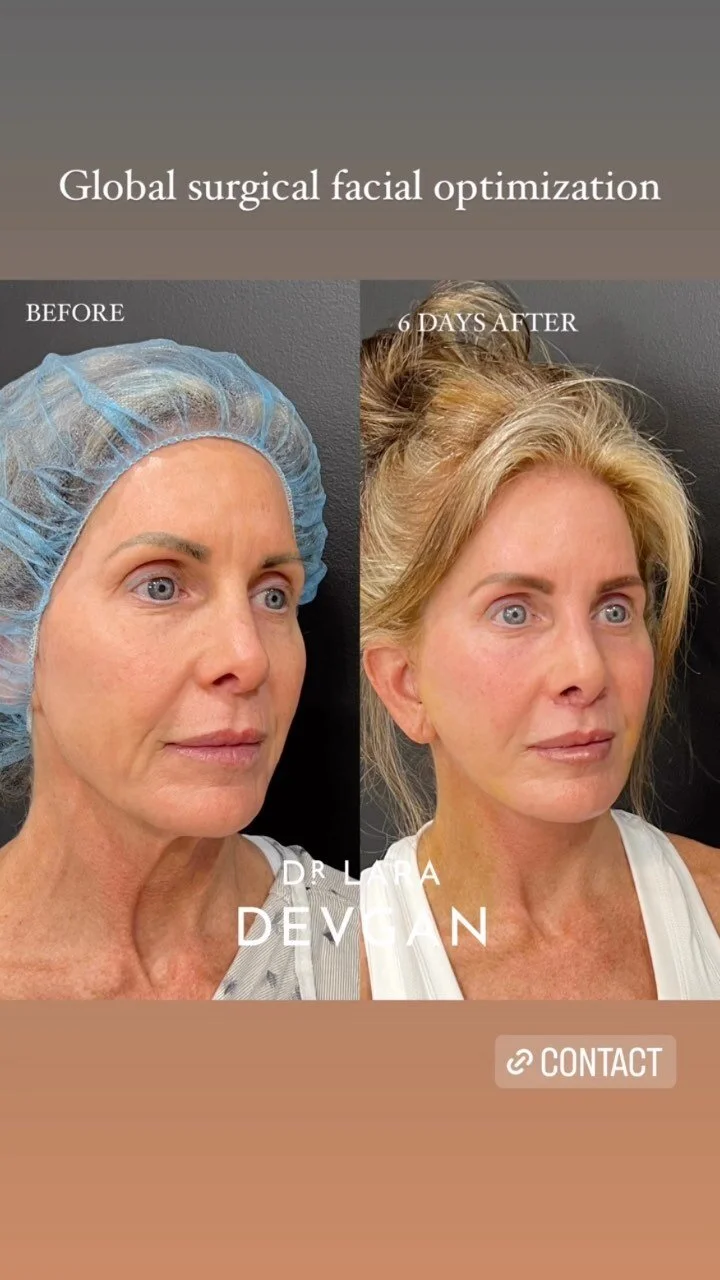
This is an example of lower facelift and necklift progression over time after 1 week and several months in a patient of Dr. Lara Devgan.

A midface lift and a lower facelift are two different surgical procedures that address different areas of the face.

A midface lift focuses on rejuvenating the middle portion of the face, including the cheeks and the area around the nose and mouth. It targets sagging or drooping cheeks, deep nasolabial folds, and a tired or sunken appearance. The procedure involves repositioning and lifting the underlying tissues to restore volume and smooth out wrinkles in the midface area.

On the other hand, a lower facelift primarily targets the jawline, jowls, and the neck. It addresses sagging skin, excessive fat deposits, and muscle laxity in the lower face, resulting in a more defined jawline and a tighter, more youthful appearance. The procedure typically involves repositioning and tightening the underlying tissues, removing excess skin, and sometimes liposuction to enhance the contour of the jawline and neck.

Both procedures can be performed separately or in combination, depending on the patient's specific concerns and goals. It is important to consult with a board-certified plastic surgeon to determine the most suitable approach for achieving the desired results.

Dr. Devgan recognized by Goop as one of New York’s best cosmetic surgeons

Written by Jack Nicastro

Goop recently published a shortlist of their favorite physicians in an article entitled: “The goop Guide to Cosmetic Surgeons.” Given goop’s aesthetic preference for a natural, understated look, it is no wonder that Dr. Devgan, known for her “beauty is in the details” motto, ranks as one of their top picks.

gooplogo.png

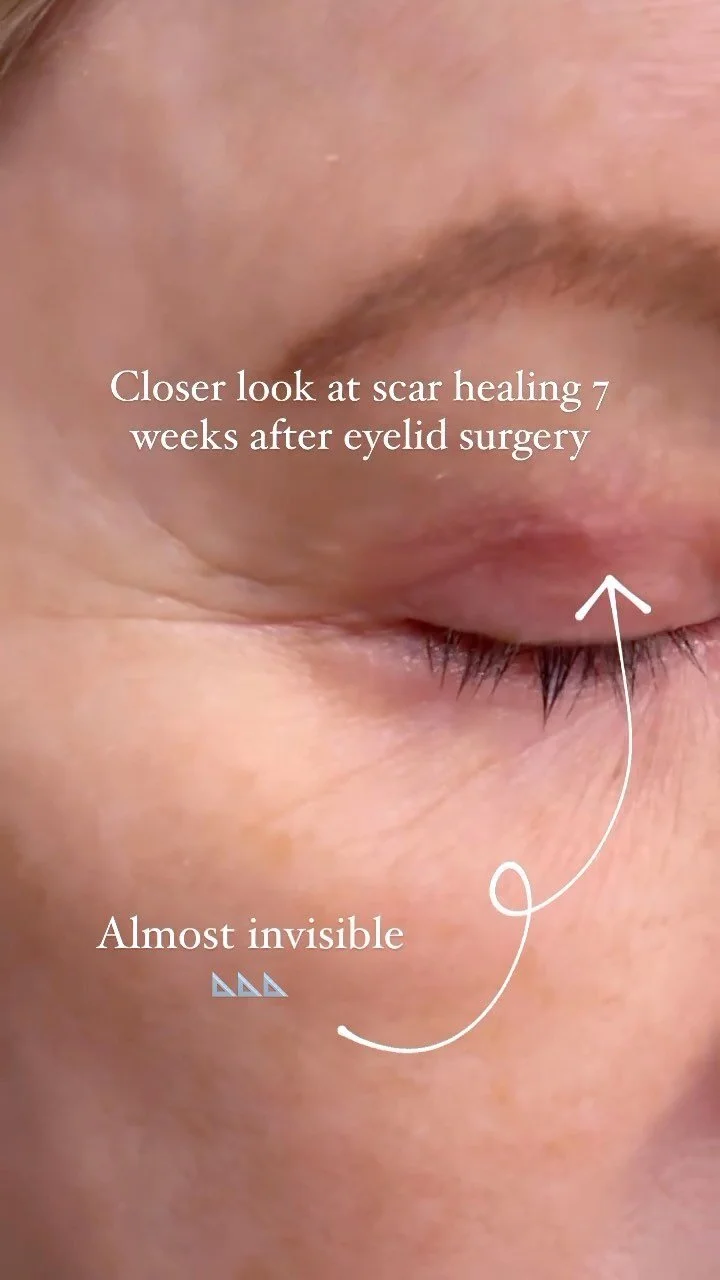
Goop applauds Dr. Devgan for her signature facial procedures which accentuate her clients’ natural beauty without leaving distracting scars. Specifically, goop cites Dr. Devgan’s non-surgical injectable procedures as well as her minimally invasive surgical techniques such as suture suspension lifting and eyelid zip-stitch, both of which are visually seamless.

Dr. Devgan's Stitch-work Lauded in Vogue

Written by Jack Nicastro

Vogue’s Maya Singer recently published a piece exploring the large surge in cosmetic surgery during the Coronavirus pandemic.

Maya posits that a combination of an abundance of time away from the office, ubiquity of face coverings and sheer boredom account for the uptick in aesthetic-enhancing procedures. Moreover, just as Dr. Devgan hypothesizes in her Eyelash Index, Maya reiterated that the amount of time spent on zoom seeing our sunken under eyes and distorted noses may also be responsible for renewed interest in facial cosmetic surgery.

Maya herself sought out Dr. Devgan to remove an invisible cyst from a nasolabial fold and lamented how the only person to appreciate her “her teensy incision with a couture-worthy stitch” and “her fine handiwork was [her] boyfriend.” Whatever the reason for the increased interest for cosmetic surgery, those who are in the market for bespoke, virtually imperceptible aesthetic enhancements go to Dr. Devgan.