Dr. Devgan and colleagues featured in Newsday for the New Yorker OR Cover Challenge

Dr. Devgan and her operating team

Dr. Devgan and her operating team

Dr. Devgan and her colleagues were proud to have been featured in the New Yorker OR Cover Challenge this week, both on social media and in Newsday. As an accomplished female surgeon, Dr. Devgan says, "Images have power, and seeing images of smart, capable women in positions of authority changes the way we internalize who we are and who we can become."

New Yorker cover, "Operating Room," by Malika Favre

New Yorker cover, "Operating Room," by Malika Favre

New Yorker cover with female surgeons mimicked on social media

Females surgeons from across the globe and locally are recreating a New Yorker cover to show diversity in what has typically been considered a male-dominated profession.

The illustration, which was featured on the magazine’s April 3 edition, shows four female surgeons gazing down over a patient on an operating table. After it was published, Susan Pitt, an endocrine surgeon at the University of Wisconsin, challenged her female colleagues to replicate the image.

Pitt shared her recreation on Twitter a day later, using the hashtag #ILookLikeASurgeon. Soon afterward, dozens of other surgeons took her lead.

Stony Brook University Hospital surgeon Aurora Pryor shared her own photo on Twitter on Tuesday, showing herself with three female colleagues in scrubs and surgical masks.

“I think it’s empowering and shows that there is a strong female presence in a field that’s historically been male-dominated,” said Pryor, a professor of surgery and vice chair of clinical affairs.

Pryor, 47, said she’s seen the demographic shift in the surgical field firsthand. While completing her residency at Duke, she was only the 10th woman to graduate from the program and there was only one female faculty member on staff at the time, she said. Now, she says the residency program at Stony Brook has a nearly equal number of men and women.

“It’s great seeing that transition,” she said. “The future of surgery is going to be a lot more evenly split.”

Jennifer Lehman, a breast surgeon at Lenox Hill Hospital in Manhattan, also helped organize a photo, featuring herself alongside 10 female attending and resident surgeons.

“We just felt inspired by seeing all these women proudly photographing themselves and really just taking pride in what they do,” said Lehman, 43.

The breast surgeon said she thinks the social media campaign combats an “old stereotype.”

“We wanted to show that there’s actually a lot more diversity in the field, both in gender and ethnicity,” she said.

Dr. Devgan and female surgeon colleagues at Lenox Hill Hospital.

Dr. Devgan and female surgeon colleagues at Lenox Hill Hospital.

Click here to read the full article on Newsday.

Click here to read the full article on Newsday.

Dr. Devgan interviewed in Allure Magazine: Lip Scrubs versus Lip Peels

As one of the busiest plastic surgeons in New York City and an expert on all things lips, Dr. Devgan was interviewed by senior Allure beauty editor Jessica Chia about the latest trends in lip care. See her article below.

Are Lip Peels Better Than Using Scrubs? A Plastic Surgeon Weighs In

BY JESSICA CHIA

APRIL 13, 2017

There are about a zillion ways to make your lips look as shredded as a pair of jeans — swiping on too matte lipsticks, licking your lips, using a sulfate-rich toothpaste — and only a couple ways to fix the issue (lip scrubs, a wet paper towel, picking at it by hand, esh). But lip peels might offer a softer, savvier solution.

In our never-ending beauty sleuthing, we recently came across an entirely new category of beauty product, heretofore known as a lip peel. Stacked Skincare’s Hydrating Lip Peel, which costs $26, is exactly what it sounds like: A gentle blend of acids (glycolic and lactic, to be exact) designed to gently slough dead skin off of the lips. “Lips see so much damage from talking and eating and environmental changes,” says New York City plastic surgeon Lara Devgan. “Glycolic and lactic acid are nice for creating a light peeling effect.” Here's how it works. We followed the directions and smoothed on a thin layer with the lip peel's built-in rollerball once a day (though Dr. Devgan says once a week should be enough to maintain results). It doesn't taste or feel like anything. Which is a plus — no stickiness, no residue, no nothing. And, thankfully for our forgetful selves, you don't even have to remove it! You can simply tuck the chapstick-sized peel back into your purse and go about your day.

And after all that, we were thoroughly impressed by how gentle it actually was. (The skin on the lips is some of the thinnest and most delicate; dosing it with high-test acid sounds like a bad idea.) If you use it daily for a few days, your lips will look smoother, but at no point did they molt the way your skin might after an intense chemical peel.

The biggest plus, though, is what they don’t do. “Lip scrubs can be damaging to the delicate mucosa of the lip; they can cause a little bit of abrasion, micro-injury, and even some bleeding if you’re not careful,” Devgan says. “If you’re too rough with exfoliation, you can get hyperpigmentation, and your lips will look a little more brown than pink.”

But although this lip peel is gentler than a rough scrub (and infinitely better than picking at your lips with your germy nails), there is a boundary to how much it can help. “The best way to stop the chapping cycle is by taking a little holiday from products,” she says. “No scrubs, no lip licking, no colors or glosses, just a simple emollient product like a hyaluronic acid serum or petroleum jelly.”

Click to read the full article in Allure Magazine

Click to read the full article in Allure Magazine

Dr. Devgan featured in Self Magazine

Dr. Devgan was interviewed in a recent Self Magazine article about trends in plastic surgery and injectables. As a board-certified plastic surgeon and expert in minimally invasive techniques, Dr. Devgan discussed tear trough augmentation, one of the most popular aspects of her practice.

Tear-Trough Augmentation

Dark undereye circles are a common complaint for women in their 20s through 70s. Younger women may be able to chalk it up to a late night out. But as we age, the fat pads that support the lower eye dwindle in volume. This creates a sunken, hollow, and, in general, tired appearance. While in the past the only real solution for these “bags” was undereye creams and concealer, now more and more patients are turning to tear-trough augmentation. An injectable filler reduces hollowing under the eyes, creating less of a dark shadow and smoothing puffiness.

“In this era of people working longer hours, sleeping less, and spending more time juggling the demands of work and family, I’ve found a sharp uptick in the number of patients complaining of tired-looking eyes,” says Lara Devgan, M.D., M.P.H., a specialist in plastic and reconstructive surgery. “When skillfully performed, tear-trough augmentation can achieve excellent and transformative results in as little as five minutes, with no downtime, incisions, or pain.” 


Click to read the full article in Self Magazine

Click to read the full article in Self Magazine

Tear trough augmentation for dark circles and undereye hollows

Actual patient of Dr. Devgan, before and 2 days after tear trough augmentation with injectable filler.

Actual patient of Dr. Devgan, before and 2 days after tear trough augmentation with injectable filler.

Undereye dark circles and hollows are a common complaint among patients in my New York City private practice. While surgery remains the gold standard treatment for this area, tear trough augmentation is a minimally invasive and remarkable way to rejuvenate the under-eye.

Undereye augmentation is performed with careful microdroplet injection of hyaluronic-based filler. The procedure takes a few minutes, lasts 1-2 years, and has no associated downtime. Final results typically take about 3 weeks. Tear trough augmentation is one of the most popular procedures in my practice, with an extremely high patient satisfaction rating.

Actual patient of Dr. Devgan, before and 2.5 weeks after tear trough augmentation with injectable filler.

Actual patient of Dr. Devgan, before and 2.5 weeks after tear trough augmentation with injectable filler.

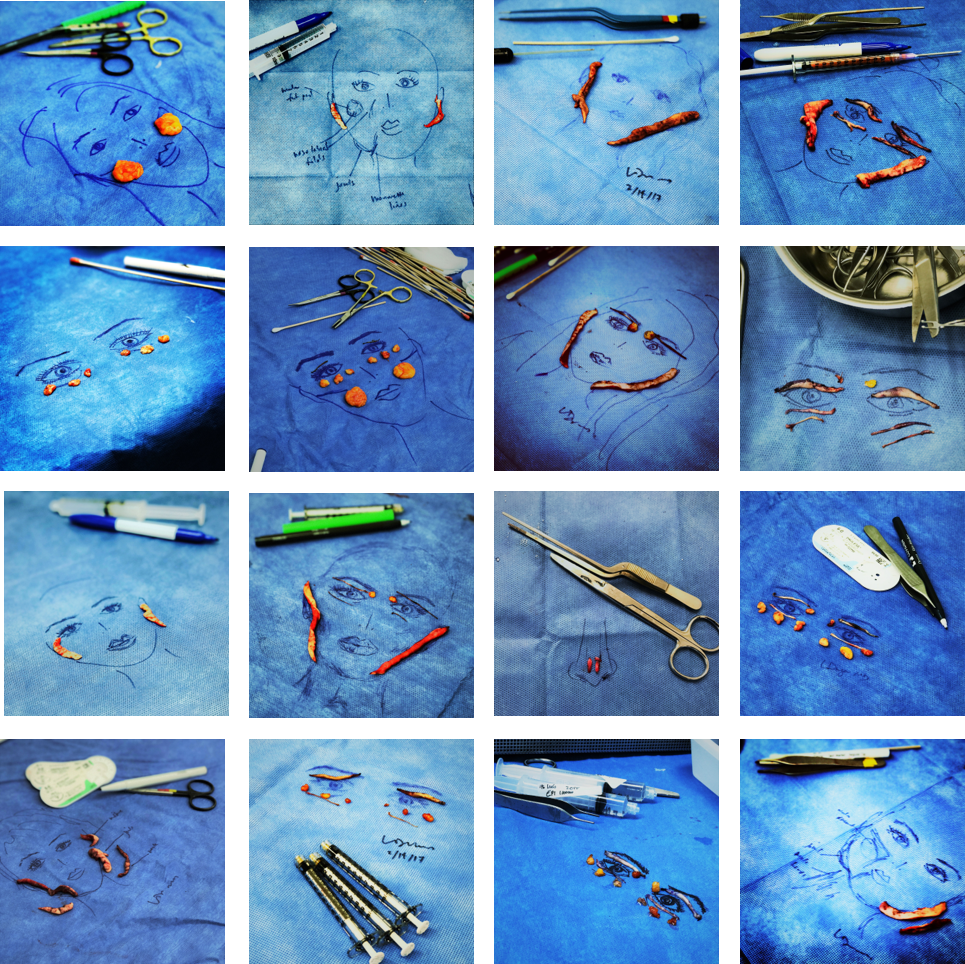
Dr. Devgan exhibiting her surgical art at Lenox Hill Hospital

Art in the Operating Room, Dr. Lara Devgan, photography/ multimedia/ ink, 2017

Art in the Operating Room, Dr. Lara Devgan, photography/ multimedia/ ink, 2017

Dr. Devgan is honored to be exhibiting her artwork at Lenox Hill Hospital next month. Her pieces are photographs of multi-media sketches of surgical specimens, pictured above. They reveal a glimpse of the artistry behind some of her most frequently performed operations, including facelift, necklift, blepharoplasty, and rhinoplasty.

The Lenox Hill Hospital Art Exhibition is being hosted by the Lenox Hill Hospital Auxiliary Board. The opening reception will take place on April 5, 2017.