Breasts age faster than the rest of the body

A new study may explain why youthful breasts don't stay that way forever: they age about 2-3 years faster than the rest of the body in healthy women, and about 12 years faster in women who have had breast cancer.

breasts5.png

According to Science Daily:

"While earlier clocks have been linked to saliva, hormones and telomeres, the new research is the first to identify an internal timepiece able to accurately gauge the age of diverse human organs, tissues and cell types. Unexpectedly, the clock also found that some parts of the anatomy, like a woman's breast tissue, age faster than the rest of the body.

..."Healthy breast tissue is about two to three years older than the rest of a woman's body," said Horvath. "If a woman has breast cancer, the healthy tissue next to the tumor is an average of 12 years older than the rest of her body."

The results may explain why breast cancer is the most common cancer in women. Given that the clock ranked tumor tissue an average of 36 years older than healthy tissue, it could also explain why age is a major risk factor for many cancers in both genders."

Youthful breasts can be partially preserved via a well-fitting and supportive bra and regular moisturizing. However, if you have noted age-related drooping, sagging, and loss of breast fullness, breast implants or a breast lift can help.

Click to read more about what Dr. Devgan can do to help your breasts

Click to read more about what Dr. Devgan can do to help your breasts

Click to try our breast implant simulator or to watch our tutorial video

Click to try our breast implant simulator or to watch our tutorial video

Click to read the full article on Science Daily

Click to read the full article on Science Daily

How skilled is your surgeon?

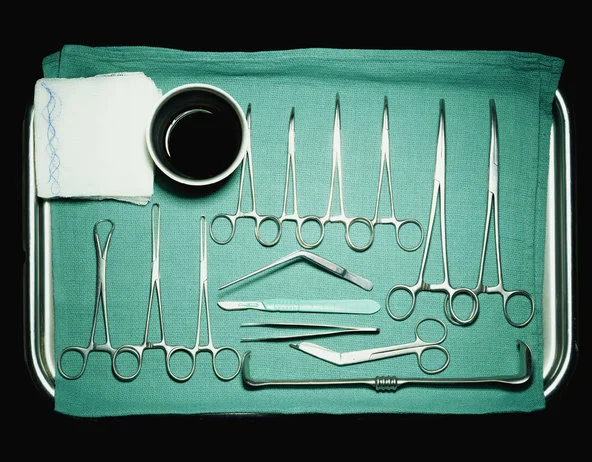
A recent study makes public something that surgeons have always known: surgical skill makes a big difference in patient outcomes. The research paper, published in the New England Journal of Medicine and reported in the New York Times, explains that surgeons with better hands-- better technical skills, faster operative times, and more dextrous movements-- have patients who do better after surgery.

Read the interesting findings below.

Paul Taylor/ Getty Images via New York Times

Paul Taylor/ Getty Images via New York Times

Click to read the full article in the New York Times

Click to read the full article in the New York Times

Click to read the original manuscript in the New England Journal of Medicine

Click to read the original manuscript in the New England Journal of Medicine

Dr. Devgan honored in Haute Living, the premiere source for the country's best doctors

We are thrilled to announce that Dr. Devgan has been selected as the featured "Face Specialist" in Haute Living Magazine. She has been chosen to be listed among only a handful of specialists nationwide in the HauteMD listing, "the premiere source of the country's best doctors."

Haute Living writes:

"As the only female plastic and reconstructive surgeon on our list, Dr. Lara Devgan has earned a following of loyal fans. She trained at some of the best institutions in the country-- Yale, Johns Hopkins, Columbia, and New York Presbyterian-- and her conservative yet modern approach to surgery reflects that. She is known for her natural-looking face and neck lift, her meticulous attention to detail, and her feminine touch."

If you are interested in arranging a consultation with Dr. Devgan, please call 212.452.2400 or email info@LaraDevganMD.com.

Click to enlarge Dr. Devgan's feature in Haute Living Magazine.

Dr. Devgan's interview on new technology in Haute Living

Click to read Dr. Devgan's full interview in Haute Living.

Click to read Dr. Devgan's full interview in Haute Living.

Dr. Lara Devgan Talks New Technology and Debated Issues

November 4, 2013

Tell us about an issue relating to your field that is highly debated. What is your stand on this issue and how does it shape your practice?

One classic debate in facial rejuvenation is injectables versus surgery. In other words, for someone who wants to age gracefully, is it better to do minimally invasive things like Botox, filler, chemical peels, and laser—or is it better to go straight to a blepharoplasty, under-the-chin liposuction, facelift, or necklift? For me, the answer depends on you.

My philosophy is to use the most advanced techniques to get the most natural-looking results—and to get the results that you actually want. In general, the most definitive and permanent results come from surgery. But the quickest procedures with the shortest downtime are the non-surgical ones. Often, a combination approach is best. If I were seeking a cosmetic improvement myself, I would be very wary of going to a doctor who pushes only one end of the spectrum. As the old saying goes, if all you have is a hammer, everything looks like a nail. Botox is not the right answer for every person, just as a facelift is not the right answer for everyone either. You will have the best chance of getting a personalized, thoughtful, beautiful result if you see a plastic surgeon who is comfortable offering you the entire spectrum of techniques. If you’d like to read more about my surgical philosophy, take a look at my website, http://laradevganmd.com/philosophy.

What new technology have you incorporated into your routine this month/year, and how has it shaped your client experience for the better?

The most exciting new technology these days is fat grafting. Fat grafting is a technique where fat is liposuctioned from one part of your body, purified to get the best fat cells and stem cells, and reinjected back into another part of your body. In truth, fat grafting is not all that new—it has been around for at least a decade. But recent data has supported its use in all sorts of applications—alone, in combination with facelifts and necklifts, to fill the “tear trough” area under the eyes,” and to fill out the breasts and buttocks. Fat grafting is more than just a volume filler. It actually improves the contour and complexion of the face. I now use it as an adjunct to many of my facelifts. It also allows the breasts to be augmented in a way that looks and feels soft and natural.


Dr. Devgan is featured on KevinMD

Dr. Devgan is featured on KevinMD.com, the web’s leading social media health platform, with 1 million monthly pageviews, and over 100,000 subscribers on Facebook, Twitter, LinkedIn, and RSS. 

Everything’s my fault: How a surgeon says I’m sorry

Lara Devgan, MD, MPH

NOVEMBER 9, 2013

When I started my surgical internship, my chief resident told me some magic words: Whenever something bad happens , stay calm and say “I assume full responsibility. It won’t happen again.”

As a young surgeon at the bottom of the totem pole, those words were my mantra for the times when someone’s head was go ing to roll. In those nascent days of my surgical career, I was just trying to st ay in everyone’s good graces. Surgery is a traditional, hierarchical field, and acting defensive or blaming someone else — whether it is justified or not — is a rookie mistake.

In the beginning, I used the “responsibility mantra” mainly to put out fires. Late one night, a transplant surgeon pulled me into the supply room to scold me. A kidney transplant patient’s blood tests were missing, he barked. Where were they? I thought about telling him the full story: I ordered the blood tests, the phlebotomist drew the blood and sent it to the lab, and somehow the test tube went missing. I thought about saying I was sorry.

Instead, I took a deep breath and said “I assume full responsiblity. It won’t happen again.” His anger was temporarily extinguished. Then I drew the patient’s blood myself, hand-delivered the test tube to the lab, and waited for the results to get printed before I ventured back to the wards.

This same scenario repeated itself over and over in my first few months as a junior surgeon. A patient would accidentally eat a snack before getting wheeled to the operating room, and the case would get cancelled. A chest x-ray I ordered wouldn’t get done. The results of a wound culture wouldn’t show up in the computer records. The hospital is an imperfect place, and there are holes in the system. Over and over again, I would assume full responsibility for things that on some level had nothing to do with me. I didn’t want to incur the fiery wrath of the senior surgeons.

Over time, though, a funny thing happened. After repeating the responsibility mantra so many times, I internalized it. I really believed it. When something went wrong with one of my patients — whether it was his fault, my fault, or someone else’s — it was always my responsibility. When a person trusts you with his life, the buck stops with you.

Thousands of people are needed to make a modern hospital run, but if you are the physician in charge of someone’s care, you are accountable for all of those people. You are the one who needs to notice when a blood test is lost or when a patient doesn’t understand his pre-operative instructions. You are the one who must follow up on the scans and cultures to make sure they are complete. You are the one who needs to verify all aspects of your patients’ care.

The truth is that in surgery, bad things can happen. A patient can have an allergic reaction to an antibiotic; a doctor can fail to diagnose a cancer until it has already spread ; a surgeon can injure a blood vessel during an operation. Physicians make mistakes, and patients get sick or die because of what we d o or don’t do. It is this unadorned reality of the profession that makes the responsibility mantra so important.

Accountability is at the core of what it means to be a surgeon, and it is the reason why we have “morbidity and mortality” conferences. M&M, as it is more affectionately known, is a confidential group-wide analysis of complications and medical errors that occurs in nearly every hospital Department of Surgery in the world. If a patient has a problem, his surgeon stands before his peers and explains what happened: This is what went wrong. This is why. And this is what we can all do to make sure this never happens again.

The airline industry has a similar approach to analyzing plane crashes — the black box is taken apart, crew members are interviewed, and experts convene. It is not enough to apologize for an error. In order to really be responsible for our mistakes, no matter the industry or profession, we must own up to them and be personally committed to preventing them in the future.

Now that I am an attending surgeon, I teach younger doctors the same mantra I learned so many years ago. What starts as a catch phrase somehow becomes a sense of maturity that molds them into compassionate surgeons. By teaching trainees the script to become accountable leaders, we give them the structure, the behaviors, and the words to grow into professionals who understand the gravity of their jobs.

I recently attended an M&M in which surgeons, young and old, presented their complications. A surgeon who was just a few years into clinical practice discussed a surgery that he cancelled at the very last minute because the patient’s blood pressure was too high.

“It’s your responsiblity to know the blood pressure in advance,” a senior surgeon called out from the back of the room.

“Of course,” the young surgeon said, with complete sincerity. “Everything is my responsibility.”
 

Click to read Dr. Devgan's piece on KevinMD.

Click to read Dr. Devgan's piece on KevinMD.